
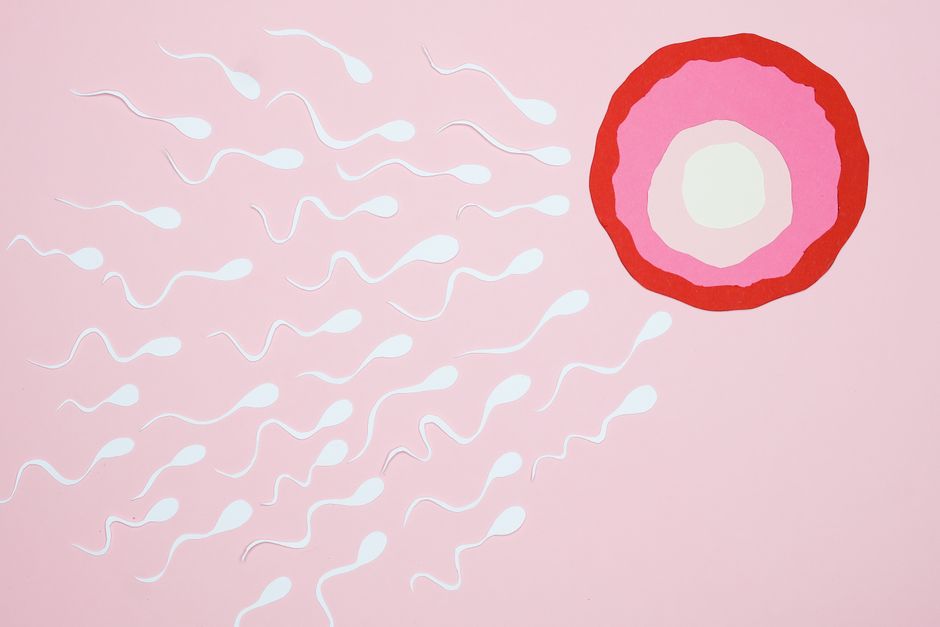
Zero. Once ovulation has happened, the egg survives for roughly 12 to 24 hours. After that window closes, pregnancy is not possible in that cycle. The days when you can actually conceive come before ovulation, not after it.
This is one of the most misunderstood points in fertility awareness. Sperm can live in the reproductive tract for up to five days, waiting for an egg to arrive. The egg does not wait for sperm. That asymmetry explains why the “fertile window” runs about five days before ovulation plus the day of ovulation itself, and why the day after ovulation is essentially the end of the line.
Why Is Fertility So Short After Ovulation?
The egg is released from the ovary at ovulation and begins to degrade almost immediately if it is not fertilized. Once it is no longer viable, fertilization cannot occur, no matter how much sperm is present.
Sperm, by contrast, can survive for several days in the cervical mucus and fallopian tubes when conditions are favorable. This is why intercourse in the days leading up to ovulation can result in pregnancy even if it happens well before the egg is released. The sperm are already there, waiting.
So the practical reality is this: the fertile window is a few days wide on the front end and closes almost immediately on the back end. If you are trying to conceive, the days before ovulation matter far more than the days after.
How Many Days After Ovulation Are You Fertile?
You are not fertile at any point after ovulation has completed. The viable window is the day of ovulation itself, and even that is measured in hours rather than days.
Some sources describe a “24-hour fertile window” around ovulation. That is a reasonable way to think about the day of release, but it does not extend beyond it. The idea that there is a multi-day fertile stretch after ovulation is not supported by reproductive physiology.
There is one important caveat that trips people up. You cannot know with certainty the exact moment ovulation occurred unless you are tracking it with methods that detect the hormonal surge or confirm release. Apps that predict ovulation based on calendar math are estimates, not measurements. If your app says you ovulated on Tuesday but you actually ovulated on Thursday, your “day after ovulation” calculation is off by two days. This is one reason fertility tracking based on predictions alone can be unreliable.
What Is the Fertile Window, Exactly?
The fertile window is the span of days during which intercourse can lead to pregnancy. It begins about five days before ovulation and ends on the day of ovulation.
The five-day lead time reflects the maximum documented survival of sperm in favorable cervical mucus. The end point reflects the short life of the egg. The window is therefore roughly six days total, though the probability of conception is not equal across those days.
Conception is most likely in the two to three days immediately before ovulation and on the day of ovulation itself. Intercourse earlier in the five-day window can still result in pregnancy, but the odds are lower.



Can You Get Pregnant From Sex After Ovulation?
No, not from an egg released in that same cycle. If ovulation has genuinely passed and the egg is no longer viable, sperm arriving afterward have nothing to fertilize.
The complication is timing uncertainty. If you had sex the day after you think you ovulated, but ovulation actually happened later than you assumed, pregnancy is possible. Sperm can survive long enough to meet an egg released a day or two after intercourse.
This is why the question “can I get pregnant the day after ovulation” has a careful answer. Physiologically, no. Practically, only if your ovulation timing estimate was wrong. The biology is firm; the tracking is where errors happen.
How Do You Know When Ovulation Has Actually Happened?
You can get a reasonably good estimate using established methods, but none of them confirm ovulation with perfect precision outside a clinical setting.
- Ovulation predictor kits detect the luteinizing hormone (LH) surge that typically precedes ovulation by about 24 to 36 hours. A positive test means ovulation is likely coming, not that it has happened.
- Basal body temperature rises slightly after ovulation due to progesterone. This confirms ovulation in hindsight, often a day or more after the fact, which is too late to act on for conception in that cycle.
- Cervical mucus changes — becoming clearer, wetter, and stretchier — indicate the approach of ovulation. This is an observation, not a confirmation.
- Calendar and app predictions are estimates based on cycle averages. They are the least reliable method, especially for anyone with irregular cycles.
No home method tells you, in real time, “the egg was released two hours ago.” That limitation is worth understanding if you are timing intercourse carefully.
Does the Egg Really Only Live 12 to 24 Hours?
Yes. The commonly cited figure is that the egg remains viable for about 12 to 24 hours after release. This is a well-established point in reproductive biology and appears consistently in medical and reproductive health literature.
Some educational sources round this to “about a day.” The precision of 12 to 24 hours is reasonable, but the exact viability varies and cannot be pinned down for an individual cycle. What matters practically is that the window is measured in hours, not days.
What If You Are Trying to Conceive?
The most useful takeaway is to shift your focus earlier in the cycle. Intercourse in the days before ovulation gives you the best chance, because sperm are already present when the egg is released.
Waiting until after ovulation to try is, biologically, too late. This is a source of frustration for many couples who assume the day after ovulation is still fertile ground.
If you have been tracking for several months without success, or if your cycles are irregular and ovulation is hard to predict, that is a conversation worth having with a clinician. Fertility assessment is a medical matter, and timing is only one part of the picture. Age, overall health, and other factors all play a role, and those are best evaluated individually rather than through general advice.
One non-obvious point: the fertile window is short, but it is not the only variable in conception. Sperm quality, tubal function, and the timing of intercourse relative to ovulation all interact. Getting the timing right improves your odds, but it does not guarantee pregnancy, and getting it wrong once does not mean you have missed your only chance. Cycles repeat.
Frequently Asked Questions
How many days after ovulation can you get pregnant?
You cannot get pregnant from an egg released in a cycle that has already ovulated, because the egg is viable for only about 12 to 24 hours. Pregnancy is only possible if intercourse happened before or on the day of ovulation.
Can you get pregnant 2 days after ovulation?
No, not from that cycle’s egg, because it is no longer viable by then. The only exception is if your ovulation timing estimate was wrong and you actually ovulated later than you thought.
Is the day after ovulation too late to conceive?
Yes, in most cases the day after ovulation is too late, since the egg’s viable window has closed. The days before ovulation are when conception is most likely.
How long does an egg live after ovulation?
About 12 to 24 hours. After that window, the egg can no longer be fertilized, which is why fertility drops to zero shortly after ovulation.
