
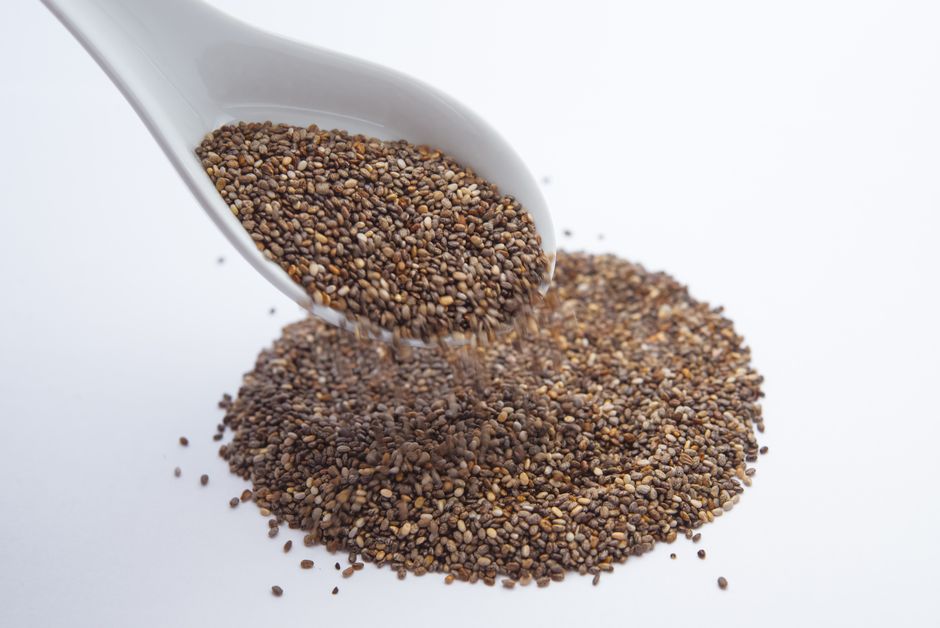
There is no official daily serving of chia seeds. The most common amount cited in nutrition guidance is about 1 to 2 tablespoons (roughly 12 to 25 grams) per day, which supplies about 5 to 10 grams of fiber. That range is a practical starting point, not a rule. Chia is a food, not a medicine, and how much suits you depends on your diet, your digestion, and how much fiber and fluid you already get.
Chia seeds (Salvia hispanica) are small oval seeds that absorb liquid and form a gel. That gelling property explains most of their practical uses and most of their risks. The numbers matter more than the marketing suggests, so it helps to know what a serving actually contains.
What Does One Serving of Chia Seeds Actually Contain?
A standard serving is usually given as 1 tablespoon, which weighs about 12 grams. A 2-tablespoon serving is about 24 grams. The USDA nutrient database lists chia seeds as roughly 486 calories, 16.5 grams of protein, 30.7 grams of fat, and 42.1 grams of carbohydrate per 100 grams, of which about 34 grams is fiber.
Scaling that down gives a clearer picture:
- 1 tablespoon (about 12 g): roughly 58 calories, about 4 grams of fiber, about 2 grams of protein
- 2 tablespoons (about 24 g): roughly 117 calories, about 8 grams of fiber, about 4 grams of protein
Chia is also a source of alpha-linolenic acid (ALA), an omega-3 fat from plants. A tablespoon provides a meaningful amount of ALA, though less than flaxseed by weight. Chia also supplies calcium, phosphorus, and magnesium. These are real nutritional contributions, and they are also modest ones. Chia is a useful addition to a diet, not a substitute for one.
How Many Chia Seeds A Day Should You Actually Eat?
For most healthy adults, 1 to 2 tablespoons a day is a reasonable and commonly recommended amount. Some nutrition sources suggest up to about 2 tablespoons (roughly 25 grams), and a few go higher. There is no established upper limit for chia seeds in general food use.
The more useful question is how much fiber you are already getting. Most adults in the US fall short of the recommended daily fiber intake, which is about 25 grams for women and 38 grams for men under current dietary guidelines. Two tablespoons of chia adds about 8 grams. That is a helpful contribution, but it is a fraction of the daily target.
There is a reason to be cautious about jumping straight to a large daily amount. Chia is very high in fiber, and fiber works best when it is increased gradually alongside enough fluid. Going from none to several tablespoons in a day is a common way to end up bloated or uncomfortable. Starting with 1 tablespoon and building up over a week or two is the gentler approach many dietitians suggest.
One clarification worth making: chia’s fiber is largely soluble fiber, which forms the gel. That gel is why chia thickens puddings and why it can feel filling. It is also why chia must be eaten with liquid, which brings us to the main safety point.
Can Chia Seeds Be Dangerous If You Eat Them Dry?
Eating a large amount of dry chia seeds without liquid can be risky. The seeds can absorb many times their weight in water, and if they do that inside the throat or esophagus, they can swell and cause a blockage. There are documented case reports of this happening, including in adults who swallowed a spoonful of dry seeds and then drank water afterward.
The safe practice is simple: mix chia into a liquid or moist food, let it sit until it gels, and drink fluids with it. A teaspoon of dry seeds sprinkled on a yogurt or salad is not the same as swallowing a heaped spoonful dry. The concern is the quantity and the lack of fluid, not the seed itself.
Chia is also a choking risk for young children, as small hard seeds can be. For infants and toddlers, no clinical guidelines exist for chia seed intake, and it should not be given without checking with a pediatrician. This is a population where the honest position is that guidance is limited.
Does Chia Help With Weight, Blood Sugar, or Cholesterol?
The evidence here is real but modest, and it is easy to overstate. Chia’s soluble fiber and its gel-forming quality slow digestion somewhat, which can increase fullness. Some small trials have found that chia added to a meal can reduce appetite or affect blood sugar response. The effects have generally been small and inconsistent across studies.
On cholesterol, some studies suggest chia can lower LDL cholesterol modestly, but results vary and the trials have been small and short. No large, long-term trial has shown that chia prevents heart disease. On weight loss, the picture is similar: chia may help some people feel fuller, but it has not been shown to cause meaningful weight loss on its own.
It is worth being direct about the gap between mechanism and outcome. Chia’s fiber and omega-3 content make it a sensible addition to a balanced diet. That is different from saying it treats a condition. If you take medications for diabetes, high blood pressure, or cholesterol, chia is a food to discuss with your clinician rather than a replacement for treatment.
Who Should Be Careful With Chia Seeds?
Several groups have genuine reasons to be cautious, and this is where the numbers matter most.
- People with swallowing difficulties: the gel-forming property raises blockage risk. This includes anyone with a history of esophageal narrowing or dysphagia.
- People on blood thinners: chia is high in ALA, a plant omega-3. Some evidence suggests very high intakes of omega-3 fats can affect bleeding time, though the effect from food-level chia intake is not well established. Anyone on warfarin or similar medication should mention chia to their clinician.
- People with low blood pressure or on blood pressure medication: chia contains potassium and has been studied for blood pressure effects. The evidence is limited, but a large daily intake is worth discussing with a clinician.
- People with diabetes on insulin or glucose-lowering drugs: chia’s fiber can slow carbohydrate absorption, which may affect blood sugar. Monitor and discuss any large change in intake.
- Anyone with a seed or mustard-family allergy: chia is in the mint family, but cross-reactivity and rare allergic reactions have been reported. If you react to other seeds, introduce chia cautiously.
Pregnant and breastfeeding women are often told chia is safe in normal food amounts, and it is generally considered a nutritious food. But no clinical guidelines set a specific chia intake for pregnancy or breastfeeding, so the honest answer is that normal dietary amounts are the reference point, not a target number.
How Should You Add Chia to Your Day?
The practical approach is to treat chia as a small, regular addition rather than a supplement to load up on. One tablespoon stirred into oatmeal, yogurt, or a smoothie, or made into a pudding with milk or a plant drink, is an easy starting point.
Always add liquid. Let the seeds sit for at least a few minutes, or overnight for pudding, so they hydrate before you eat them. Drink water with the meal. If you are increasing your fiber intake in general, do it gradually and keep fluids up, because fiber without fluid can cause constipation rather than relieve it.
Store chia in a sealed container, ideally in a cool dark place or the refrigerator for longer storage. The oils in chia can go rancid over time, so buy amounts you will use within a few months and check for an off smell before using.
The bottom line on the numbers: 1 to 2 tablespoons a day is a sensible, commonly cited range for healthy adults. It provides useful fiber and plant omega-3s without turning chia into something it is not. More is not automatically better, and for some people, especially those with swallowing issues or on certain medications, the right amount may be smaller or worth a conversation with a clinician first.
Frequently Asked Questions
How many chia seeds should I eat per day?
Most nutrition guidance points to about 1 to 2 tablespoons (roughly 12 to 25 grams) per day for healthy adults. Start with 1 tablespoon and increase gradually with plenty of fluid.
Can you eat chia seeds raw?
Yes, but they should be mixed with liquid or moist food and allowed to hydrate first. Eating a large spoonful of dry chia seeds without fluid can cause a blockage in the throat or esophagus.
Is 2 tablespoons of chia seeds a day too much?
For most healthy adults, 2 tablespoons a day is within the commonly recommended range and provides about 8 grams of fiber. It may be too much if you have swallowing difficulties or take certain medications, so check with a clinician if unsure.
Do chia seeds need to be soaked before eating?
Soaking is not strictly required, but it is the safer and more comfortable way to eat them in larger amounts. Soaking lets the seeds absorb liquid and form their gel before you swallow them.
