
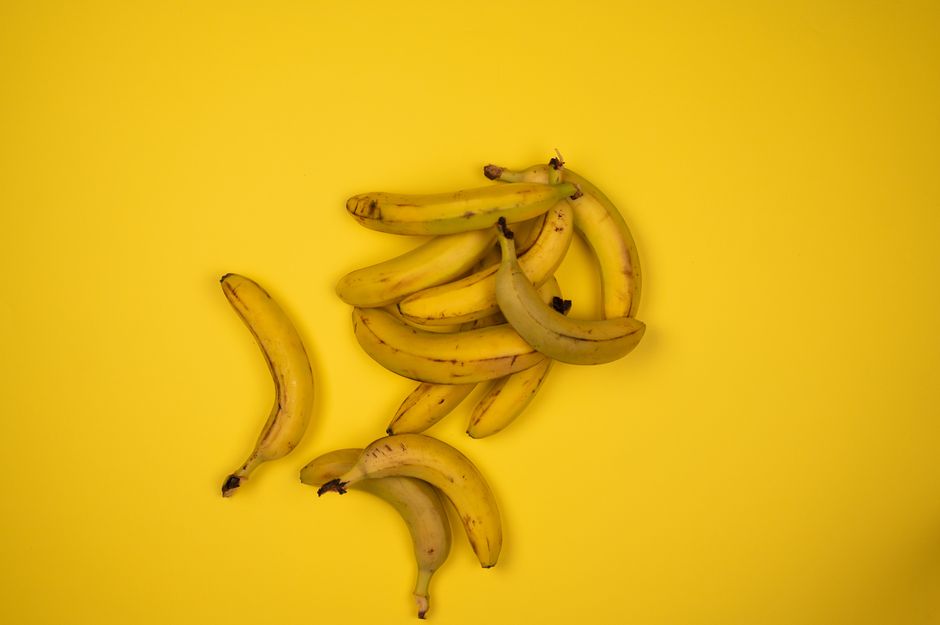
A medium banana has about 27 grams of total carbohydrates. That includes roughly 14 grams of natural sugar and 3 grams of fiber. Because the exact amount depends on size and ripeness, the number can range from about 20 grams in a small banana to over 30 grams in a large one.
How Many Carbs Does A Banana Have Compared to Other Fruit?
Bananas sit on the higher end of the carbohydrate scale among common fruits. A medium apple has about 25 grams of carbs. A cup of strawberries has roughly 12 grams. A cup of blueberries has about 21 grams.
What makes bananas different is their starch content. Most fruits store their carbs mostly as sugar. Bananas store a significant portion as starch, especially when they are not fully ripe. That starch converts to sugar as the banana ripens, which is why a spotty banana tastes much sweeter than a green one.
For people counting carbs for diabetes management or low-carb diets, portion size matters more with bananas than with most other fruit. A small banana is a reasonable single serving. A large banana is closer to two servings of carbohydrate.
Does Ripeness Change the Carb Content?
Ripeness changes the type of carbs in a banana, not the total amount. A green banana and a ripe banana have roughly the same total carbohydrate count. What changes is the balance between starch and sugar.
A green banana contains mostly resistant starch. Resistant starch is a type of carbohydrate that your body does not fully digest. It passes through the small intestine and feeds gut bacteria in the colon. This means a green banana contributes fewer digestible carbs than its total carb count suggests.
As the banana ripens, enzymes convert that starch into simple sugars — mainly glucose, fructose, and sucrose. A fully ripe banana with brown spots contains very little starch and much more sugar. The total carb number stays about the same, but the effect on blood sugar is different.
Some research suggests that resistant starch in green bananas may blunt the blood sugar response compared to ripe bananas. The evidence is not strong enough to make a firm clinical recommendation. But the mechanism is well understood: less digestible starch means fewer carbs reach the bloodstream quickly.
How Many Net Carbs Are in a Banana?
Net carbs are calculated by subtracting fiber from total carbs. The idea is that fiber is not digested and does not raise blood sugar the way other carbs do.
For a medium banana, that calculation looks like this: 27 grams total carbs minus 3 grams of fiber equals about 24 grams of net carbs.
This number matters for people following ketogenic or very low-carb diets. Many of these diets set a daily carb limit between 20 and 50 grams. A single medium banana would use up most or all of that allowance. Even a small banana with roughly 20 total grams and 2 grams of fiber would leave only about 18 net carbs.
For people with diabetes, the American Diabetes Association does not ban bananas. The guidance focuses on portion control and pairing. A half banana with peanut butter or yogurt is a common strategy to keep the carb load moderate while still getting the nutritional benefits.
What Nutrients Come With the Carbs?
Bananas are not just carbohydrate delivery. They provide several nutrients that matter for daily health.
A medium banana contains about 422 milligrams of potassium. Potassium supports normal blood pressure regulation and muscle function. The daily recommended intake for adults is 2,600 to 3,400 milligrams depending on age and sex, so one banana covers roughly 12 to 16 percent of that need.
Bananas also provide vitamin B6. A medium banana supplies about 0.4 milligrams, which is roughly a quarter of the daily recommended intake for adults. Vitamin B6 is involved in amino acid metabolism and red blood cell production.
Magnesium is present at about 32 milligrams per medium banana. That is about 8 to 10 percent of the daily recommendation. Magnesium plays a role in muscle and nerve function, blood sugar control, and bone health.
Bananas contain no fat, no cholesterol, and very little protein — about 1 gram per medium fruit. They are almost entirely carbohydrate and water.
How Does the Glycemic Index of a Banana Compare?
The glycemic index (GI) measures how quickly a food raises blood sugar compared to pure glucose. Bananas score in the low-to-medium range depending on ripeness.
Less ripe bananas tend to score lower on the glycemic index. Fully ripe bananas score higher. The range typically falls between about 40 and 60, which places bananas in the low to medium GI category. For reference, pure glucose is 100 and white bread is around 75.
The glycemic load is a more practical measure because it accounts for portion size. Glycemic load multiplies the GI by the grams of carbohydrate in a serving and divides by 100. A medium banana has a glycemic load of roughly 10 to 13, which is considered low to moderate.
Individual blood sugar responses vary. One person’s response to a banana can differ from another’s based on metabolism, body composition, and what else was eaten at the same meal. Pairing a banana with protein or fat — like nuts, yogurt, or cheese — slows digestion and reduces the blood sugar spike.
Are Bananas Good or Bad for Weight Loss?
Bananas are not inherently fattening. Weight gain happens when total calorie intake exceeds total calorie expenditure. A medium banana has about 105 calories.
Some popular diet advice warns against bananas because of their sugar content. The evidence does not support treating bananas as harmful for weight management. Observational research consistently links higher fruit intake — including bananas — with lower body weight and better metabolic health. This does not prove causation, but it contradicts the idea that bananas cause weight gain.
The practical issue is portion control. Bananas are easy to overeat because they are portable, sweet, and satisfying. Two large bananas provide over 240 calories and roughly 60 grams of carbs. For someone actively restricting calories, that is a meaningful amount.
For most people, a banana is a reasonable snack. It provides fiber, potassium, and quick energy. The fiber content — about 3 grams per medium banana — supports satiety and digestive regularity.
Can People with Diabetes Eat Bananas?
Yes, people with diabetes can eat bananas. The key is portion size and context.
A small banana contains about 20 grams of carbs. That fits within a standard carbohydrate budget for a snack, which is typically 15 to 30 grams. A half of a large banana is also a reasonable portion.
What matters more than the banana itself is the overall meal pattern. Eating a banana alone will raise blood sugar faster than eating a banana with protein or fat. The fiber in the banana helps, but not enough to eliminate the glycemic effect.
Blood sugar monitoring after eating can help individuals learn their personal response. Some people with diabetes find that bananas spike their glucose more than other fruits of similar carb content. Others tolerate them fine. The only way to know is to test.
How Many Carbs in Different Banana Sizes?
Banana sizes vary widely, and carb content tracks with size. The USDA provides standard reference values for common sizes.
| Banana Size | Total Carbs | Sugar | Fiber | Calories |
|---|---|---|---|---|
| Extra small (under 6 inches) | About 18 g | About 10 g | About 2 g | About 72 |
| Small (6–7 inches) | About 23 g | About 12 g | About 2.5 g | About 90 |
| Medium (7–8 inches) | About 27 g | About 14 g | About 3 g | About 105 |
| Large (8–9 inches) | About 31 g | About 17 g | About 3.5 g | About 121 |
| Extra large (over 9 inches) | About 35 g | About 19 g | About 4 g | About 135 |
These are reference values. Actual bananas vary. Weighing a banana without the peel is the most accurate way to determine its true carb content. A peeled banana weighing 100 grams contains about 23 grams of carbs regardless of what the store labeled it.
Frequently Asked Questions
Are bananas high in carbs?
Yes, compared to most other fruits, bananas are relatively high in carbs. A medium banana has about 27 grams of total carbohydrates.
How many net carbs are in a banana?
A medium banana has about 24 grams of net carbs after subtracting its 3 grams of fiber. A small banana has roughly 18 net carbs.
Is a banana too much sugar for a diabetic?
Not necessarily, but portion control matters. A small banana contains about 12 grams of sugar, which fits within a standard snack-sized carbohydrate budget when paired with protein or fat.
Do green bananas have fewer carbs than ripe bananas?
Green and ripe bananas have about the same total carbs. Green bananas contain more resistant starch, which is digested more slowly, while ripe bananas contain more simple sugar.
