
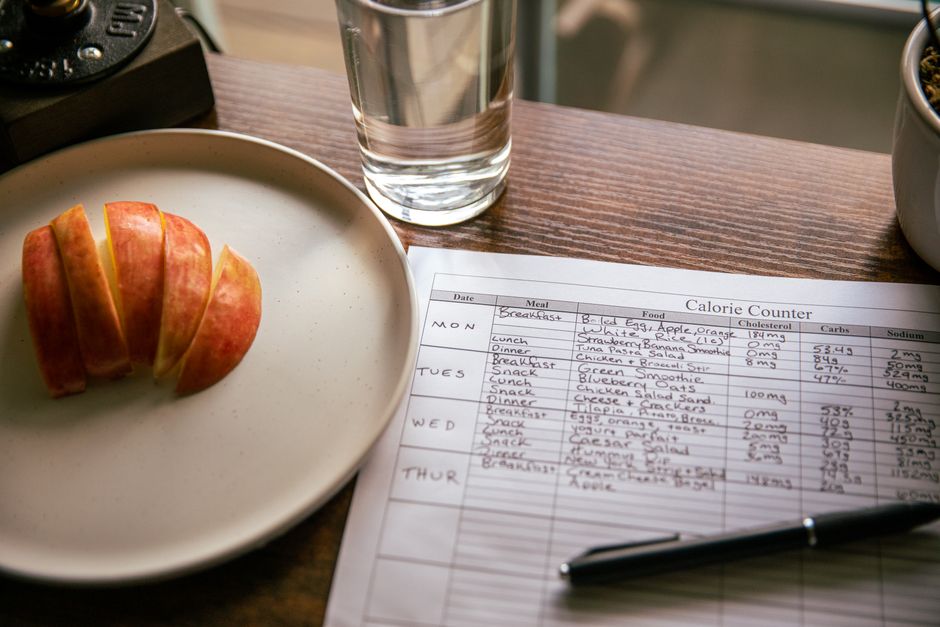
Your daily calorie needs are not a single number. They depend on your age, sex, height, weight, and activity level. For most adult women, daily needs fall between 1,600 and 2,400 calories. For most adult men, the range is 2,200 to 3,000 calories. These figures come from the Dietary Guidelines for Americans, which are based on established nutritional science.
This range is broad because it must cover many different bodies and lifestyles. A 5-foot-2 woman who works at a desk and rarely exercises needs fewer calories than a 6-foot-2 man who lifts weights five days a week. The number that matters for you specifically depends on your personal body composition and how much energy you burn each day.
What Determines Your Daily Calorie Needs?
Your body burns calories just to stay alive. This baseline energy use is called your basal metabolic rate, or BMR. It covers the energy needed for your heart to beat, your lungs to breathe, and your cells to repair themselves. BMR accounts for roughly 60 to 75 percent of the calories you burn each day.
Several factors influence your BMR. Muscle tissue burns more calories at rest than fat tissue does. This is why two people of the same weight can have very different calorie needs. The person with more muscle will burn more calories doing nothing at all.
Age also matters. Muscle mass naturally declines as we get older, which lowers BMR. This is why calorie needs typically decrease with each decade after age 30. A 60-year-old man generally needs fewer calories than a 30-year-old man of the same weight and activity level.
Sex is another major factor. Men typically have more muscle mass and larger bodies than women, so their BMR tends to be higher. Hormonal differences also play a role, though muscle mass is the primary driver.
How to Calculate Your Personal Calorie Target
You can estimate your daily calorie needs using a formula called the Mifflin-St Jeor equation. This is a well-validated method used by clinicians and dietitians. It calculates BMR first, then adjusts for activity level.
For men, the equation is: 10 × weight in kilograms + 6.25 × height in centimeters − 5 × age in years + 5.
For women, the equation is: 10 × weight in kilograms + 6.25 × height in centimeters − 5 × age in years − 161.
To convert pounds to kilograms, divide your weight in pounds by 2.2. To convert inches to centimeters, multiply your height in inches by 2.54.
Once you have your BMR, multiply it by an activity factor. If you are sedentary, multiply by 1.2. If you do light exercise one to three days per week, multiply by 1.375. Moderate exercise three to five days per week means multiplying by 1.55. Active people exercising six to seven days per week multiply by 1.725. Very active people with physically demanding jobs or twice-daily training multiply by 1.9.
The result is your estimated total daily energy expenditure, or TDEE. This is the number of calories you need to maintain your current weight.
How Many Calories Must I Eat A Day to Lose Weight?
Weight loss requires a calorie deficit. You must consume fewer calories than your body burns. A common clinical guideline is to reduce daily intake by 500 calories below your maintenance level. This typically produces a weight loss of about one pound per week.
A larger deficit of 1,000 calories per day can lead to about two pounds of weight loss per week. Many clinicians consider this the upper safe limit for sustainable weight loss. Faster rates of loss often involve muscle loss and can be difficult to maintain.
One pound of body fat contains roughly 3,500 calories. This is an established conversion used in clinical settings. However, weight loss is not perfectly linear. Your body adapts to lower calorie intake over time, which can slow your rate of loss even when you stick to your plan.
Extremely low-calorie diets, typically under 1,200 calories per day for women and 1,500 for men, should only be followed under medical supervision. These diets risk nutrient deficiencies, gallstones, and loss of lean muscle mass. They are not appropriate for unsupervised self-treatment.





What Happens When You Eat Too Few Calories?
Your body treats severe calorie restriction as a threat. Metabolism slows down as your body tries to conserve energy. This is a well-documented physiological response, not a myth.
Hormones shift as well. Levels of leptin, a hormone that signals fullness, drop. Levels of ghrelin, a hormone that signals hunger, rise. This combination makes you feel hungrier even as your body burns fewer calories.
Chronic under-eating can also affect thyroid function. The thyroid gland produces hormones that regulate metabolism. Very low calorie intake can reduce thyroid hormone output, further lowering your metabolic rate. Some research suggests this effect can persist even after normal eating resumes.
Muscle loss is another concern. When calorie intake is too low, your body breaks down muscle tissue for energy. This is counterproductive for weight loss because losing muscle lowers your BMR, making it harder to maintain weight loss long term.
Calorie Needs by Age and Sex
The Dietary Guidelines for Americans provide reference ranges based on age and sex. These are useful starting points, though individual needs vary.
Women in their 30s generally need 1,800 to 2,400 calories per day depending on activity level. Women in their 40s and 50s typically need 1,600 to 2,200 calories. After age 60, the range drops to 1,600 to 2,000 calories.
Men in their 30s typically need 2,400 to 3,000 calories daily. Men in their 40s and 50s usually need 2,200 to 2,800 calories. After age 60, the range falls to 2,000 to 2,600 calories.
These ranges assume generally healthy adults with no chronic conditions. Pregnancy, breastfeeding, certain medications, and medical conditions can all change calorie needs significantly. If any of these apply to you, consult a healthcare provider for personalized guidance.
Why Calorie Quality Matters as Much as Quantity
All calories are not equal in how they affect your body. A 200-calorie serving of chicken breast and a 200-calorie serving of soda affect your metabolism differently. This is not about magic properties of certain foods. It is about how your body processes different macronutrients.
Protein requires more energy to digest than carbohydrates or fat. This is called the thermic effect of food. Protein also promotes satiety, helping you feel full longer. Diets higher in protein are consistently associated with better appetite control and preservation of muscle mass during weight loss.
Fiber plays a similar role. High-fiber foods like vegetables, fruits, and whole grains slow digestion and increase fullness. They also provide volume without many calories, which helps you feel satisfied on a lower calorie intake.
Ultra-processed foods tend to be calorie-dense and low in satiety. They are easy to overeat because they do not trigger the same fullness signals as whole foods. This is one reason why calorie counting alone often fails if food quality is ignored.
How to Track Calories Accurately
Most people underestimate how much they eat. Studies consistently show that people report eating fewer calories than they actually consume. This is not deliberate deception. It is a natural tendency to underestimate portion sizes and forget snacks and drinks.
Using a food scale is the most accurate way to measure portions. Measuring cups and spoons are less precise, especially for foods like rice, pasta, and nut butters. A food scale removes guesswork and gives you reliable data.
Calorie tracking apps can help, but they are only as accurate as the information you enter. Weigh your food and enter it honestly. Log everything, including cooking oils, sauces, and beverages. These small additions can add up to hundreds of calories per day.
Do not track every day forever. Many people find that tracking for two to four weeks teaches them accurate portion sizes. After that, they can estimate well enough without logging. The goal is to learn sustainable habits, not to depend on an app indefinitely.
When to See a Professional
A registered dietitian can calculate your precise calorie needs and help you build a sustainable eating plan. This is especially valuable if you have diabetes, kidney disease, heart disease, or other conditions where diet plays a major role in management.
You should also seek professional guidance if you have a history of disordered eating. Rigid calorie counting can trigger unhealthy behaviors in some people. If tracking calories causes anxiety, guilt, or obsessive thoughts about food, stop and talk to a healthcare provider instead.
Rapid weight loss without trying, unexplained weight gain, or difficulty gaining weight despite high calorie intake all warrant medical evaluation. These can be signs of underlying health conditions that need attention beyond simple calorie math.
Frequently Asked Questions
How many calories should I eat to maintain my weight?
Multiply your weight in kilograms by 10, add 6.25 times your height in centimeters, subtract 5 times your age, then adjust for sex and activity level using the Mifflin-St Jeor equation. This gives you your estimated maintenance calories.
Is 1,200 calories a day safe for weight loss?
For most people, 1,200 calories per day is too low and risks muscle loss and nutrient deficiencies. Very low-calorie diets should only be followed under medical supervision.
Do calories from different foods affect weight differently?
Weight change ultimately depends on total calorie balance, but protein and fiber increase fullness and require more energy to digest. This makes higher-protein, higher-fiber diets easier to stick to for most people.
How do I know if I am eating the right number of calories?
Track your food accurately for two weeks and monitor your weight. If your weight is stable, you are at maintenance. If it is changing faster or slower than you want, adjust your intake by 100 to 200 calories per day.
