
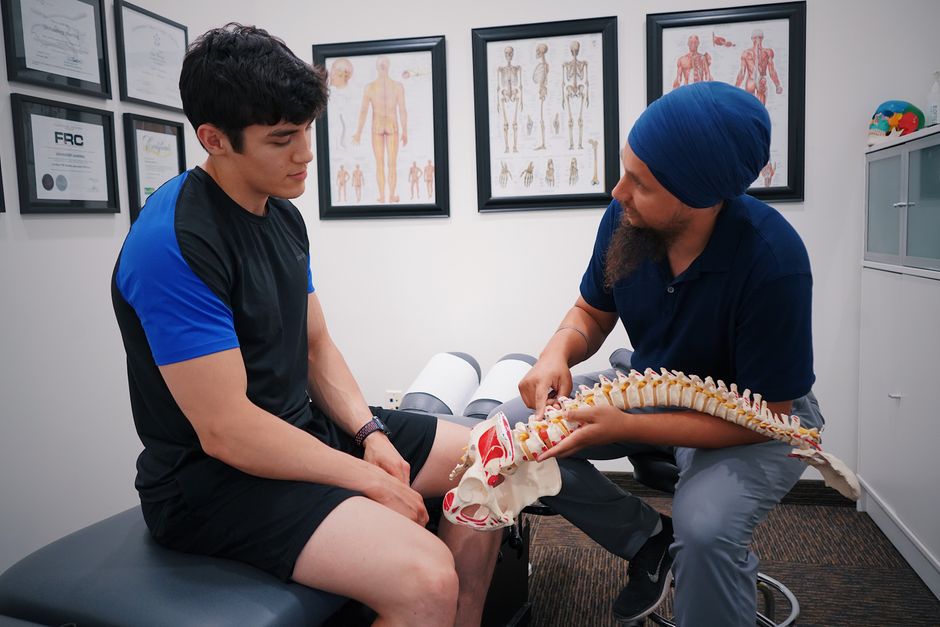
An adult human body has 206 bones. That number is a standard count found in anatomy textbooks and medical references. Babies are born with far more separate bone pieces — roughly 270 to 300 — and many of them fuse together as a child grows, which is why the adult total is lower.
The count itself is simple. What is less simple is why the number changes, how bones are built and rebuilt, and what actually keeps them strong across a lifetime. This guide covers all of it, including the parts that are well established and the parts where the evidence is thinner than most people assume.
How Many Bones In Your Body Do We Have and Why the Number Changes
A newborn has around 270 separate bones, and an adult has 206. The difference is not lost bone. It is fusion.
Many infant bones begin as separate pieces of cartilage that slowly turn into bone — a process called ossification. As a child grows, some of these pieces fuse into single bones. The bones of the skull are a good example. A baby’s skull has distinct plates with soft gaps between them, which allow the head to pass through the birth canal and let the brain grow rapidly in the first years. Over time those plates fuse into the solid structure of an adult skull.
The same thing happens in the spine and the pelvis. Sections that start as separate parts become unified bones. By the late teens or early twenties, the count settles at 206.
Are the Numbers of Bones the Same in Every Person?
No. The 206 figure is a standard reference, not a universal rule.
Some people have extra bones. A common example is an extra rib, which occurs in a small share of people and is usually harmless but occasionally causes symptoms. Some people have fewer. Certain small bones in the foot or the sesamoid bones near the big toe vary from person to person.
Anatomy textbooks also differ slightly in how they count. Some count certain small bones as one structure; others count them individually. That means even the “official” total can shift by a few depending on the source.
So when you read that an adult has 206 bones, understand it as a reliable average for a normal skeleton — not a guarantee for every individual.
What Are the Five Main Types of Bones?
Bones are classified by shape, and shape reflects function. There are five main categories.
- Long bones — found in the arms and legs. They are longer than they are wide and act as levers for movement. The femur in the thigh is the longest and strongest bone in the body.
- Short bones — roughly cube-shaped, like the small bones of the wrist and ankle. They provide stability with limited movement.
- Flat bones — such as the ribs, sternum, and skull bones. They protect organs and give muscles a broad surface to attach to.
- Irregular bones — bones with complex shapes that do not fit the other categories, like the vertebrae of the spine.
- Sesamoid bones — small bones embedded in tendons. The patella (kneecap) is the largest example.
This classification is well established and appears consistently across anatomy references.
What Do Bones Actually Do Besides Hold You Up?
Bones are structural, but that is only part of the job. They are living tissue with several functions.
Protection. The skull protects the brain. The rib cage protects the heart and lungs. The spine protects the spinal cord.
Movement. Muscles attach to bones through tendons. When muscles contract, they pull on bones to create movement at joints.
Blood cell production. The soft tissue inside many bones, called bone marrow, is where the body makes most of its blood cells. This is one of the more underappreciated roles of the skeleton — it is a blood factory as much as a frame.
Mineral storage. Bones store calcium and phosphorus. When the body needs calcium for other functions, such as nerve signaling or muscle contraction, it can draw on the reserve in bone. This is tightly regulated by hormones, including parathyroid hormone and vitamin D.
How Do Bones Grow and Rebuild Themselves?
Bone is not static. It is constantly being broken down and rebuilt in a process called remodeling.
Two main cell types drive this. Osteoclasts break down old bone. Osteoblasts build new bone. In a healthy adult, the two stay roughly balanced, so bone mass holds steady.
This balance shifts with age. After roughly age 30, bone breakdown tends to slowly outpace bone building in most people. That is a normal part of aging, but the rate varies widely depending on genetics, nutrition, physical activity, and hormones.
Two nutrients get most of the attention for bone health: calcium and vitamin D. Calcium is the main mineral in bone. Vitamin D helps the body absorb calcium from the diet. Established guidance from public health bodies recommends adequate intake of both, and vitamin D is also made in the skin when exposed to sunlight.
Weight-bearing exercise — walking, lifting, and activities that load the skeleton — is well established as a way to support bone density. The evidence here is consistent across many studies.
What Happens to Bones as You Age?
Bone mass peaks in early adulthood and then gradually declines. In some people, the decline becomes significant enough to raise fracture risk.
Osteoporosis is the condition where bone becomes thin and weak enough that a minor fall can cause a break. It is far more common in women after menopause, because estrogen plays a role in protecting bone. But men develop it too, and the risk rises for both sexes with age.
Osteoporosis often has no symptoms until a fracture happens. That is why clinicians sometimes recommend bone density testing for people at higher risk. The exact age and interval for screening vary by guideline and by individual risk, so it is a conversation to have with a clinician rather than a fixed rule.
What is well established: adequate calcium and vitamin D intake, regular weight-bearing activity, not smoking, and limiting alcohol are all associated with better bone health. What is less certain is how much any single lifestyle change moves the needle for a given person. Biology is not the same as guaranteed outcome.
Which Bones Are the Smallest and Largest?
The smallest bone is the stapes, located deep in the middle ear. It is roughly the size of a grain of rice and helps transmit sound vibrations to the inner ear.
The largest is the femur, the thigh bone. It is also the strongest bone in the body, built to carry the load of walking, running, and jumping.
These facts are consistent across anatomy references and are not in dispute.
Do Men and Women Have Different Bone Counts?
No. Men and women have the same standard count of 206 bones.
What differs is bone size and density, not number. On average, men have larger and denser bones than women, which is one reason women face a higher risk of osteoporosis. But the count itself does not change by sex.
Frequently Asked Questions
How many bones does an adult human have?
An adult human has 206 bones. This is a standard reference count, though a small number of people have extra or fewer bones due to normal variation.
Why do babies have more bones than adults?
Babies start with around 270 separate bone pieces, many of which fuse together as the child grows. The adult count of 206 reflects those fused structures.
What is the smallest bone in the human body?
The stapes, a tiny bone in the middle ear, is the smallest. It is about the size of a grain of rice and helps transmit sound.
Can the number of bones change over a lifetime?
Yes, in the sense that infant bones fuse into adult bones during growth. In adults, the count stays stable, though individual variation exists from birth.
