
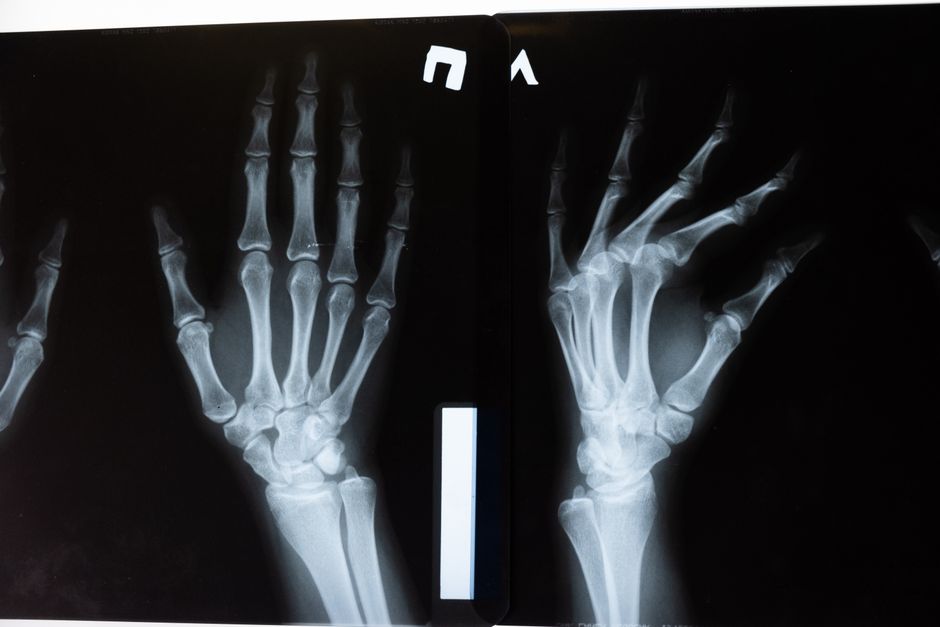
Your hand is one of the most complex parts of your body. It lets you grip, pinch, write, and feel the world around you. The exact number of bones in the hand is a common question with a precise answer. An adult human hand contains 27 bones. This count includes the wrist bones, the palm bones, and the finger bones. It does not include the bones of the forearm, which are the radius and ulna.
How Many Bones Are In The Hand Exactly?
The 27 bones in the hand are grouped into three distinct sections. Each section has a specific job that contributes to how the hand moves and functions. Understanding these groups helps clarify the anatomy.
The first group is the carpals, or wrist bones. There are 8 of these. They are arranged in two rows of four and form the base of the hand. The second group is the metacarpals, which make up the palm. There are 5 of these long bones. The third group is the phalanges, the bones of the fingers and thumb. There are 14 of these.
When you add 8 carpals, 5 metacarpals, and 14 phalanges, you get 27. This number is consistent across almost all adults. Variations are rare but can occur due to congenital conditions or injury.
What Are The 8 Carpal Bones In The Wrist?
The carpal bones are small and arranged in a compact way. They allow the wrist to bend and rotate. These bones are not named for their shape in everyday language, but their medical names are standard.
The proximal row sits closer to the forearm. It includes the scaphoid, lunate, triquetrum, and pisiform. The distal row sits closer to the palm. It includes the trapezium, trapezoid, capitate, and hamate.
The scaphoid is the most commonly fractured carpal bone. It is located near the base of the thumb. A scaphoid fracture can be slow to heal because the blood supply to the bone is limited. If you fall on an outstretched hand and have wrist pain near the thumb, it is important to get it checked.
What Are The 5 Metacarpal Bones?
The metacarpals are the long bones in the middle of your hand. They connect the wrist bones to the finger bones. You can feel them on the back of your hand when you make a fist.
Each metacarpal corresponds to a finger. The first metacarpal supports the thumb. The second supports the index finger, the third the middle finger, the fourth the ring finger, and the fifth the little finger.
These bones are vulnerable to injury. A common injury is a “boxer’s fracture,” which affects the fifth metacarpal near the knuckle. This usually happens when someone punches a hard object. The bone can break and the knuckle may appear sunken. Treatment depends on the severity of the break.





What Are The 14 Phalanges In The Fingers?
The phalanges are the bones in your fingers and thumb. They are the smallest bones in the hand. The term “phalanx” refers to a single bone, while “phalanges” is the plural form.
Each finger has three phalanges. These are the proximal phalanx (closest to the palm), the middle phalanx, and the distal phalanx (the tip of the finger). The thumb is different. It only has two phalanges: a proximal and a distal. This is why the total count is 14. If every digit had three bones, the count would be 15. The missing middle phalanx in the thumb accounts for the difference.
The distal phalanges support the fingertips. They are involved in fine touch and pressure sensation. The tips of these bones are where your fingernails grow from.
How Do The Bones In The Hand Work Together?
The bones do not move alone. They work with joints, ligaments, tendons, and muscles. The interaction between these parts creates the hand’s wide range of motion.
The wrist joint is formed where the radius meets the carpal bones. This joint allows flexion, extension, and side-to-side movement. The joints between the metacarpals and phalanges are the knuckles. These allow you to bend and straighten your fingers.
Ligaments hold the bones together. They provide stability and prevent dislocation. Tendons connect muscles to bones. The muscles in the forearm control most finger movements. The small muscles in the hand itself control fine movements like pinching and spreading the fingers.
The thumb is unique because it has a saddle joint at its base. This joint allows opposition, which means the thumb can touch the tips of the other fingers. This movement is central to grasping objects and using tools.
Do Children Have The Same Number Of Bones In Their Hands?
Children are born with more bones than adults. This is because some bones fuse together as a person grows. The hand is a clear example of this process.
A newborn’s hand contains the same 27 bones as an adult hand in terms of the major groups. However, the carpals in a young child are not fully developed. They start as cartilage and gradually turn to bone over several years. The process is called ossification.
The carpal bones appear on X-rays at different ages. For example, the capitate and hamate are usually visible within the first year of life. The pisiform is often the last to appear, typically around age 9 to 12. This timeline is used by doctors to estimate bone age in children.
The phalanges and metacarpals are also not fully formed at birth. The ends of these bones, called growth plates, remain open during childhood. These plates allow the bones to lengthen. They close during adolescence, ending bone growth.
What Conditions Affect The Bones In The Hand?
Several conditions can affect hand bones. Some are related to aging, while others are caused by injury or disease.
Osteoarthritis is common in the hand. It occurs when the cartilage that cushions the joints wears down. This can cause pain, stiffness, and swelling. The joints at the ends of the fingers and the base of the thumb are often affected. There is no cure, but treatment focuses on managing pain and maintaining function.
Rheumatoid arthritis is an autoimmune disease. It causes inflammation in the joints, which can damage the bones over time. It often affects the same joints on both hands. Early treatment is important to prevent joint destruction.
Fractures are a common injury. The scaphoid, the distal radius, and the metacarpals are frequent fracture sites. Some fractures heal with a splint or cast. Others require surgery to align the bone and hold it in place with pins or plates.
Ganglion cysts are non-cancerous lumps that can form near the joints or tendons of the hand. They are filled with fluid. Many are painless and do not require treatment. If a cyst presses on a nerve, it can cause discomfort or weakness.
How Can You Keep Your Hand Bones Healthy?
Bone health depends on several factors. Nutrition, physical activity, and injury prevention all play a role.
Calcium and vitamin D are essential for bone strength. Dairy products, leafy green vegetables, and fortified foods are good sources of calcium. Vitamin D helps the body absorb calcium. Sunlight and certain foods provide vitamin D. Some people may need supplements, but it is best to discuss this with a doctor.
Weight-bearing exercise helps maintain bone density. This includes activities like walking, jogging, and lifting weights. For the hands specifically, grip-strengthening exercises can help maintain muscle and bone strength. Simple actions like squeezing a stress ball can be beneficial.
Preventing falls is one of the most effective ways to protect hand bones. Falls are a leading cause of wrist and hand fractures, especially in older adults. Keeping floors clear of clutter, using handrails on stairs, and wearing supportive shoes can reduce fall risk.
If you experience persistent hand pain, swelling, or difficulty moving your fingers, seek medical evaluation. Early diagnosis of conditions like arthritis or a hidden fracture can prevent long-term complications.
Frequently Asked Questions
How many bones are in one hand?
There are 27 bones in one adult hand. This includes 8 wrist bones, 5 palm bones, and 14 finger bones.
Does the thumb have two or three bones?
The thumb has two bones, called the proximal and distal phalanges. The other four fingers each have three bones.
What is the most commonly broken bone in the hand?
The scaphoid bone in the wrist is the most commonly fractured carpal bone. Metacarpal fractures, especially of the fifth metacarpal, are also very common.
Are there the same number of bones in a child’s hand as an adult’s?
A child is born with the same number of hand bones as an adult. However, the wrist bones are not fully hardened and appear gradually on X-rays during childhood.
