

Your two feet together hold 52 of the 206 bones in your body. Each human foot has 26 bones, and that number is one of the most reliable facts in anatomy. It holds true across nearly every healthy adult, regardless of height, sex, or shoe size.
The foot is built like a bridge. Bones form the rigid supports, while muscles, tendons, and ligaments act as the cables that hold the arch and absorb load with every step. That 26-bone count splits into three regions: 7 tarsal bones, 5 metatarsals, and 14 phalanges. Understanding what each group does helps explain why the foot is so strong and so prone to specific injuries.
How Many Bones Are in the Human Foot and Where Are They?
All 26 bones sit in one of three zones, and each zone handles a different job. The tarsal bones form the back half of the foot. The metatarsals form the middle. The phalanges make up the toes.
- Tarsals (7): The calcaneus (heel bone), talus, navicular, cuboid, and three cuneiform bones. The talus meets the tibia and fibula to form the ankle joint.
- Metatarsals (5): Long bones that connect the tarsals to the toes and form the arch of the foot.
- Phalanges (14): Three bones in each of the four smaller toes, and two in the big toe.
The big toe has two phalanges because it needs stiffness, not flexibility. That stiffer structure helps you push off with each step. The other toes have three each, which lets them flex and help with balance.
One detail people often miss: the calcaneus is the largest bone in the foot, and it takes the impact of roughly your body weight with every stride. During running, the force passing through the foot can be several times body weight, according to widely cited biomechanics research. The heel bone and the fat pad beneath it are built to handle that load.
Why Do Some Sources Say 26 and Others Say 28?
The count of 26 is the standard adult number. The discrepancy comes from two small bones that do not always fuse or appear the same way in every person.
The first is the sesamoid bones. Two small oval bones sit under the head of the first metatarsal, near the base of the big toe. They are embedded in a tendon and help it glide smoothly. Some anatomy texts count them as part of the 26, and others list them separately, which can push the total to 28.
The second is an accessory bone. Some people are born with an extra small bone in the foot, most often the accessory navicular near the arch. These are normal variants, not defects, and many people who have them never know.
So the honest answer is that 26 is the number you should remember. Counts of 28 or higher usually reflect how a particular source groups the sesamoids or includes an accessory bone.
How Many Bones Are in a Baby’s Foot?
A newborn’s foot contains many more separate bone pieces than an adult’s, though the exact number varies by source and by how you count. At birth, most of the foot is cartilage, not hard bone. The bones gradually turn from cartilage into bone through a process called ossification.
The tarsal bones are the slowest to finish. The calcaneus, for example, does not fully ossify until roughly the late teens. That is why a child’s foot is softer and more flexible than an adult’s, and why the shape of the arch can change as a child grows.
This slow ossification matters for parents. Because the bones are still forming, young children’s feet are more adaptable, and footwear that restricts movement is generally not recommended during early walking years. The structural changes of growth happen on their own timeline.




How Do 26 Bones Support Your Whole Body Weight?
The foot works as a weight-bearing arch, and the bones are arranged to spread load rather than absorb it all in one spot. When you stand or walk, force travels from the ankle through the talus, then divides across the tarsals and metatarsals.
The arch itself is not a single bone. It is a shape created by the way the bones fit together, held in place by ligaments and supported by muscles and tendons, including the plantar fascia — a thick band of tissue along the sole. The arch flattens slightly under load and springs back, which is part of how the foot absorbs shock.
This design has a tradeoff. The same structure that makes the foot strong also makes it vulnerable. The plantar fascia can become irritated with repeated strain, a common cause of heel pain. The metatarsals can develop stress fractures from repetitive impact. The bones are doing a lot of work under a lot of force.
What Happens to Foot Bones as You Age?
Bone mass in the foot, like the rest of the skeleton, changes across a lifetime. Bone density tends to peak in early adulthood and then gradually decline. In women, the drop often accelerates after menopause because of changes in estrogen, which plays a role in bone maintenance.
Lower bone density raises the risk of fracture from falls, and the foot is not exempt. Some research suggests foot fractures become more common with age, though the pattern varies by population and by which bone is involved.
Age also brings changes to the soft tissues around the bones. The fat pad on the heel can thin, and ligaments can lose some elasticity. These changes can affect how the foot absorbs force, even when the bones themselves are intact.
Can You Strengthen the Bones in Your Feet?
Bone responds to load. Weight-bearing activity — walking, standing, and other activities that put force through the feet — is generally associated with maintaining bone strength. This is well established for bone health broadly, though research specifically isolating foot bone density is more limited.
What is clearer is that the muscles and connective tissues around the foot benefit from use. Regular movement and appropriate footwear support the structures that hold the 26 bones together. Prolonged inactivity tends to weaken those supporting tissues.
No exercise or supplement has been shown to add bones to the foot. The count stays at 26. What you can influence is how well the surrounding system supports them over time.
Do Foot Bone Numbers Differ Between People?
For most people, the count is 26. Variations exist, but they are the exception. Extra bones, fused bones, and missing bones all occur, usually as congenital variations rather than problems.
A common example is a fused or partially fused joint between two tarsal bones. Some people are born with bones that join together, and many never experience symptoms. Others may develop discomfort that leads to a diagnosis.
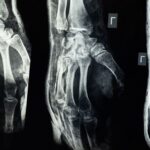
This is why a doctor reading an X-ray looks at structure, not just count. The number 26 is the norm, but individual anatomy can differ, and that difference is usually normal.
Why Does the Foot Have So Many Small Bones?
Many small bones allow the foot to do something a single large bone could not: change shape. The foot needs to be rigid when you push off and flexible when you land. A collection of smaller bones joined by joints and ligaments can shift between those states.
This is the same principle seen in the hand and wrist, which also contain many small bones. The tradeoff is that more joints mean more places for wear, injury, or inflammation. The foot’s design is a balance between strength and adaptability, and the 26-bone count reflects that balance.
Frequently Asked Questions
How many bones are in the human foot?
Each human foot has 26 bones. Together, both feet contain 52 bones, which is about a quarter of the 206 bones in the adult body.
Why do some sources say the foot has 28 bones?
Some counts include the two sesamoid bones near the big toe as separate from the 26, or include an accessory bone some people are born with. The standard adult count is 26.
Are foot bones fully formed at birth?
No. A newborn’s foot is mostly cartilage, and the bones gradually harden through ossification. The heel bone does not fully ossify until roughly the late teens.
Can you have extra bones in your foot?
Yes, some people are born with an accessory bone, most often near the arch. These are normal variants and often cause no symptoms.
