
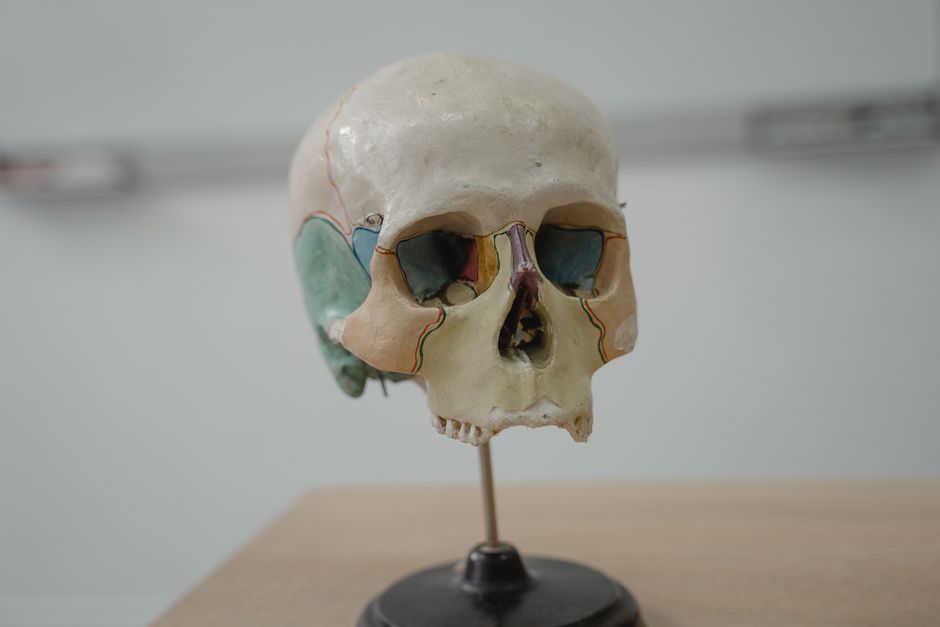
The human skull is a complex structure, and the answer to how many bones are in the cranium depends on how you define the word. In adults, the cranium—the part of the skull that holds and protects the brain—is made of 8 bones. However, the entire skull, which includes the facial bones, contains 22 bones in total. The number also changes throughout life, as babies are born with more separate bone plates that fuse together as they grow.
What Exactly Counts as the Cranium?
The cranium is the bony shell that surrounds your brain. It is also called the neurocranium. The facial skeleton, or viscerocranium, is a separate set of bones. When people ask about the cranium, they usually mean the 8 bones that form the protective vault around the brain.
These 8 bones fit together along fixed joints called sutures. In adults, these joints are firmly fused, so the bones do not move. The cranium provides a rigid, protective case for the brain, and it also shapes the upper part of your face and head.
The 8 Bones of the Adult Cranium
There are exactly 8 bones in the adult cranium. They are divided into two groups: the cranial vault bones and the cranial base bones.
- Frontal bone — forms the forehead and the upper part of the eye sockets.
- Parietal bones (2) — form the top and sides of the skull.
- Temporal bones (2) — form the sides and base of the skull, and house the structures of the inner ear.
- Occipital bone — forms the back and base of the skull, and has a large opening called the foramen magnum where the spinal cord connects to the brain.
- Sphenoid bone — sits at the base of the skull, behind the eyes. It spans the width of the skull and helps form the floor of the cranium.
- Ethmoid bone — a small, delicate bone located between the eyes. It forms part of the nasal cavity and the eye sockets.
That gives you 1 frontal, 2 parietal, 2 temporal, 1 occipital, 1 sphenoid, and 1 ethmoid bone. The total is 8 bones.
Why Babies Have More Bones in Their Skull
A newborn baby does not have 8 separate cranium bones that are already fused. At birth, the bones of the cranium are not yet joined together. They are separated by soft areas called fontanelles, commonly known as soft spots. These gaps allow the baby’s head to compress slightly during birth and allow the brain to grow rapidly in the first years of life.
Over time, the bones grow toward each other and the sutures close. This process is called ossification. The frontal bone in a baby is actually two separate bones that fuse into one. The same is true for the occipital bone, which begins as several parts. By the time a child is around two years old, the fontanelles have closed, and the cranium becomes a single fused structure of 8 bones.




The Difference Between the Cranium and the Full Skull
If you count every bone in the head, the number is higher than 8. The full human skull has 22 bones when you include the facial skeleton. The facial bones include the mandible (jawbone), maxilla (upper jaw), cheekbones, nasal bones, and several others.
The mandible is the only bone in the skull that moves. All the other bones of the skull, including the 8 cranial bones, are held together by sutures and do not move in adults. This distinction matters because many people use the word “skull” and “cranium” interchangeably, but they are not the same thing anatomically.
Are There More Bones in the Cranium?
Some anatomy texts count additional small bones within the sutures. These are called sutural bones or Wormian bones. They are extra, irregularly shaped bones that can appear within the joints between the main cranial bones. They are not present in everyone, and their number varies widely from person to person.
Because these bones are not always present, the standard anatomical answer remains 8 bones for the adult cranium. The presence of sutural bones is a normal variation, not a standard part of the count. They are more common in certain populations and can be seen on skull X-rays or CT scans, but they do not change the basic structural answer.
What Does Each Cranial Bone Do?
The cranial bones do more than just protect the brain. They provide attachment points for muscles of the head and neck, and they form the structure of the face and upper respiratory tract.
The frontal bone is the only cranial bone that also contributes to the face. It forms the forehead, the brow ridge, and the roof of the nasal cavity. The sphenoid bone is sometimes called the keystone of the cranial floor because it connects with all the other cranial bones. It also forms part of the orbit, the bony socket that holds the eye.
The temporal bones contain the structures needed for hearing and balance. The inner ear sits inside the temporal bone, and the eardrum attaches to it. The occipital bone has a smooth, rounded surface that rests on the top bone of the spine, called the atlas. This joint allows you to nod and shake your head.
The ethmoid bone is small but important. It separates the nasal cavity from the brain and contains many small air spaces called sinuses. The parietal bones are the largest cranial bones and form most of the top and sides of the skull.
How the Cranial Bones Connect
The 8 cranial bones meet at immovable joints called sutures. The major sutures have specific names based on the bones they connect.
- The coronal suture runs across the top of the skull, connecting the frontal bone to the two parietal bones.
- The sagittal suture runs from front to back along the midline, connecting the two parietal bones.
- The lambdoid suture is at the back of the skull, connecting the parietal bones to the occipital bone.
- The squamous sutures are on each side, connecting the parietal bones to the temporal bones.
In an adult, these sutures are completely fused. The wavy, jagged lines of the sutures add strength to the skull, much like the seams on a baseball. This design helps distribute the force of impacts across the entire cranium rather than concentrating it in one spot.
Common Injuries and Conditions of the Cranium
Because the cranium protects the brain, injuries to it can be serious. A skull fracture is a break in one or more of the cranial bones. The most common type is a linear fracture, which looks like a thin line and often heals on its own. More serious types include depressed fractures, where a piece of bone is pushed inward toward the brain.
In infants, a condition called craniosynostosis can occur. This happens when one or more of the sutures close too early. The skull cannot grow normally in that area, which can lead to an abnormally shaped head and increased pressure on the brain. This condition usually requires surgical treatment in early childhood.
Another condition, called Paget’s disease of bone, can affect the cranium in older adults. It causes bones to grow larger and weaker than normal. When it affects the skull, it can cause headaches, hearing loss, and changes in head shape. Treatment focuses on managing symptoms and slowing bone changes.
Why the Number Matters in Medicine
Knowing the exact number of cranial bones is not just a trivia question. It matters for surgeons, radiologists, and emergency doctors. When a patient has head trauma, doctors need to know the normal anatomy to identify fractures or bleeding. When a neurosurgeon plans an operation, they must know exactly where each bone ends and the next one begins.
The number also matters for pediatricians. When a baby’s head is measured at checkups, the growth of the cranial bones is being tracked indirectly. The soft spots closing at the expected time is a sign of normal development. If the fontanelles close too early or stay open too long, it can signal a problem that needs investigation.
Frequently Asked Questions
How many bones are in the cranium of an adult?
An adult cranium has exactly 8 bones. These are the frontal, two parietal, two temporal, occipital, sphenoid, and ethmoid bones.
How many bones are in the human skull total?
The full human skull has 22 bones when you count the cranium and the facial skeleton. The mandible, or jawbone, is the only movable one.
Do babies have more bones in their skull than adults?
Yes. Newborns have separate bone plates that are not yet fused, and some bones that will later join into one start as multiple parts. The bones fuse together during the first years of life.
What are the soft spots on a baby’s head?
The soft spots are called fontanelles. They are gaps between the cranial bones that allow the head to pass through the birth canal and give the brain room to grow.
