
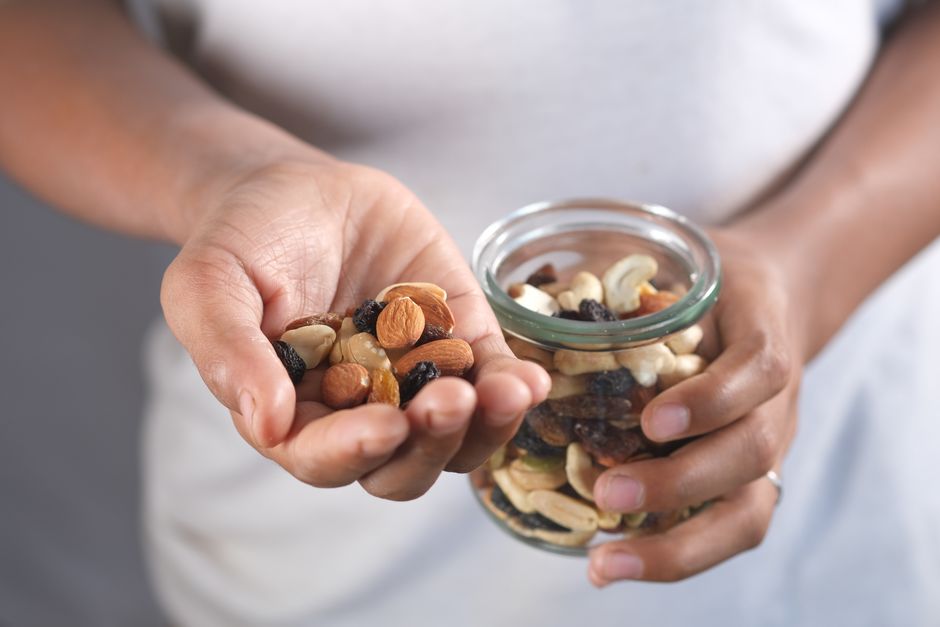
One ounce of almonds is about 23 whole kernels. That is the standard serving size used in nutrition labels and dietary guidelines. If you are counting calories or tracking protein, that number — 23 almonds — is the figure to remember.
Why Is the Serving Size 23 Almonds?
The number comes from the standard weight of a single serving, not from counting individual nuts. One ounce equals 28 grams by weight. Almonds vary in size, so 23 is an average count based on that fixed weight.
Some almonds are larger and some are smaller. A big handful might be 20 almonds. A smaller handful might be 26. The weight is what matters for nutrition tracking, not the exact count.
This serving size is consistent across most packaged almond products in the United States. When you see “serving size: 1 oz” on a bag of almonds, the manufacturer is using the 28-gram standard.
What Is in That One Ounce?
One ounce of dry-roasted or raw almonds provides a specific nutritional profile. The numbers below are based on USDA food composition data for raw almonds.
- Calories: about 164
- Protein: about 6 grams
- Total fat: about 14 grams
- Carbohydrates: about 6 grams
- Fiber: about 3.5 grams
- Vitamin E: about 7.3 milligrams
- Magnesium: about 76 milligrams
Most of the fat in almonds is monounsaturated fat, the same type found in olive oil. This fat profile is one reason almonds are often included in heart-healthy eating patterns.
The fiber and protein together make almonds a fairly filling snack. A single ounce provides meaningful amounts of magnesium and vitamin E, two nutrients many American adults do not get enough of.
Does the Count Change With Different Almond Types?
Yes. The 23-almond figure applies to whole, shelled almonds. If you are eating a different form, the count changes.
| Almond Form | Approximate Count per Ounce |
|---|---|
| Whole almonds | 23 |
| Slivered almonds | About 1/4 cup |
| Sliced almonds | About 1/3 cup |
| Almond flour | About 1/4 cup |
| Almond butter | About 2 tablespoons |
These cup measurements are approximate because almond pieces pack differently depending on size and shape. Weighing your almonds on a kitchen scale is the most accurate method if you are tracking intake precisely.
Smoked, roasted, or flavored almonds still weigh the same per ounce, but the added oil or seasoning changes the calorie count. Check the label on flavored varieties because the fat and sodium content can be significantly higher.





How Many Almonds Should You Eat Per Day?
There is no single recommended daily amount for almonds specifically. The Dietary Guidelines for Americans suggest about 5 ounces of nuts, seeds, and soy products per week as part of a 2,000-calorie diet. That works out to roughly 1.5 ounces of almonds per day if nuts are your only source.
Some research has looked at specific amounts. Studies on almond consumption and heart health have often used 1.5 ounces per day, which is about 35 almonds. Other studies have used smaller amounts like 1 ounce per day.
The evidence for health benefits is strongest at the 1 to 1.5 ounce range. Eating more than that is not necessarily harmful, but the calories add up quickly. Almonds are energy-dense, and it is easy to eat several hundred calories of nuts without feeling full.
If you are using almonds to manage weight, portion control matters more than the exact count. A small food scale or a pre-portioned snack bag can help you stay consistent.
Are There Health Risks From Eating Too Many Almonds?
Almonds are safe for most people in normal food amounts. The main concern with overeating is excess calories and the digestive discomfort that can come from a sudden increase in fiber and fat.
Some people experience bloating or gas when they eat large handfuls of almonds. This is usually temporary and resolves when the portion is reduced.
Almonds contain oxalates, naturally occurring compounds found in many plant foods. For most people this is not a problem. People with a history of calcium oxalate kidney stones may be advised by their doctor to limit high-oxalate foods, including almonds. This is not a reason for healthy people to avoid them.
There is no established upper limit for almond consumption from health authorities. Common sense applies: a handful is a reasonable snack. A whole bag in one sitting is more than the evidence supports for any specific benefit.
Do You Need to Soak or Activate Almonds First?
No. Soaking almonds is a common practice, often promoted as a way to improve digestion or increase nutrient absorption. The clinical evidence for these claims is limited.
Soaking does reduce phytic acid content. Phytic acid is a compound that can bind to minerals like zinc and iron, potentially reducing their absorption. However, the effect is modest, and the human studies on this are not conclusive.
If you enjoy the texture of soaked almonds, there is no harm in eating them that way. But there is no strong evidence that soaking is necessary for health. Raw and dry-roasted almonds both provide the same core nutritional benefits.
One note: if you soak almonds, they must be refrigerated and eaten within a few days. The moisture creates an environment where bacteria and mold can grow. Dry almonds have a long shelf life; soaked almonds do not.
Are Almonds the Best Nut for You?
No single nut is clearly superior. Almonds have a strong nutritional profile, but so do walnuts, pistachios, and pecans. Each type has a slightly different mix of fats, vitamins, and minerals.
Walnuts are higher in omega-3 fatty acids. Pistachios have more potassium. Brazil nuts are extremely high in selenium. Almonds stand out for vitamin E and magnesium content.
The healthiest approach is variety. Rotating different nuts across the week gives you a broader range of nutrients than eating only almonds. The research on nut consumption and reduced risk of heart disease generally looks at total nut intake, not one specific type.
If almonds are the nut you enjoy most, eat almonds. The benefit comes from consistent, moderate consumption — not from forcing yourself to eat a nut you dislike.
How to Measure Almonds Without a Scale
A kitchen scale is the most accurate tool, but most people do not weigh their snacks. Here are practical alternatives.
One ounce of whole almonds is roughly a small handful. For most adults, this is about the amount that fits in a cupped palm without overflowing. It is not the entire hand — just the center of the palm.
Another method is to count them out. Twenty-three almonds takes about 30 seconds to count. If you are making a snack mix or packing lunches, counting once and then using a small container or bag of the same size can be a useful habit.
Pre-portioned packages are widely available. Many brands sell 1-ounce snack packs that take the guesswork out of portion control. These are more expensive per ounce than buying in bulk, but they are convenient.
If you are tracking calories for weight loss or medical reasons, weighing is worth the effort. Eyeballing portions tends to underestimate intake, especially for calorie-dense foods like nuts.
Frequently Asked Questions
How many almonds are in one ounce?
About 23 whole almonds. This is based on the standard 28-gram serving size used in nutrition labeling.
Is 23 almonds too many to eat in a day?
No. For most people, 1 ounce of almonds per day is a reasonable and healthy portion. Some research uses up to 1.5 ounces daily, which is about 35 almonds.
How many calories are in 23 almonds?
About 164 calories. This is the calorie count for one ounce of raw whole almonds based on USDA data.
Do roasted almonds have more calories than raw almonds?
Dry-roasted almonds have roughly the same calories as raw almonds. Oil-roasted or flavored almonds can have more calories and sodium, so check the label.
