
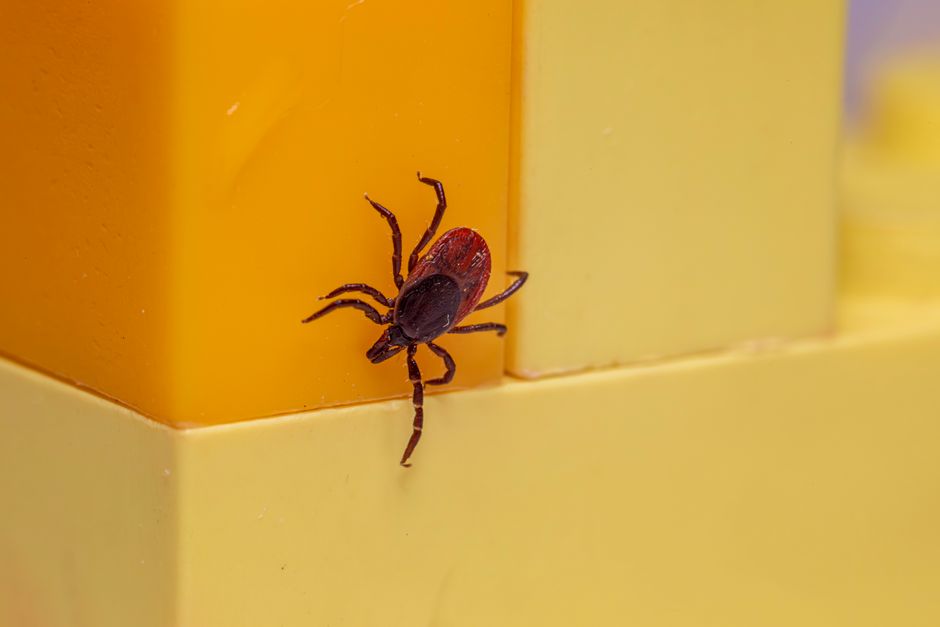
A tick’s survival without a host depends heavily on its species and its life stage. Most hard ticks die within days to weeks in dry, hot conditions, but some can survive for many months — and in rare cases over a year — in cool, humid environments. The single biggest factor is moisture: ticks lose water through their outer shell and die once they dry out, not from starvation.
How Long Will a Tick Live Without a Host?
There is no single number, because “tick” describes hundreds of species with very different survival strategies. What they share is a slow metabolism that lets them fast for a long time — but a limited ability to stay hydrated.
For the ticks people most often encounter, the general timeline looks like this:
- Larval ticks (newly hatched, six legs): usually survive a few days to a few weeks without a host, and die quickly in dry air.
- Nymph ticks (eight legs, about the size of a poppy seed): often survive several weeks to a few months, longer in humid conditions.
- Adult ticks: the most resilient stage. Some species can survive several months to more than a year without feeding, especially in cool, moist climates.
The blacklegged tick, which spreads Lyme disease in the northeastern and upper midwestern United States, is one of the hardier species. Its adults can remain alive through a winter without feeding. The American dog tick and lone star tick are generally less tolerant of dry conditions and tend to die faster indoors.
These ranges are broad on purpose. The exact lifespan of a single tick depends on the weather, the humidity, and where it happens to be waiting.
Why Moisture Matters More Than Food
A tick can go a long time between meals, but it cannot go long without water. That is the core of how it survives — or fails to.
Ticks do not drink. They absorb water vapor from the air through special structures on their body and mouthparts. In humid air, they can top up their water reserves and keep going. In dry air, they lose water faster than they can replace it and eventually desiccate.
This is why you rarely find ticks in open, sunny lawns in the middle of a hot afternoon. They retreat to shaded, damp microhabitats — leaf litter, the base of tall grass, the underside of low vegetation — where humidity stays high. A tick waiting on a blade of grass is not just waiting for a passing animal. It is also waiting somewhere it will not dry out.
Temperature works alongside humidity. Cooler air holds moisture better and slows a tick’s metabolism, so a tick in a cool, shaded forest floor can outlast the same species in a hot, dry yard by a wide margin.
Does a Tick Die If It Doesn’t Find a Host?
Yes, eventually. A tick that never finds a host will die of dehydration or simply run out of stored energy — but “eventually” can mean a very long time.
Ticks feed only three times in their entire life: once as a larva, once as a nymph, and once as an adult. Between those meals, they can wait for months. The trade-off is that each wait carries a risk of drying out before the next host arrives.
What a tick cannot do is reproduce without a blood meal. An adult female needs to feed before she can lay eggs. So a tick that never finds a host does not just die — it also fails to pass on its genes. That is the whole reason ticks are so patient. Their survival strategy is built around waiting.
How Long Can a Tick Live Inside a House?
Indoors, a tick’s odds drop sharply. Most homes are far drier than the outdoor microhabitats ticks evolved to survive in.
A tick that comes inside on a person, pet, or clothing will usually die within a few days to a couple of weeks, depending on the species and the humidity in the room. Bathrooms, basements, and laundry areas — the damp spots — can extend that. A dry, heated bedroom in winter is close to a death sentence for most ticks.
This is one reason a tick found crawling on a wall is not a sign of an infestation the way a flea or bed bug would be. Ticks do not breed indoors the way those pests do. They need a host to complete their life cycle, and a house is a poor place to find one and an even worse place to stay hydrated.
That said, ticks can survive long enough indoors to bite someone. If you find one, remove it promptly rather than waiting to see what it does.
Do Ticks Die in the Winter?
Not reliably, and this is one of the most persistent myths about ticks. Cold does not kill most ticks. It slows them down.
Many tick species overwinter in a dormant state, tucked into leaf litter or under snow cover, which insulates the ground and keeps temperatures from dropping as low as the air above. When the weather warms, they resume activity. In some regions, adult blacklegged ticks are actually most active on mild winter days when the ground is not frozen and there is no snow cover.
What does tend to kill ticks is a stretch of very dry, hot weather — the opposite of what most people expect. A hard freeze without insulating snow can harm some ticks, but it is not a dependable way to reduce their numbers.
How Long Can a Tick Survive Without Feeding on a Host?
This is the same question as the one above, framed from the tick’s point of view, and the answer is the same: it depends on species, life stage, and moisture.
What is worth understanding is that “survive” and “stay dangerous” are not the same thing. A tick that has been waiting for months without a meal is still capable of biting and transmitting disease-causing organisms if it carries them. The pathogens inside a tick can persist for as long as the tick does. So a tick that has been sitting in leaf litter since last fall is not a harmless leftover — it is a live, potentially infectious tick.
This is why the practical advice does not change based on how long a tick has been waiting. If a tick is on you, remove it. Do not try to figure out how long it has been there or whether it is “still good.”
What This Means for Reducing Ticks Around Your Home
Since ticks depend on moisture, the most effective steps target damp, shaded areas where they wait for hosts.
- Keep grass mowed short and clear leaf litter, especially near the edges of your yard where lawn meets woods.
- Create a dry barrier of gravel or wood chips between your lawn and any wooded or brushy area.
- Keep playground equipment, decks, and seating areas away from the tree line and out of tall vegetation.
- Check pets and people after time outdoors, and remove any tick promptly.
None of these steps will eliminate ticks, and no yard treatment removes them entirely. But reducing humidity and shade in the areas you use most cuts down where ticks can survive long enough to find a host.
One clarification worth making: the common belief that ticks “jump” from trees or drop from above is not accurate. Most ticks wait on low vegetation and grab onto a host that brushes past. They do not leap or fall from height. Knowing where they actually wait — knee-high grass, shaded edges, leaf litter — tells you where to focus your attention.
Frequently Asked Questions
How long can a tick live without a host?
It ranges from a few days for larvae in dry conditions to more than a year for some adult ticks in cool, humid environments. Moisture, not food, is usually what determines how long a tick survives.
Can a tick survive without blood for a year?
Some adult hard ticks, including the blacklegged tick, can survive many months without feeding, and in cool, humid conditions possibly longer. Survival depends heavily on species and local humidity.
Do ticks die in the winter?
Most do not. Cold slows ticks down, and many overwinter in leaf litter or under snow cover, becoming active again when temperatures rise.
How long do ticks live indoors?
Usually a few days to a couple of weeks, because indoor air is dry and ticks lose water quickly. Damp rooms like basements or bathrooms can extend that time.
