
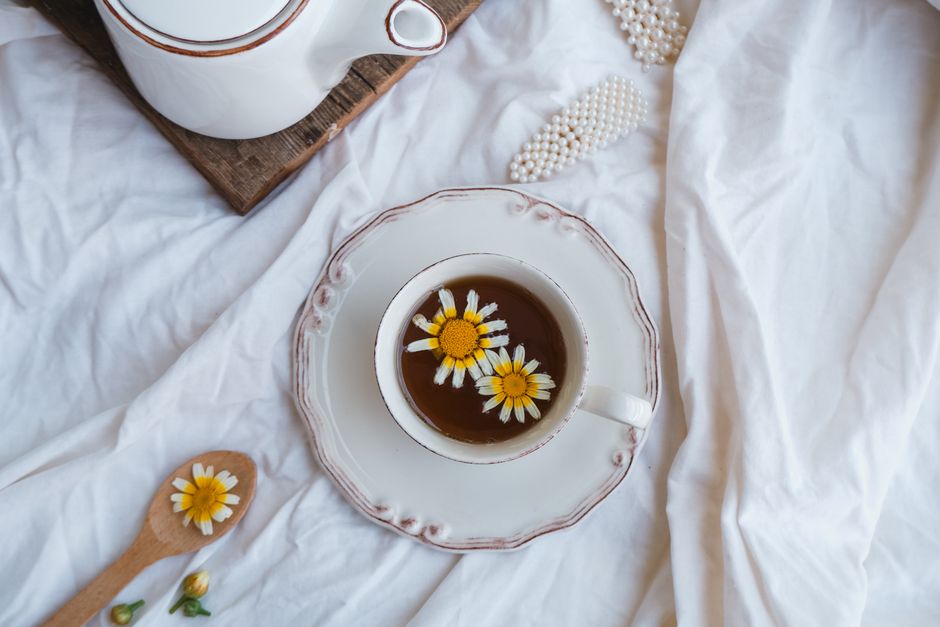
Chamomile tea needs about 5 to 10 minutes of steeping in water that has just boiled. A shorter steep gives a pale, mild cup. A longer steep pulls out more color, aroma, and flavor from the dried flowers. Most tea bags and loose flower labels suggest somewhere in that range, and it is a good place to start.
The steeping timeline matters more than most people expect. Chamomile is not a true tea leaf. It is a dried flower head, and its flavor compounds release at a different pace than black or green tea. Steep it too briefly and you get warm water with a faint scent. Steep it much longer and it turns bitter and grassy.
How Long To Steep Chamomile Tea for the Best Cup
Five to ten minutes is the standard window, and within that range you are adjusting strength rather than following a strict rule. A five-minute steep produces a light, floral cup. Eight to ten minutes gives a fuller body and a stronger apple-like aroma.
Water temperature matters as much as time. Chamomile should be brewed with water at or near boiling, roughly 200 to 212°F. This is different from green tea, which is often brewed cooler to avoid bitterness. The chamomile flower head is dense and needs heat to release its oils.
Here is how the steep time changes the cup:
- 1 to 3 minutes: Pale color, faint flavor. Fine if you only want a light drink.
- 5 minutes: Mild and floral. A common starting point for tea bags.
- 7 to 10 minutes: Full flavor and aroma. The sweet spot for most people.
- Over 15 minutes: Noticeably bitter and grassy. Not harmful, just less pleasant.
One clarification worth knowing: longer steeping does not mean a stronger medicinal effect. The compounds that give chamomile its flavor are not the same ones studied for any health effects. Steeping longer mostly changes taste.
Does Steeping Time Change What Chamomile Does?
Steeping time changes flavor and aroma far more reliably than it changes any health effect. The pleasant compounds in chamomile include oils and flavonoids that give it its scent and color. How much of these you extract depends on time and heat.
Chamomile has been studied for several things, including relaxation and sleep quality. The evidence is mixed and generally modest. Some small studies suggest a calming effect, but the research is not strong enough to promise a specific result from a specific steep time.
What this means in practice: brew chamomile for the taste you enjoy. Do not expect that steeping it for 20 minutes instead of 5 will turn it into something more powerful. No clinical evidence currently confirms that a longer steep produces a stronger effect.
It is also worth separating chamomile tea from chamomile extracts and supplements. Concentrated extracts used in research are not the same as a steeped cup. Findings from one do not automatically apply to the other.
Loose Flowers vs Tea Bags: Does the Timeline Change?
Loose dried chamomile flowers usually need the longer end of the range, closer to 7 to 10 minutes. Tea bags, which hold finely cut flowers, often reach full flavor in about 5 minutes. The difference comes down to particle size and how easily water reaches the plant material.
Loose flowers are whole or nearly whole. Water has to work its way into the flower head to release the oils. Finely cut flowers in a bag expose more surface area, so the water extracts flavor faster.
Use about one heaped teaspoon of dried loose flowers per cup, or one tea bag. Always cover the cup while steeping. The volatile oils that carry chamomile’s aroma escape into the air as steam. A saucer or lid keeps more of them in the cup.





What Happens If You Steep It Too Long or Too Short?
Over-steeping makes chamomile bitter, not dangerous. The same plant compounds that taste pleasant in balance turn sharp and grassy when extracted in excess. If you forget a cup for half an hour, it is still safe to drink. It just will not taste good.
Under-steeping is the more common mistake. Many people pour hot water over a bag and pull it out after a minute or two. That produces colored water with little flavor. If your chamomile always tastes weak, the steep time is the first thing to check, followed by water temperature.
Two practical fixes help. First, make sure the water is actually hot enough. Water that has cooled below boiling extracts flavor slowly. Second, give the bag or flowers room to move. A bag crammed into a tiny cup steeps unevenly.
Is Chamomile Tea Safe for Everyone?
Chamomile tea is generally considered safe for most adults in normal amounts. It has a long history of use as a beverage. That said, a few groups should be careful.
People with an allergy to plants in the daisy family, such as ragweed, may react to chamomile. Chamomile is in that same plant family. If you have a known allergy to these plants, talk to a doctor before drinking it.
Pregnancy and breastfeeding deserve a direct note. No clinical guidelines currently exist that set a safe amount of chamomile tea for pregnant or breastfeeding women. Some sources suggest limited amounts are fine, while others advise caution. Because the evidence is limited, check with a healthcare provider rather than relying on general advice.
Chamomile can interact with some medications, including blood thinners. If you take prescription medicine, ask a pharmacist or doctor before making chamomile a daily habit. This is especially true if you drink several cups a day.
For children, keep servings small and check with a pediatrician first. No established dosing guidelines exist for young children.
How to Steep Chamomile Tea Step by Step
A good cup comes down to four things: hot enough water, the right amount of flowers, enough time, and a cover. Here is a simple method.
- Heat fresh water to a boil, then let it settle for a moment so it is hot but not splashing.
- Place one tea bag or one heaped teaspoon of dried flowers in a cup.
- Pour the hot water over it and cover the cup.
- Steep for 5 to 10 minutes, depending on how strong you like it.
- Remove the bag or strain out the flowers, then drink.
If you want a stronger cup, add more flowers rather than steeping much longer. More plant material gives more flavor without the bitterness that comes from over-extraction.
One small point that surprises people: chamomile tea does not contain caffeine. It is an herbal infusion, not a true tea. So the steep time has nothing to do with caffeine levels, unlike black or green tea where longer steeping can pull out more caffeine and tannins.
Does Chamomile Tea Help You Sleep?
The evidence for chamomile as a sleep aid is limited and mixed. Some small studies suggest a mild calming effect, but the research is not strong enough to call it a proven sleep treatment. A warm cup before bed is a pleasant routine, and the ritual itself may help some people relax.
It is honest to say that chamomile is not a substitute for treating a sleep problem. If you have ongoing trouble sleeping, that deserves a conversation with a doctor rather than more tea.
Frequently Asked Questions
How long should you steep chamomile tea?
Steep chamomile tea for about 5 to 10 minutes in water that has just boiled. Loose flowers usually need closer to 7 to 10 minutes, while tea bags often reach full flavor in about 5 minutes.
Can you steep chamomile tea too long?
Yes, steeping much longer than about 15 minutes makes chamomile taste bitter and grassy. It is not harmful, but the flavor becomes less pleasant.
Does chamomile tea need boiling water?
Yes, chamomile brews best in water at or near boiling, roughly 200 to 212°F. Cooler water extracts the flavor slowly and produces a weak cup.
Does chamomile tea have caffeine?
No, chamomile tea is an herbal infusion and contains no caffeine. Steeping time affects flavor only, not caffeine content.
