

If you’re checking your blood pressure at home, sit quietly for at least five minutes before the cuff inflates. That five-minute rest is the standard recommended by the American Heart Association and other major clinical guidelines. Skipping it can push your reading up by several points and give you a number that doesn’t reflect your true blood pressure.
Getting this right matters more than most people realize. A single rushed measurement can look like hypertension when your pressure is actually fine, or it can nudge a borderline reading into a range that triggers unnecessary worry. The rest period is not a formality. It’s part of the measurement itself.
How Long To Sit Before Taking Blood Pressure at Home?
Five minutes of quiet sitting is the accepted standard. This applies whether you’re using a home monitor, an automated cuff at a pharmacy, or having your pressure taken in a clinic.
The five minutes should be genuinely quiet. That means no talking, no scrolling on your phone, no reading, and no watching television. Sit with your back supported against a chair, both feet flat on the floor, and your arm resting at heart level on a table or armrest. Don’t cross your legs.
Why five minutes specifically? Blood pressure fluctuates constantly. Physical activity, emotional state, posture, and even the act of walking into a room can raise it temporarily. The rest period allows your cardiovascular system to settle into what clinicians call your resting baseline. Without it, you’re measuring a reaction rather than a resting state.
Some guidelines describe a range of three to five minutes of rest. The five-minute figure is the most widely cited and the safest to follow. If you’re unsure, longer is better than shorter. Sitting quietly for ten minutes won’t hurt your reading.
Does the Position of Your Body Affect the Reading?
Yes, and the effect can be larger than many people expect. Body position changes the hydrostatic pressure in your arteries, which directly influences what the cuff measures.
Your back should be supported. Slouching or sitting without back support can raise both systolic and diastolic readings. Your feet should be flat on the floor, not dangling or crossed. Crossing your legs at the knee has been shown to increase blood pressure readings in some studies, though the size of the effect varies.
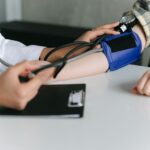
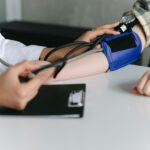
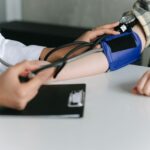
Your arm position matters too. The cuff should be at roughly the level of your heart. If your arm hangs down below heart level, the reading will tend to be higher. If it’s held above heart level, the reading will tend to be lower. Rest your forearm on a flat surface so the middle of the cuff sits at about the midpoint of your chest.
These aren’t minor details. A cuff placed over clothing, an arm that’s unsupported, or a back that isn’t against a chair can each shift your numbers enough to change how a doctor interprets them.
What Should You Avoid Before Measuring?
Several common habits can raise your blood pressure temporarily and distort a reading. The most consistent advice is to avoid caffeine, exercise, and smoking for at least 30 minutes before you measure. These all have short-term effects on blood pressure that can persist well past the five-minute rest.
You should also empty your bladder first. A full bladder can raise blood pressure readings by a noticeable amount in some people. It’s a small thing, but it’s easy to fix and it removes one more source of error.
Stress and anxiety matter as much as physical factors. If you’ve just had an argument, driven through heavy traffic, or received upsetting news, five minutes may not be enough to return to baseline. In those situations, waiting longer is reasonable.
One overlooked factor is the “white coat effect,” which isn’t limited to doctors’ offices. Some people feel anxious simply putting on a home cuff, and that anxiety alone can push readings up. Taking a few slow breaths and waiting a bit longer can help, though it won’t eliminate the effect for everyone.


How Many Times Should You Measure?
One reading is rarely enough. Clinical guidance generally recommends taking two or three measurements, spaced about one minute apart, and averaging them. The first reading is often the highest because the act of measuring itself can cause a slight rise.
If you take multiple readings, keep the rest period before the first one. You don’t need to sit for five more minutes between each measurement. Just wait about a minute between them and stay seated and quiet.
Recording all your readings, not just the lowest or the average, gives your doctor a clearer picture. Some people track their numbers in a notebook or app and bring the log to appointments. This is often more useful than a single measurement taken in a clinic, because it shows your pressure across different times and conditions.
When Should You Take Your Blood Pressure?
Morning and evening are the two most common times, and many clinicians suggest measuring at both. Blood pressure follows a daily rhythm, typically lower during sleep and rising in the early morning hours.
Measuring at roughly the same times each day makes your readings easier to compare. If you take medication for blood pressure, your doctor may want readings taken at specific times relative to your dose. Follow whatever schedule your clinician recommends.
Avoid measuring right after a meal, since digestion shifts blood flow and can affect readings in some people. Also avoid measuring when you’re rushed or distracted. The quality of the rest period matters as much as its length.
Does the Type of Monitor Change the Rest Time?
No. The five-minute rest applies to automated home monitors, manual cuffs used with a stethoscope, and clinic devices alike. The physiology is the same regardless of the equipment.
Automated upper-arm monitors are generally recommended over wrist or finger monitors for home use because they tend to be more accurate. Wrist monitors are more sensitive to arm position, so if you use one, the instructions about holding your wrist at heart level become even more important.
Whatever device you use, make sure the cuff fits properly. A cuff that’s too small can produce falsely high readings. A cuff that’s too large can produce falsely low ones. Most monitors list a recommended arm circumference range on the packaging or in the manual.
What Do the Numbers Mean?
For adults, a normal blood pressure reading is generally defined as less than 120/80 mm Hg. Readings consistently at or above 130/80 mm Hg are typically classified as high blood pressure, though diagnosis depends on multiple readings over time, not a single measurement.
These thresholds come from established clinical guidelines and are used by healthcare providers across the United States. A single elevated reading doesn’t mean you have hypertension. It means the reading was elevated, and it may reflect stress, recent activity, poor measurement technique, or a genuine trend that needs monitoring.
This is exactly why the rest period matters. If you skip it, you introduce a variable that can make a normal reading look abnormal. You’re not just measuring your blood pressure. You’re measuring your blood pressure plus whatever you did in the two minutes before the cuff went on.
If your home readings are consistently high despite careful technique, that’s worth discussing with a doctor. Don’t adjust medication or make treatment decisions based on home readings alone.
Frequently Asked Questions
How long do you have to sit before taking blood pressure?
Sit quietly for at least five minutes before the cuff inflates. This rest period is the standard recommended by major clinical guidelines.
Does sitting for only one minute change the reading?
Yes, it can. A shorter rest period often produces a higher reading because your cardiovascular system hasn’t returned to its resting baseline.
Should you sit quietly without talking during the rest period?
Yes. Talking, scrolling on a phone, or watching television can all raise blood pressure temporarily and distort the measurement.
Can you take blood pressure right after walking?
No, you should wait at least five minutes after sitting down, and longer if you’ve been physically active. Exercise and movement raise blood pressure temporarily.
