
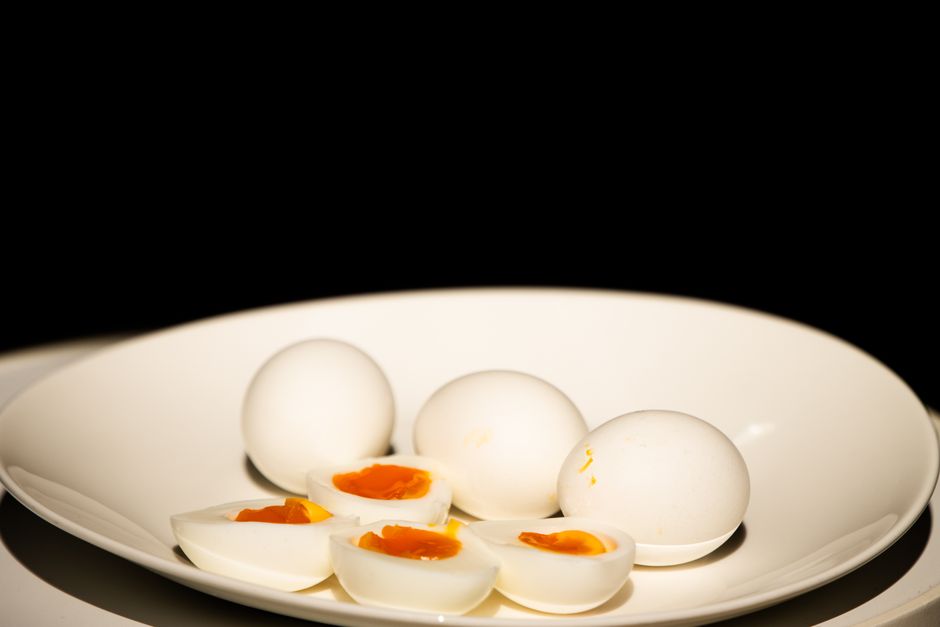
To make a hard boiled egg, place large eggs in a single layer in a saucepan, cover with cold water by one inch, bring to a full rolling boil, then turn off the heat, cover the pan, and let the eggs sit for 10 to 12 minutes. This method yields a fully set yolk with no raw center. For smaller eggs, reduce the time by about one minute; for extra‑large eggs, add one minute.
How Long To Make A Hard Boiled Egg?
The exact time depends on your method, egg size, and how firm you want the yolk. For large eggs using the cold‑water start method (described above), the standard range is 10 to 12 minutes. At 10 minutes the yolk is fully set but still moist and bright yellow. At 12 minutes the yolk is completely firm and pale yellow. If you prefer a slightly softer center, 9 minutes gives a yolk that is set around the edges but still slightly creamy in the middle — this is often called a medium‑boiled egg.
If you start eggs in already boiling water, reduce the sit time by 1 to 2 minutes because the eggs heat up faster. For example, gently lowering large eggs into boiling water and then boiling for 9 to 10 minutes produces the same result as the cold‑water method. Regardless of the start method, always transfer the eggs to an ice bath immediately after cooking to stop the cooking process. This also makes peeling easier.
For quick reference:
- Large egg, cold‑water start: 10–12 minutes (hard boiled)
- Medium egg, cold‑water start: 9–11 minutes
- Extra‑large egg, cold‑water start: 12–14 minutes
- Boiling‑water start (large egg): boil 9–10 minutes
What Happens If You Overcook an Egg?
Leaving eggs in hot water beyond 12 to 13 minutes changes both texture and appearance. The yolk may develop a greenish‑gray ring around the outside. This ring is not harmful — it is a chemical reaction between iron in the yolk and sulfur in the white. It does not affect safety, but the yolk becomes dry and crumbly, and the white can turn rubbery. To avoid this, stick to the recommended times and cool the eggs quickly in ice water.
Overcooking for much longer, such as 20 minutes or more, can cause the white to become tough and the yolk to take on a chalky, unpleasant texture. The green ring becomes more pronounced. No health risk is involved, but the eating experience suffers.
Does Altitude Affect Cooking Time?
Yes, altitude changes the boiling point of water, which in turn changes how eggs cook. At sea level, water boils at 212°F (100°C). For every 1,000 feet of elevation gain, the boiling point drops by roughly 2°F (1°C). Because the water is cooler at higher altitudes, eggs need more time to reach the same internal temperature. If you live above 3,000 feet, add about 1 minute of sit time for every 1,000 feet of elevation. At 5,000 feet, for example, a large egg may need 13 to 15 minutes of rest time after boiling to become fully hard boiled.
No standard table exists for every elevation, so experimentation may be needed. Start by adding one minute to your usual time and adjust from there. The same test — peeling an egg and checking the yolk — will tell you if you need more or less time.




Cold Water Start vs. Boiling Water Start
Both methods work, but they produce slightly different results and have different timing. The cold‑water start (eggs in cold water, brought to a boil together) is the most common and forgiving method. The gradual heating helps reduce the chance of shells cracking and makes the timing less critical because the eggs heat up slowly.
The boiling‑water start (eggs lowered into already boiling water) cooks the egg white faster and can sometimes produce a more tender white, but the timing is tighter. If you leave the eggs in boiling water even one minute too long, the white can become rubbery. This method also requires careful lowering of eggs to avoid cracking. Many experienced cooks prefer it because the total cook time is shorter — about 9 to 10 minutes compared to 12 to 14 minutes with the cold‑water start. Both methods, when done correctly, give a fully cooked hard boiled egg.
How to Get Perfect Peels Every Time
The age of the egg matters. Fresh eggs (less than a week old) are harder to peel because the white adheres more tightly to the inner shell membrane. Eggs that are 7 to 10 days old peel more easily. If you only have fresh eggs, try adding a teaspoon of baking soda to the cooking water. The baking soda raises the pH of the water, which helps loosen the egg white from the membrane. Some evidence supports this, but not all tests confirm it works every time.
The most reliable technique is to shock the cooked eggs in an ice bath for at least 5 minutes immediately after cooking. This rapid cooling contracts the egg contents slightly, pulling them away from the shell. After cooling, gently tap the egg all over on a hard surface, then roll it under your palm to crackle the shell. Start peeling from the wider end, where the air pocket sits — this often gives you a starting point that lifts the membrane with the shell. Peeling under a thin stream of cold running water can also help wash away small shell fragments.
How Long Do Hard Boiled Eggs Last?
Cooked hard boiled eggs, with or without the shell, should be refrigerated within two hours of cooking and can be kept in the refrigerator for up to one week. Place them in a covered container. Eggs left at room temperature for more than two hours should be discarded. If you peel the eggs, they should be eaten within a day or two for best quality, but they remain safe to eat for up to a week if kept cold. Do not freeze hard boiled eggs — the whites become watery and rubbery after thawing.
Frequently Asked Questions
How long do you boil a hard boiled egg?
For large eggs, bring to a boil, then let them sit in the hot water for 10 to 12 minutes with the lid on. Smaller eggs need 9 to 11 minutes; extra‑large eggs need 12 to 14 minutes.
Can you overcook a hard boiled egg?
Yes. Boiling or sitting too long makes the yolk develop a green‑gray ring and the white become rubbery. The egg is still safe to eat, but the texture suffers.
Why are my hard boiled eggs hard to peel?
Very fresh eggs are harder to peel because the white clings to the shell membrane. Using eggs that are 7 to 10 days old and cooling them in an ice bath immediately after cooking helps a lot.
How long can you keep hard boiled eggs in the fridge?
Hard boiled eggs, in the shell, keep for up to one week in the refrigerator. Peeled eggs are best eaten within a day or two but are safe for up to a week if kept cold.
