
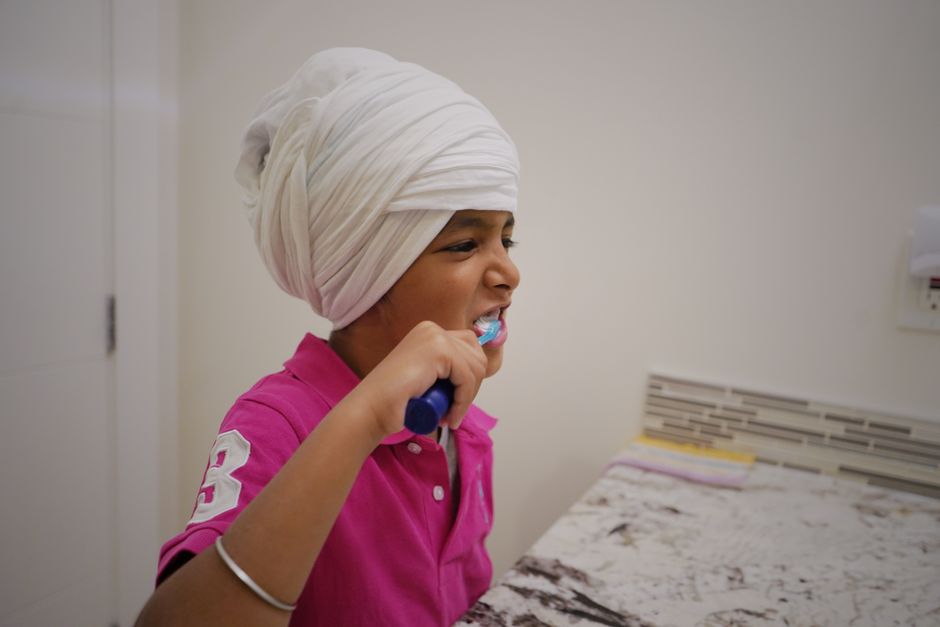
Two minutes. That is the brushing time most dental professionals recommend, and it is the number you will see on the timer on an electric toothbrush. Brushing for about two minutes twice a day, with a soft-bristled brush and fluoride toothpaste, is the standard advice from dental organizations worldwide. Most people fall well short of that mark without realizing it.
The two-minute figure is not arbitrary. It reflects how long it takes to reach the surfaces of all your teeth with enough repetitions to remove plaque. Understanding why that time matters, and what actually happens during it, helps you get more from the habit.
How Long Should You Brush Your Teeth Each Time?
About two minutes is the recommended duration for a full brushing session, and that applies to both morning and evening. The goal is to spend enough time on each section of your mouth to clear plaque from every surface.
Plaque is a soft, sticky film of bacteria that forms on teeth continuously. It starts rebuilding within hours of being removed. Brushing disrupts that film mechanically. If you rush, you leave plaque behind in the spots your brush did not reach, and those are the spots where problems tend to start.
Two minutes is a practical target, not a magic threshold. The underlying aim is thorough coverage. Dividing your mouth into four sections — upper right, upper left, lower right, lower left — and giving each about 30 seconds is a simple way to hit the two-minute mark evenly. This is the method many dental professionals describe to patients.
Most people are poor judges of their own brushing time. Studies that have observed people brushing have generally found that unaided brushing tends to fall short of two minutes, often by a wide margin. A timer, an electric brush with a built-in timer, or simply watching a clock removes the guesswork.
What Happens if You Brush for Less Time?
Short brushing sessions leave more plaque behind, and plaque that stays on teeth hardens into tartar within roughly 24 to 72 hours. Once tartar forms, it cannot be removed by brushing at home. A dental professional has to remove it.
The bacteria in plaque produce acids when they meet sugars from food and drink. Those acids attack tooth enamel. Repeated acid exposure over time is what drives cavities. Plaque along the gumline also irritates gum tissue, which is the beginning of gum disease.
This does not mean a single rushed brushing causes damage. The risk builds from a pattern. Consistently brushing for 30 or 45 seconds instead of two minutes means plaque accumulates faster than you clear it, and over months and years that adds up.
There is a useful distinction here. Brushing harder does not make up for brushing briefly. Firm pressure can wear down enamel and irritate gums without removing more plaque. Time and technique matter more than force.
Does Brushing Twice a Day Matter as Much as Duration?
Both frequency and duration matter, and they work together. Brushing twice a day for two minutes each time is the standard recommendation. Skipping a session gives plaque many more hours to build up and produce acid.
The evening brushing is often considered the more important of the two. Overnight, saliva flow drops. Saliva normally helps rinse teeth and neutralize acids. With less saliva during sleep, teeth are more exposed to whatever plaque and food residue remain. Cleaning thoroughly before bed reduces that overnight exposure.
Brushing more than twice a day is not automatically better. Brushing too often, or too soon after acidic food and drink, can contribute to enamel wear. Twice a day with good technique covers the need for most people.
How Long To Brush Teeth: A Simple Timeline
A structured timeline makes the two minutes easier to follow and helps you cover every surface. The sequence below is one common approach. It is not the only correct order, but it ensures nothing gets skipped.
- Seconds 0–30: Upper right section — outside, inside, and chewing surfaces.
- Seconds 30–60: Upper left section — same three surfaces.
- Seconds 60–90: Lower right section — same three surfaces.
- Seconds 90–120: Lower left section — same three surfaces.
The inside surfaces of the front teeth are easy to miss. Many people brush the outside and chewing surfaces but skim the back of the front teeth. Angling the brush vertically and using the front part of the bristles helps reach them.
After brushing, spit out the excess toothpaste rather than rinsing with water. Rinsing washes away the fluoride that continues to protect enamel after you finish. This is a point many people get wrong, and it is worth correcting.
Does an Electric Toothbrush Change the Timeline?
Electric toothbrushes often build in a two-minute timer with pauses or signals every 30 seconds. That structure helps people hit the recommended time without watching a clock. Some evidence suggests powered brushes can remove more plaque than manual brushing, though the difference depends heavily on how well someone uses a manual brush.
A manual brush used correctly for two minutes is effective. An electric brush does not remove the need for technique — you still have to move it across every surface. The built-in timer is arguably its most useful feature for many people, because it solves the timing problem directly.
For children, the recommended brushing time is generally the same two minutes, though young children need an adult to brush for them or supervise closely. The amount of toothpaste differs by age, and that guidance comes from dental and pediatric organizations rather than from brushing duration itself.
What Else Affects How Well You Brush?
Duration is only one variable. Bristle type, toothpaste, and technique all shape the result.
A soft-bristled brush is the standard recommendation. Medium and hard bristles offer no cleaning advantage and are more likely to irritate gums and wear enamel. Replace your brush, or the head of an electric brush, roughly every three to four months, or sooner if the bristles look frayed. Worn bristles clean less effectively.
Fluoride toothpaste has the strongest evidence base of any routine oral care product for reducing cavities. Brushing with fluoride toothpaste combines mechanical plaque removal with a chemical defense against decay. Brushing without toothpaste removes plaque but gives up that fluoride protection.
Flossing or using another interdental cleaner once a day addresses the spaces between teeth that brush bristles cannot reach. Brushing alone leaves those gaps uncleaned. This is widely recommended by dental professionals, though the strength of evidence varies by which interdental method is used.
One clarification worth making: mouthwash is not a substitute for brushing, and rinsing with it right after brushing can reduce the benefit of the fluoride in your toothpaste. If you use mouthwash, choosing a fluoride version and using it at a different time of day is the more sensible approach.
When Should You See a Dentist?
Regular dental checkups catch problems that brushing cannot reverse, like tartar buildup and early cavities. The right interval varies by person and is best set with a dentist based on your individual risk.
See a dentist sooner if you notice bleeding gums that persist, tooth sensitivity that does not settle, a tooth that hurts when you bite, or visible changes to your gums or teeth. These signs can have several causes, and only a dental professional can determine which one applies to you.
Brushing for two minutes twice a day is a strong foundation, but it works alongside professional care, not instead of it.
Frequently Asked Questions
How long should you brush your teeth?
About two minutes per session, twice a day. Dividing your mouth into four sections and spending roughly 30 seconds on each helps you reach the full time evenly.
Is brushing for 1 minute enough?
One minute is generally shorter than recommended and tends to leave more plaque behind. Most people brush for less than two minutes without a timer, so tracking the time helps.
Should you brush your teeth for 3 minutes?
Two minutes is the standard target for most people. Brushing longer is not harmful in itself, but it offers no clear added benefit over a thorough two-minute session.
Is it better to brush twice a day or longer once a day?
Twice a day is the standard recommendation. Skipping a session lets plaque build up for many more hours, especially overnight when saliva flow drops.
