
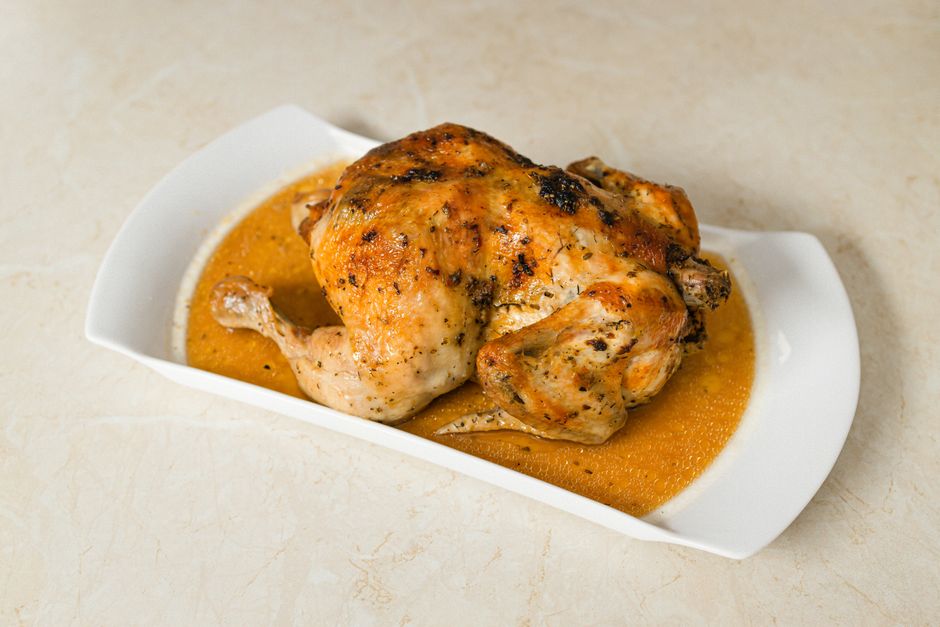
Baking chicken in the oven is one of the most reliable ways to cook it, but the timing depends entirely on the cut. Boneless, skinless chicken breasts typically take 20 to 30 minutes at 375°F. Bone-in thighs and legs need 40 to 45 minutes at the same temperature. A whole chicken takes about 1 hour and 30 minutes to 1 hour and 45 minutes at 375°F. The only way to know for sure it is safe to eat is to check the internal temperature with a meat thermometer.
What Temperature Should The Oven Be?
Most recipes call for 375°F, and that is a solid middle ground. It cooks the chicken through without drying it out as quickly as a higher heat would.
You can bake at 350°F if you prefer a slower, gentler cook. This works well for bone-in pieces and whole birds. At 400°F or 425°F, the outside browns faster and the skin crisps, but lean cuts like boneless breasts can dry out before the center is done.
The oven temperature matters less than the final internal temperature of the meat. Heat the oven to whatever temperature your recipe calls for, but always finish by checking the meat itself.
How Long To Bake Chicken Breasts?
Boneless, skinless chicken breasts are the most common cut people bake, and they are also the easiest to ruin. A typical breast that weighs about 6 to 8 ounces needs 22 to 30 minutes at 375°F.
Thicker breasts take longer. If you buy large breasts that weigh over 10 ounces, they may need 35 to 40 minutes. The safest approach is to pound thicker breasts to an even thickness before baking. This shortens the cook time and prevents the outside from drying out while the center finishes cooking.
Bone-in chicken breasts take longer than boneless. Expect 35 to 45 minutes at 375°F because the bone slows heat transfer and the meat sits closer to the bone.
Check the temperature at the thickest part of the breast, avoiding the bone. You want a reading of 165°F. That is the safe minimum temperature set by the USDA.
How Long To Bake Chicken Thighs And Legs?
Dark meat is more forgiving than white meat because it has more fat and connective tissue. This means it stays moist even if you overcook it slightly.
Bone-in, skin-on chicken thighs and drumsticks need 40 to 45 minutes at 375°F. Boneless, skinless thighs cook faster and are usually done in 25 to 30 minutes.
Dark meat is safe to eat at 165°F, but many cooks prefer to take it to 175°F to 185°F. At those higher temperatures, the connective tissue breaks down further and the meat becomes more tender. This is not unsafe. The USDA minimum is a floor, not a ceiling.





How Long To Bake A Whole Chicken?
A whole chicken is a different cooking challenge because the white meat and dark meat finish at different times. The breast is done at 165°F, but the thighs are more tender at 175°F or higher.
For a chicken that weighs 4 to 5 pounds, plan on 1 hour and 30 minutes to 1 hour and 45 minutes at 375°F. A larger bird over 6 pounds can take up to 2 hours.
The standard rule is to roast a whole chicken for about 15 minutes per pound at 375°F. That gives you a rough estimate, but weight alone does not tell the full story. A bird straight from the refrigerator takes longer than one that sat on the counter for 30 minutes.
Check the temperature in two places: the thickest part of the thigh without touching the bone, and the thickest part of the breast. Both should read at least 165°F. If the thigh reads 165°F but the breast reads 150°F, keep cooking.
How To Tell When Baked Chicken Is Done
A meat thermometer is the only reliable tool here. Color and juices are not trustworthy indicators.
Pink meat near the bone can still be fully cooked. Clear juices can come from meat that is not done. The opposite is also true. The only way to know is to measure the internal temperature.
Insert the thermometer into the thickest part of the meat, away from bone and fat. For whole chicken, the thigh is the best spot to check. The meat should reach 165°F to be safe.
Digital instant-read thermometers are inexpensive and give a reading in seconds. Leave-in probe thermometers let you monitor the temperature without opening the oven door, which keeps the heat steady.
Let the chicken rest for 5 to 10 minutes after it comes out of the oven. The internal temperature will rise another 5 to 10 degrees during this time. Resting also lets the juices redistribute, so the meat is moister when you cut into it.
Why Does Chicken Dry Out In The Oven?
Chicken breast is lean meat. It has very little fat to keep it moist during cooking. When the internal temperature climbs past 165°F, the muscle fibers contract and squeeze out moisture. This is why a breast left in the oven too long becomes dry and stringy.
Baking at too high a temperature does the same thing. The outside cooks quickly, but the heat drives moisture out of the meat before the center is done.
Brining helps. Soaking chicken in salt water for 30 minutes to a few hours before baking changes the protein structure so it holds onto moisture better. Even a dry salt rub left on for 30 minutes before cooking helps.
Another approach is to sear the chicken in a hot pan first, then finish it in the oven. This browns the outside for flavor while the oven heat finishes the cooking gently. This method works especially well for bone-in pieces and whole birds.
Can You Bake Chicken From Frozen?
Yes, but it takes about 50 percent longer than thawed chicken. A frozen boneless chicken breast may need 40 to 50 minutes at 375°F instead of the usual 25 minutes.
The USDA does not recommend cooking frozen chicken in a slow cooker, but baking it in the oven is safe. The key is the same: the internal temperature must reach 165°F.
For best results, thaw chicken in the refrigerator overnight. This gives you more control over the cooking time and produces more even results. If you must bake from frozen, add 15 to 20 minutes to the recipe time and check the temperature carefully.
What If The Outside Is Brown But The Inside Is Raw?
This happens when the oven is too hot or the chicken is too thick. The surface browns and crisps while the heat takes longer to reach the center.
If you hit this situation, lower the oven temperature to 325°F and cover the chicken loosely with foil. The foil prevents the outside from browning further while the inside finishes cooking. Check the temperature every 10 minutes until the center reaches 165°F.
For future batches, pound thick cuts to an even thickness before baking. This is the simplest fix and prevents the problem entirely.
Baking Times At A Glance
Here is a quick reference for common cuts at 375°F. Always verify with a thermometer.
- Boneless, skinless chicken breast: 22 to 30 minutes
- Bone-in chicken breast: 35 to 45 minutes
- Boneless, skinless chicken thighs: 25 to 30 minutes
- Bone-in chicken thighs or drumsticks: 40 to 45 minutes
- Whole chicken (4 to 5 pounds): 1 hour 30 minutes to 1 hour 45 minutes
- Chicken wings: 45 to 50 minutes for crispy skin
These times assume the chicken starts from a refrigerated temperature of about 40°F. If the chicken sits at room temperature for a while before baking, it will cook a few minutes faster.
Frequently Asked Questions
How long to bake chicken at 350°F?
Boneless chicken breasts take 25 to 35 minutes at 350°F, and bone-in pieces take 45 to 55 minutes. A whole chicken needs about 20 minutes per pound at this temperature.
How long to bake chicken at 400°F?
Boneless chicken breasts take 18 to 25 minutes at 400°F. Bone-in thighs and legs take 35 to 40 minutes, and a whole chicken takes about 1 hour and 15 minutes.
Is baked chicken healthy?
Baking is one of the healthier cooking methods because it does not add extra fat the way frying does. Skinless chicken breast is a lean source of protein, though the skin adds saturated fat if you leave it on.
Do you need to flip chicken when baking?
Flipping is not required for even cooking in a standard oven. It can help browning on both sides, but the hot air circulates around the meat either way.
