
Getting chicken cooked right is a balancing act. Cook it too little and you risk food poisoning. Cook it too much and you get dry, tough meat. The good news is you don’t need to guess. A simple meat thermometer takes the uncertainty out of the process. The target is always the same: chicken is safe to eat when its internal temperature reaches 165°F (74°C) at the thickest part of the meat, whether you are roasting a whole bird, grilling thighs, or pan-searing breasts. That single number is your finish line.
Why 165°F Is the Magic Number for Chicken
Chicken can carry harmful bacteria like Salmonella and Campylobacter. These germs are killed when the meat reaches a high enough internal temperature. The U.S. Department of Agriculture sets the safe minimum at 165°F (74°C) for all poultry products.
This temperature is not arbitrary. It is the point where bacteria are destroyed instantly. Cooking chicken to this temperature throughout ensures the meat is safe for everyone, including children, older adults, and people with weakened immune systems.
Color is not a reliable test. Pink chicken can be safe if it hit 165°F, and white chicken can still harbor bacteria if it was undercooked. Only a thermometer gives you an accurate answer.
How Long to Cook Chicken Breasts
Boneless, skinless chicken breasts are the most popular cut, and the easiest to overcook. Because they are lean and irregular in shape, the thin end cooks faster than the thick end.
For boneless, skinless breasts, expect roughly 20 to 30 minutes in a 400°F (204°C) oven. On the stovetop over medium heat, they usually need about 6 to 8 minutes per side. Grilling takes a similar amount of time, about 6 to 8 minutes per side over medium heat.
Bone-in, skin-on breasts take longer. Plan for 35 to 45 minutes in a 375°F (190°C) oven. The bone conducts heat slowly, so the meat near it takes longer to cook.
The most reliable approach is to start checking the temperature a few minutes before you expect it to be done. Insert the thermometer into the thickest part of the breast, avoiding the bone. Pull the chicken off the heat at 160°F to 162°F if you plan to let it rest. Carryover cooking will bring it up to 165°F while it sits.
How Long to Cook Chicken Thighs and Legs
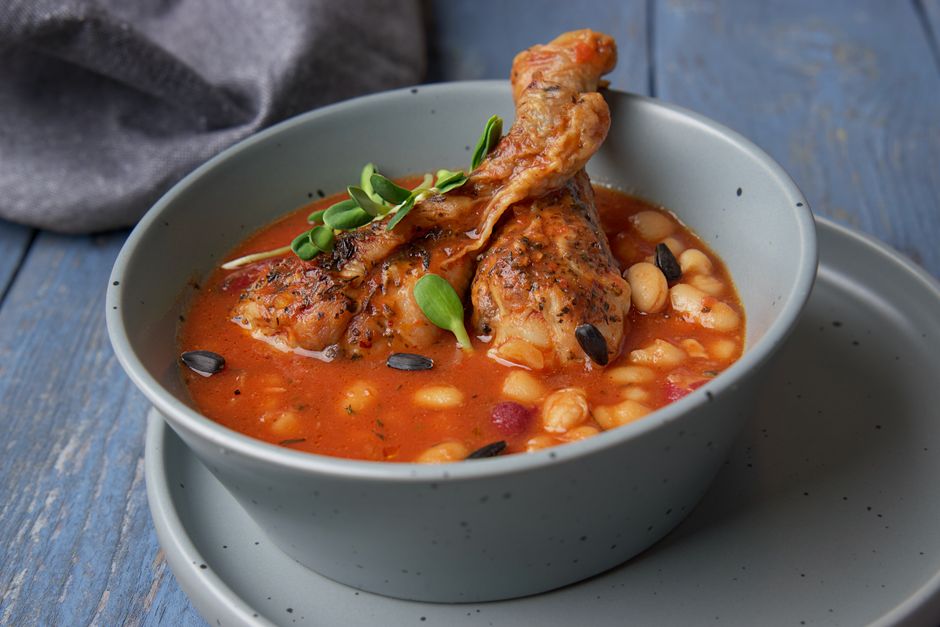
Dark meat is more forgiving than white meat. Thighs and legs contain more fat and connective tissue, which means they stay moist even when cooked past 165°F. Many chefs prefer to cook dark meat to 175°F to 185°F to break down the connective tissue for a more tender result.
Boneless, skinless thighs cook quickly. They need about 5 to 7 minutes per side on the stovetop or grill. In a 400°F oven, they take about 20 to 25 minutes.
Bone-in thighs and drumsticks require more time. Expect 40 to 45 minutes in a 375°F oven. On the grill, use indirect heat and plan for 30 to 40 minutes, turning occasionally.
For the best texture, cook dark meat to an internal temperature of at least 175°F. It is safe at 165°F, but the extra heat makes the meat noticeably more tender.


How Long to Cook a Whole Chicken
A whole chicken takes significantly longer than individual cuts. The cooking time depends on the weight of the bird. A general rule is about 20 minutes per pound at 350°F (177°C).
A 4-pound chicken will take roughly 1 hour and 20 minutes. A 5-pound bird needs about 1 hour and 40 minutes. These times are estimates. The only way to know for sure is to measure the temperature.
Check the temperature in two places. Insert the thermometer into the thickest part of the thigh, avoiding the bone. It should read 165°F. Also check the stuffing if you used any — stuffing must reach 165°F too. The breast meat should also be at least 165°F.
Let the chicken rest for 10 to 15 minutes before carving. This allows the juices to redistribute and the temperature to equalize.
How Long to Cook Chicken at Different Temperatures
Oven temperature changes cooking time. Higher heat cooks faster but can dry out lean cuts. Lower heat takes longer but can produce more evenly cooked meat.
At 350°F (177°C), the standard roasting temperature, boneless chicken breasts take about 25 to 30 minutes. At 400°F (204°C), they take closer to 20 to 25 minutes. At 425°F (218°C), they may be done in 15 to 20 minutes.
For whole chickens, the math is similar. A 4-pound bird at 350°F takes about 1 hour 20 minutes. At 375°F, it might be done in about 1 hour 10 minutes. At 425°F, expect closer to 1 hour.
Frying and air frying change the timeline too. Air fryers circulate hot air rapidly, so chicken cooks faster than in a conventional oven. Boneless breasts in an air fryer at 375°F typically take 12 to 15 minutes. Fried chicken pieces usually need 12 to 15 minutes in oil heated to 350°F.
How to Tell When Chicken Is Done Without a Thermometer
A thermometer is the gold standard, but you can look for other signs if you don’t have one. These methods are less precise, so use them with caution.
Pierce the thickest part of the meat with a fork or knife. The juices should run clear, not pink or red. This is a useful indicator, but not foolproof. Some fully cooked chicken can still release slightly pink juices near the bone.
Check the texture. Cooked chicken should feel firm to the touch but not hard. Raw chicken feels squishy and jiggly. Cut into the thickest part — the meat should be opaque all the way through with no translucent or raw-looking areas.
These visual checks are helpful, but they are not as reliable as a thermometer. If you cook chicken regularly, a digital instant-read thermometer is worth the small investment. It removes all guesswork.
Common Mistakes That Lead to Overcooked or Undercooked Chicken
Most chicken problems come down to a few repeatable errors.
Not letting the chicken come to room temperature before cooking is a common one. A cold breast straight from the fridge cooks unevenly. The outside can be done while the center stays raw. Let the chicken sit on the counter for 15 to 20 minutes before cooking. This is safe for short periods, but do not leave raw chicken out for more than 2 hours total.
Flipping too often is another mistake. Each flip lowers the surface temperature and extends cooking time. Flip chicken only once or twice during cooking.
Slicing immediately after cooking is also a problem. Cutting into hot chicken releases the juices and leaves the meat dry. Resting for 5 to 10 minutes for cuts, or 10 to 15 minutes for a whole bird, makes a real difference.
Finally, relying on cooking time alone is risky. Ovens run hot or cold. Pan thickness varies. A 6-ounce breast cooks faster than a 10-ounce breast. Time is a starting point, but temperature is the finish line.
Resting Time and Carryover Cooking
Chicken continues to cook after you remove it from the heat source. This is called carryover cooking. The internal temperature can rise by 5 to 10 degrees during resting.
This matters for white meat. If you pull chicken breasts off the heat at 160°F and let them rest, they will climb to 165°F safely. This technique helps prevent the dry, chalky texture that comes from overcooking.
Dark meat benefits from resting too, though it is more forgiving. Letting thighs and legs rest for 5 to 10 minutes allows the juices to settle.
Always rest chicken on a clean plate or cutting board, never on the same surface that held raw chicken. Wash any surfaces and utensils that touched raw poultry with hot, soapy water.
Frequently Asked Questions
Can you eat chicken that is slightly pink?
Yes, if the internal temperature reached 165°F. Pinkness near the bone can occur in fully cooked chicken, especially in younger birds.
Is it safe to cook chicken from frozen?
Yes, but it takes about 50 percent longer than thawed chicken. Always check that the center reaches 165°F before serving.
How long can cooked chicken stay in the refrigerator?
Cooked chicken is safe to store in the refrigerator for 3 to 4 days. Reheat leftovers to an internal temperature of 165°F.
What is the best thermometer for chicken?
An instant-read digital thermometer is the most accurate and easy to use. Insert it into the thickest part of the meat, avoiding bone.
