
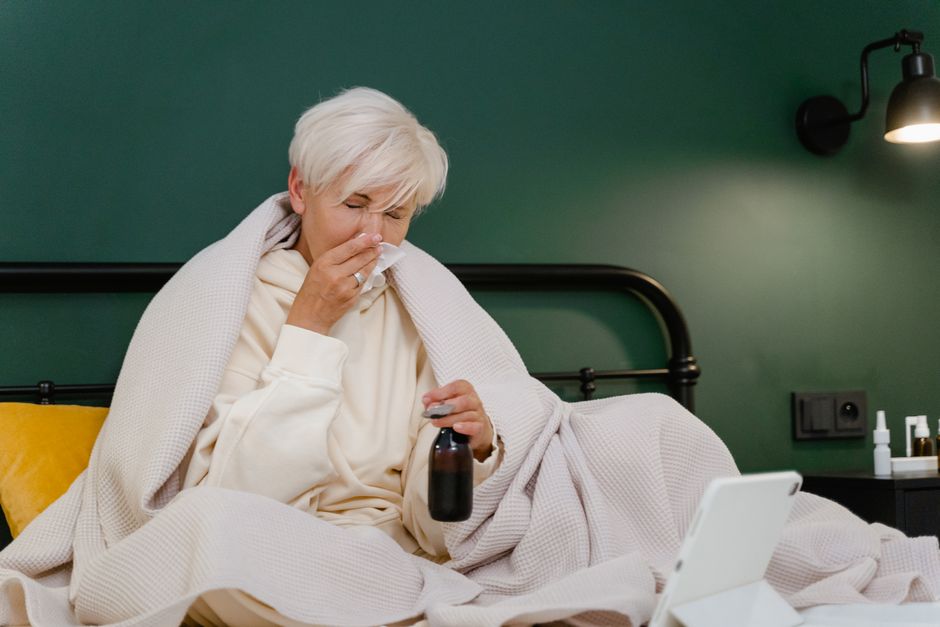
A common cold usually gets better on its own within about 7 to 10 days. Symptoms often peak around day 2 to day 3 and then slowly ease. A mild cough can linger for up to two weeks, and that is still considered normal.
How Long Should A Common Cold Last?
Most adults recover in about a week to ten days. Children sometimes take a little longer because their immune systems are still learning to recognize these viruses.
The cold is not one single illness. It is a group of mild infections caused by many different viruses. Rhinoviruses are the most common cause, but coronaviruses, adenoviruses, and respiratory syncytial virus (RSV) can all produce the same runny nose, sneezing, and sore throat. Because the cause varies, the exact length varies too.
What matters more than counting days is the pattern. A cold that follows the usual arc — building for a few days, peaking, then fading — is behaving normally. A cold that suddenly gets much worse after day five, or one that drags on past two weeks without improving, is worth a closer look.
What Is the Day-by-Day Timeline of a Cold?
The typical cold moves through predictable stages. Not everyone hits every stage, and the timing can shift by a day or two, but the overall shape is consistent.
- Day 1: A tickle in the throat, mild tiredness, maybe a sneeze. You may not feel sick yet.
- Days 2–3: Symptoms peak. Runny nose, congestion, sore throat, and sometimes a low fever. This is when you feel worst.
- Days 4–7: Symptoms start to ease. Nasal mucus may thicken and turn yellow or green — this is normal and does not mean you need antibiotics.
- Days 7–10: Most symptoms are gone or nearly gone.
- Days 10–14: A dry cough or mild congestion may hang on. This is common and usually not a sign of something serious.
That color change in mucus deserves a note. Many people assume green mucus means a bacterial infection. It usually does not. The color comes from white blood cells and enzymes that are part of your normal immune response to a virus.
Why Do Colds Sometimes Last Longer Than a Week?
A cold that stretches past ten days is not automatically a problem. Several things can extend the timeline.
One is that you may have caught a second virus before the first fully cleared. Colds do not grant lasting immunity, partly because so many different viruses cause them. Another factor is your own health. People with asthma, allergies, or a weakened immune system often take longer to recover.
Smoking and secondhand smoke exposure irritate the airways and slow healing. Dry indoor air in winter can keep nasal passages irritated and make symptoms feel worse for longer.
If symptoms clearly worsen after day five or six — rather than steadily improving — that pattern can point to a secondary infection such as sinusitis. This is not common, but it is the reason doctors ask whether you were getting better and then got worse.
When Is a Cold Actually Something Else?
Several conditions look like a cold at first but behave differently. Telling them apart matters because the timeline and care can differ.
Influenza (the flu) tends to hit fast and hard. A cold builds gradually; the flu can put you in bed within hours. Flu also brings higher fever, body aches, and exhaustion that a cold usually does not.
COVID-19 can range from no symptoms to severe illness, and early on it can look exactly like a cold. Testing is the only reliable way to tell them apart.
Seasonal allergies cause runny nose, sneezing, and congestion, but they do not cause fever. They also tend to last as long as the allergen is around — weeks, not days — and often come with itchy, watery eyes.
RSV is common and usually mild in adults, but it can be more serious in infants and older adults. A cold in a healthy adult and RSV can be hard to distinguish without testing.
What Helps a Cold Go Away Faster?
Nothing cures a cold. No over-the-counter medicine shortens it, and antibiotics do not work because colds are caused by viruses. What you can do is manage symptoms while your body clears the infection.
Rest and fluids support your body without directly attacking the virus. Over-the-counter decongestants and pain relievers can ease congestion and sore throat, but they treat symptoms, not the cause.
Some evidence suggests zinc lozenges may shorten cold duration if started within the first day or two of symptoms, but results across studies vary and the effect is modest at best. Zinc can also cause nausea and, with long-term high-dose use, interfere with copper absorption. Anyone considering zinc should talk with a pharmacist or doctor about appropriate use.
Honey can soothe a cough in adults and children over age one. It should never be given to infants under 12 months because of the risk of infant botulism.
Vitamin C taken regularly does not appear to prevent colds in most people. Some research suggests it might slightly reduce duration, but the effect is small and not consistent across studies.
No product on the market has been shown to reliably cure or prevent the common cold. Claims otherwise are marketing, not evidence.
When Should You See a Doctor?
Most colds do not need medical care. Certain signs suggest you should check in with a clinician.
- Symptoms that get worse after day five instead of better
- A fever above 101°F (38.3°C) that lasts more than a few days, or any fever in an infant
- Trouble breathing, wheezing, or chest pain
- Severe sore throat that makes swallowing very difficult
- Symptoms lasting more than two weeks without improvement
- Cold symptoms in someone with asthma, COPD, or a weakened immune system
These signs do not mean something is definitely wrong. They mean a professional should take a look, because a small number of colds do lead to ear infections, sinus infections, or bronchitis.
Can You Prevent a Cold in the First Place?
Prevention is imperfect because there are so many cold viruses and no vaccine for most of them. But some steps reduce your odds.
Handwashing with soap and water remains the most reliable measure. Cold viruses spread through droplets from coughs and sneezes and through contaminated surfaces you touch before touching your face.
Avoiding close contact with people who are sick helps, though people can spread cold viruses before they feel ill. Keeping your hands away from your eyes, nose, and mouth limits the chance a virus on your skin reaches the places it can infect.
Sleep and general health may influence how often you get sick and how long it lasts, though the evidence here is not strong enough to promise a specific effect. What is clear is that no supplement or product has been shown to reliably prevent colds.
Does a Lingering Cough Mean the Cold Is Not Over?
A cough that outlasts other symptoms is common and usually not a concern. Cold viruses irritate the airways, and that irritation can take time to settle even after the infection clears.
Post-nasal drip — mucus running down the back of the throat — is a frequent cause of a lingering cough after a cold. It tends to improve gradually over one to two weeks.
A cough that lasts more than three weeks, brings up blood, or comes with shortness of breath or fever should be evaluated. Those features point away from a simple cold.
Frequently Asked Questions
How long does a common cold usually last?
A common cold typically lasts about 7 to 10 days in adults. A mild cough can linger for up to two weeks and still be normal.
Is it normal for a cold to last two weeks?
Yes, a cold can last up to two weeks, especially if a cough lingers. Symptoms that worsen after day five or fail to improve past two weeks should be checked by a doctor.
Can a cold turn into something worse?
Rarely, a cold can lead to a secondary infection like sinusitis, an ear infection, or bronchitis. Signs include symptoms that suddenly worsen after day five or a fever that returns.
Does green mucus mean I need antibiotics?
No. Green or yellow mucus is a normal part of the immune response to a cold virus and does not mean you have a bacterial infection. Antibiotics do not treat colds.
