
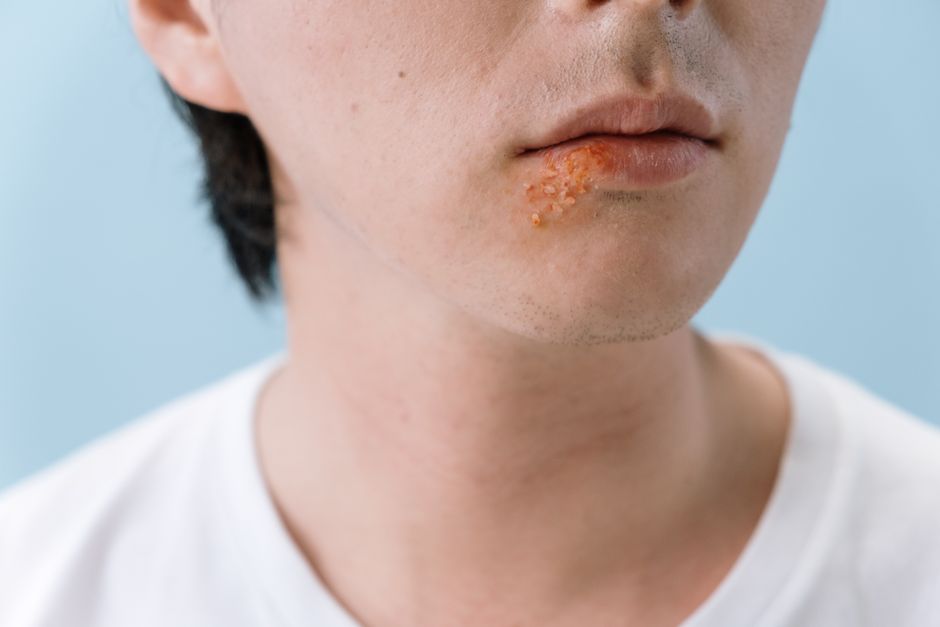
Cold sores are contagious from the moment tingling starts until the blister has completely crusted over and healed — roughly 7 to 12 days in most people. The virus is most contagious when fluid-filled blisters are present, but it can also spread a day or two before any visible sore appears. Once the skin has fully healed, the risk of passing the virus through that spot drops sharply.
How Long Is The Cold Sore Virus Contagious?
The contagious window runs longer than the visible sore. Herpes simplex virus type 1 (HSV-1) can be shed from the skin before a blister forms and for a short time after it looks healed.
The clearest way to think about it: the sore itself is contagious from the first tingle through full healing. That is typically about one to two weeks. The most infectious stage is the blister stage, when the sore is weeping clear fluid.
Once a dry, golden crust forms, contagiousness drops. Once the crust falls off and new skin is intact, that particular outbreak is generally no longer considered contagious through that site.
One point people often miss: HSV-1 can also be shed with no sore at all. This is called asymptomatic shedding. It happens less often than during an active outbreak, but it is real and it is part of why the virus spreads so widely. Many people who carry HSV-1 do not know it.
What Are the Stages of a Cold Sore and When Is Each One Contagious?
A cold sore moves through predictable stages. Knowing them helps you understand when the virus is most likely to pass to someone else.
- Tingling or itching (prodrome): A burning, tingling, or itchy feeling starts at the spot. No sore is visible yet. The virus is reactivating and shedding has likely begun. This stage is contagious.
- Blister: Small fluid-filled blisters appear, usually on or near the lip. This is the most contagious stage because the fluid carries live virus.
- Weeping or ulcer: The blisters burst and leave an open sore. Still highly contagious.
- Crusting: A scab forms over the sore. Contagiousness begins to fall, but the virus can still be present.
- Healing: The crust flakes off and new skin forms underneath. Once fully healed, that outbreak is generally no longer contagious.
People often ask whether a cold sore is contagious once it scabs. The honest answer is that it is less contagious than during the blister stage, but it should still be treated as contagious until the skin has fully closed.
When Is a Cold Sore Most Contagious?
The blister stage carries the highest risk. Fluid inside the blister contains live virus, and any contact with that fluid can transfer it.
The day or two before a blister appears also carries meaningful risk. Many people do not realize they are contagious during the tingle stage because there is nothing to see.
Contagiousness is not equally spread across the whole outbreak. It is highest early, when the sore is wet and open, and lowest late, once the skin has repaired itself.
How Does the Cold Sore Virus Actually Spread?
HSV-1 spreads through direct skin-to-skin contact. It does not travel through the air. You cannot catch it from sitting near someone with a cold sore, or from touching a surface they touched briefly.
The virus enters through small breaks in the skin or through mucous membranes, such as the lips or the inside of the mouth. It then travels along nerve endings and settles into a cluster of nerve cells, where it stays for life.
Most adults carry HSV-1. The World Health Organization estimates that a large share of the global population under 50 is infected, and most of them were infected in childhood through everyday contact like kissing relatives.
This is where a common misunderstanding sits. Many people assume a cold sore means someone recently caught the virus. In most cases it means the opposite: the virus has been dormant in the body for years and has reactivated. The first infection is often mild or silent, especially in children.
What Can Trigger a Cold Sore to Come Back?
Once HSV-1 is in the body, it can reactivate when the immune system is under strain. Common triggers include:
- Physical or emotional stress
- Fever or another infection
- Sun exposure and sunburn on the lips
- Fatigue and lack of sleep
- Hormonal changes, including menstruation
- Skin injury or surgery near the mouth
- A weakened immune system from illness or certain medications
Triggers vary from person to person. Some people have one outbreak a year; others have several. Many people who carry the virus never get a visible cold sore at all.
How Can You Avoid Passing a Cold Sore to Someone Else?
Avoid direct contact with the sore until it has fully healed. That is the single most effective step.
Practical measures during an outbreak:
- Do not kiss anyone, especially babies and young children, while a sore is present.
- Do not share cups, utensils, water bottles, lip balm, or towels.
- Wash your hands often, and avoid touching the sore.
- If you touch the sore, wash your hands right away and avoid touching your eyes.
- Avoid oral sex during an outbreak — HSV-1 can cause genital herpes through oral contact.
- Avoid close contact sports like wrestling while a sore is active.
Newborns deserve special caution. HSV infection in a newborn is uncommon but can be serious. Anyone with an active cold sore should avoid kissing or handling a newborn’s face, and should wash hands thoroughly before any contact. If a newborn is exposed to an active cold sore, contact a healthcare provider promptly.
Can You Spread a Cold Sore When There Is No Sore?
Yes. This surprises many people. HSV-1 can be shed from the skin or mouth with no blister, no tingle, and no warning.
Asymptomatic shedding is less frequent than shedding during an outbreak, but it is a major reason the virus is so common. It also means that avoiding contact only during visible sores reduces risk but does not eliminate it.
For most healthy adults, this is a normal part of living with a very common virus. For people with weakened immune systems, and for newborns, the stakes are higher, and extra care is reasonable.
When Should You See a Doctor About a Cold Sore?
Most cold sores heal on their own without treatment. Certain situations call for medical advice.
- A sore that lasts longer than about two weeks or keeps getting worse
- Sores near the eyes, or any eye pain, redness, or blurred vision
- Widespread blisters, or sores that spread beyond the lips
- Signs of infection such as spreading redness, warmth, pus, or fever
- Frequent outbreaks that disrupt daily life
- A cold sore in a person with a weakened immune system
- Any cold sore exposure in a newborn
Prescription antiviral medications can shorten outbreaks and reduce shedding when started early, ideally during the tingle stage. Whether they are appropriate depends on your situation, so this is a conversation to have with a clinician rather than a decision to make alone.
Frequently Asked Questions
How long is a cold sore contagious after it scabs?
A cold sore is generally considered contagious until the scab falls off and the skin has fully healed. The scab stage is less contagious than the blister stage, but the virus can still be present.
Can you kiss someone with a cold sore if it is healing?
Avoid kissing until the sore has completely healed and new skin has formed. The virus can still spread during the crusting stage.
How long does a cold sore last from start to finish?
Most cold sores heal in about 7 to 12 days. The first outbreak can take longer than later ones.
Is a cold sore contagious before you can see it?
Yes. The virus can shed during the tingling stage, a day or two before a blister appears. Some people also shed the virus with no symptoms at all.
