
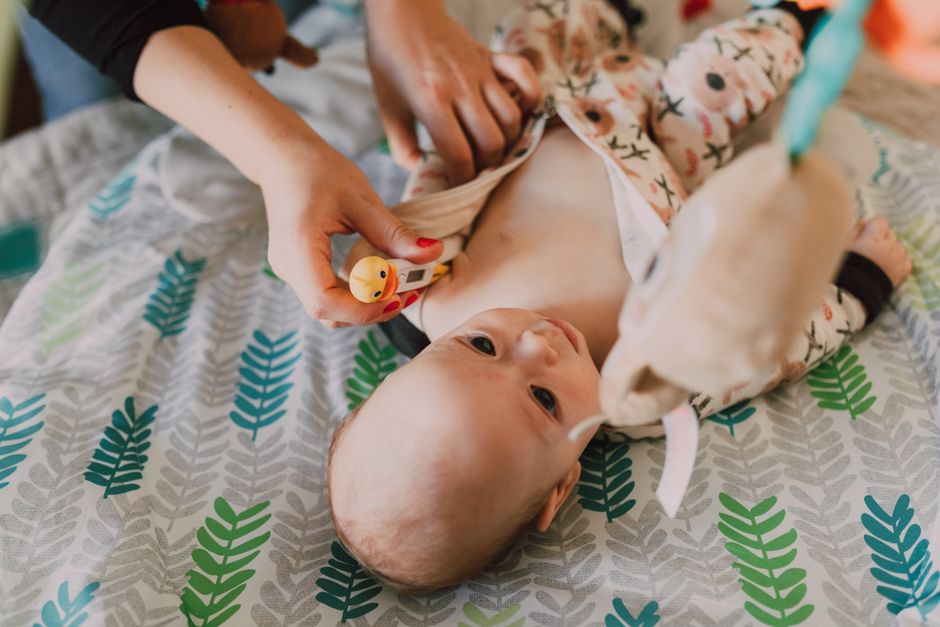
The medical newborn period lasts exactly 28 days from the moment of birth. That is the standard definition used by the World Health Organization and pediatric organizations worldwide. After day 28, a baby is classified as an infant — though in everyday language, most parents keep calling them “newborns” for a few more weeks.
That gap between the medical definition and the way people actually talk matters. It affects how developmental milestones get tracked, how some health risks are described, and what parents should reasonably expect at each stage. Here is what the timeline actually looks like.
How Long Is a Newborn a Newborn?
The clinical answer is 28 days. Day one is the day of birth. Day 28 is the last day of the newborn period. On day 29, the baby is medically an infant.
This 28-day window is not arbitrary. It marks the period when certain health risks are highest and when a baby’s body is undergoing its most rapid transition — from relying on the placenta to breathing air, regulating temperature, and processing food through the gut. Most newborn screening programs, follow-up schedules, and warning-sign checklists are built around this four-week window.
Some organizations extend the definition slightly. The American Academy of Pediatrics uses “newborn” for the first month of life in most clinical contexts. The World Health Organization’s statistical classification uses 28 completed days. These are not conflicting definitions so much as slightly different boundaries for slightly different purposes.
What Happens During the First 28 Days?
The first month is the most physiologically demanding period of a person’s life outside the womb. A newborn’s body is adjusting to several major systems at once.
Breathing. Before birth, the lungs are fluid-filled and unused. Within the first few breaths after delivery, air replaces that fluid and blood flow to the lungs increases sharply. This transition is usually complete within minutes, but the lungs continue maturing for weeks.
Circulation. In the womb, a fetal opening between the heart’s upper chambers allows blood to bypass the lungs. After birth, this opening typically closes — functionally within hours or days, and structurally within the first few weeks. A small opening that persists is common and often closes on its own, though larger ones require medical evaluation.
Feeding and digestion. A newborn’s stomach holds only a small amount at first — roughly the size of a cherry on day one, growing to about the size of a walnut by day three and an egg by day ten. This is why newborns feed so frequently. The gut is also colonizing with bacteria for the first time, which is part of why stool patterns change so dramatically during this period.
Temperature regulation. Newborns lose heat quickly because they have relatively little insulating fat and cannot shiver effectively. This is why keeping a newborn warm — but not overheated — is a genuine safety concern in the early weeks.
Immune function. A newborn’s immune system is immature. Antibodies passed from the mother before birth and through breast milk offer some protection, but the first month is a period of real vulnerability to infection.
When Does the Newborn Period End and Infancy Begin?
By the standard definition, infancy begins on day 29. But the developmental changes that matter most to parents happen on a rolling basis, not on a single day.
Some markers that shift around the end of the newborn period:
- More sustained alert periods — a newborn sleeps most of the day, but by four weeks, many babies have longer stretches of wakefulness
- Improved head control — still very limited, but noticeably better than at birth
- Social smiling — some babies begin smiling in response to faces around four to six weeks, which is just past the newborn window
- More predictable feeding patterns — though “predictable” is relative at this age
The 28-day boundary is useful for medical tracking. It is not a switch that flips a baby from one kind of being into another. Development is continuous.
Why the 28-Day Mark Matters for Health Monitoring
Health systems use the newborn period as a defined window because certain risks cluster there.
Newborn screening. Blood spot tests for conditions like phenylketonuria, congenital hypothyroidism, and sickle cell disease are typically done within the first few days of life. These are timed to catch treatable conditions before symptoms appear.
Jaundice monitoring. Many newborns develop some degree of jaundice in the first week as their livers mature. Most cases are mild and resolve without treatment. Severe or persistent jaundice needs medical attention.
Weight checks. It is normal for newborns to lose some weight in the first few days — often around five to seven percent of birth weight, sometimes more. Most regain birth weight by about two weeks. Pediatric visits in the first month track this closely.
Infection vigilance. Because a newborn’s immune system is immature, fever in a baby under 28 days old is treated as a medical emergency. This is one of the clearest examples of why the 28-day boundary has real clinical weight. A fever in a two-month-old is handled differently than a fever in a two-week-old.
What Changes After the First Month?
After 28 days, the risk profile shifts. Some of the most acute newborn concerns — like the transition to breathing air and the highest-risk window for certain infections — become less pressing. Other developmental tasks come forward.
By two months, most babies:
- Can lift their head briefly when lying on their stomach
- Track objects with their eyes
- Respond to loud sounds
- Begin to coo
None of these are strict deadlines. Babies develop at different rates. What matters is the overall trajectory, not hitting a specific milestone on a specific day.
The two-month mark is also when the first round of routine childhood vaccinations typically begins in the United States. That timing is deliberate — it reflects when a baby’s immune system can respond well to vaccines and when protection against certain diseases becomes most important.
Common Questions About Newborn Timelines
Is a one-month-old still a newborn? By the 28-day definition, no. A one-month-old is technically an infant. In casual conversation, most people still use the word “newborn” for babies up to about two or three months old.
Does premature birth change the timeline? Yes. For babies born early, developmental milestones are often adjusted for gestational age. A baby born at 34 weeks may be tracked developmentally as if they were younger than their birth date suggests. The 28-day newborn period still applies from the date of birth, but developmental expectations are adjusted.
Is the 28-day definition universal? Not entirely. Different organizations and countries use slightly different boundaries. Some use “neonatal period” for the first 28 days and “postneonatal” after that. The 28-day figure is the most widely used standard.
What Parents Should Watch For in the First Month
The newborn period is not just a calendar label. It is a time when certain symptoms need immediate medical attention.
Seek urgent care if a baby under 28 days old has:
- A rectal temperature of 100.4°F (38°C) or higher
- Difficulty breathing or unusual breathing patterns
- Poor feeding or refusal to eat
- Fewer wet diapers than expected
- Unusual lethargy or difficulty waking
- Yellowing of the skin or eyes that is worsening or spreading
These signs do not always mean something serious is happening. But in the first month, they need to be checked. The threshold for evaluation is lower in newborns than at any other age.
Frequently Asked Questions
How long is a newborn considered a newborn?
The medical newborn period is 28 days from birth, according to the World Health Organization. After day 28, a baby is classified as an infant.
Is a 1-month-old still a newborn?
No — by the standard 28-day definition, a one-month-old is an infant. In everyday language, many people still call babies “newborns” for several more weeks.
What is the difference between a newborn and an infant?
A newborn is a baby in the first 28 days of life; an infant is a baby from day 29 through the first year. The distinction matters mainly for medical monitoring and risk assessment.
Why is the newborn period defined as 28 days?
The 28-day window captures the period of highest physiological transition and vulnerability, including the highest-risk window for certain infections. It is also when most newborn screening and follow-up care is scheduled.
