
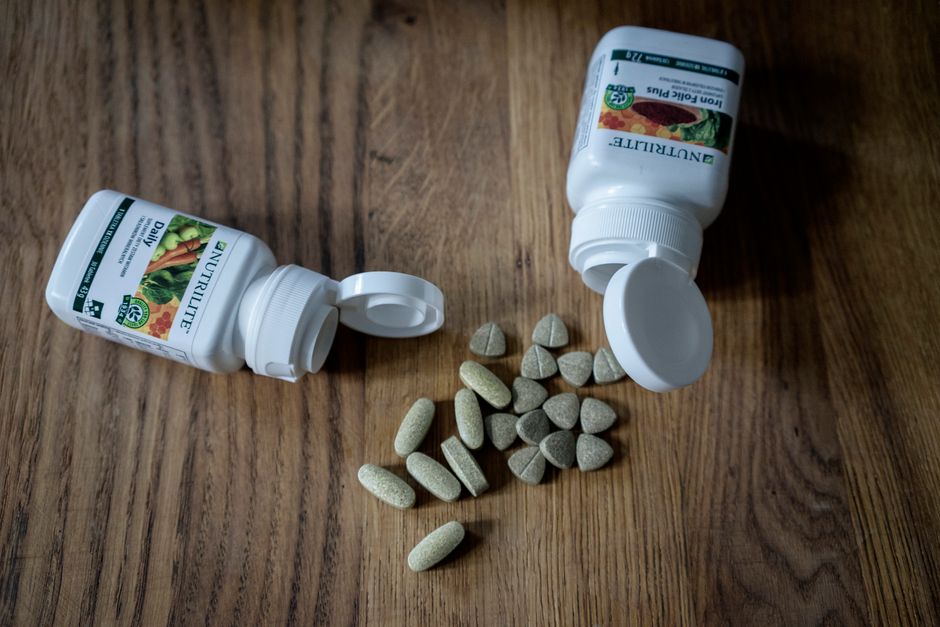
Iron tablets do not stop hair loss on a fixed schedule. The timeline depends on whether iron deficiency is actually causing your shedding, how low your iron stores were to begin with, and how quickly your body absorbs the supplement. Most people who genuinely have iron-deficiency hair loss see the earliest change in shedding after about three to six months of consistent treatment, and meaningful regrowth typically takes six to twelve months. If your ferritin is normal, iron pills will not help your hair at all.
Does Iron Deficiency Actually Cause Hair Loss?
Yes, but the relationship is more specific than most people assume. Iron deficiency is a well-established cause of a type of shedding called telogen effluvium, where a larger-than-normal share of hair follicles shift out of the growing phase and into the resting phase. A few months later, those hairs fall out together.
The key detail is that this is diffuse shedding across the whole scalp, not a receding hairline or a bald patch. Iron deficiency does not cause the patterned hair loss of male or female androgenetic alopecia. If your hair loss is concentrated at the temples or crown, iron is unlikely to be the main driver.
Iron matters because hair follicle cells divide rapidly, and rapidly dividing cells need iron for normal function. When stores run low, the body prioritizes essential functions like oxygen transport over hair growth. The follicle doesn’t stop working, but the growth cycle gets disrupted.
How Long Do Iron Tablets Take to Stop Hair Loss?
The honest answer is that there is no single number, and anyone who gives you one is oversimplifying. What we know is based on how iron is absorbed, how long it takes to rebuild stores, and how the hair growth cycle works.
Here is the sequence most clinicians describe:
- Weeks 1 to 4: Hemoglobin and ferritin begin to rise if you are truly deficient and absorbing the iron. Hair shedding has not changed yet.
- Months 2 to 3: Ferritin continues climbing. Shedding may start to slow, but many people notice nothing.
- Months 3 to 6: This is when most people who will respond start to see less shedding in the shower or on the pillow.
- Months 6 to 12: New growth becomes visible. Baby hairs along the hairline and part are common.
That timeline assumes you are taking the iron consistently, your dose is adequate, and you are absorbing it. It also assumes iron deficiency was the actual cause. If thyroid disease, protein deficiency, or another condition is driving the shedding, iron will not fix it.
One thing worth knowing: hair grows roughly half an inch per month. That physical limit means no supplement on earth can produce visible new length faster than the follicle can grow it. Any product promising hair regrowth in two weeks is not describing biology.
Why Does It Take So Long?
Two separate clocks are running at the same time, and they both have to finish before you see results.
The first clock is your iron status. Oral iron raises hemoglobin relatively quickly in someone who is anemic, often within a few weeks. But ferritin, which reflects your stored iron, rises much more slowly. Rebuilding depleted stores commonly takes several months of consistent supplementation. Your hair does not appear to care much about hemoglobin. It responds to the stored iron available to the follicle.
The second clock is the hair cycle itself. Hair grows in phases. The growing phase lasts years, the transition phase lasts days, and the resting phase lasts around three months before the hair sheds. When iron deficiency pushes follicles into the resting phase early, those hairs are already committed to falling out. Correcting the deficiency does not recall them. You have to wait for them to shed and for new follicles to enter the growing phase.
That is why the timeline is measured in months, not weeks. It is not slow absorption. It is the biology of the follicle.





What Ferritin Level Matters for Hair?
This is where the evidence gets murky, and it is worth being honest about that. There is no universally accepted ferritin threshold that defines iron-deficiency hair loss.
Standard lab reference ranges often list a lower limit around 15 to 30 ng/mL for ferritin. Many dermatologists who treat hair loss consider that too low and prefer to see ferritin above 40 ng/mL, with some aiming higher. That practice is common but not uniformly supported by high-quality trials. Some studies have found lower ferritin levels in people with certain types of hair loss compared with controls. Other studies have not found a clear relationship.
What this means practically: a ferritin of 18 ng/mL is technically within range but may still be relevant to your hair. A ferritin of 70 ng/mL is unlikely to explain shedding, and taking more iron will not help. The number has to be interpreted alongside your symptoms, your menstrual history if applicable, your diet, and other lab results.
Do not self-diagnose from a single number. Iron status is assessed with ferritin plus a complete blood count, and sometimes additional tests. A clinician interprets these together.
What Else Causes Hair Loss That Looks Like Iron Deficiency?
Diffuse shedding has a long list of possible causes, and several of them look identical to iron-deficiency shedding. This is why iron supplements often fail to fix the problem.
- Thyroid disorders: Both an underactive and overactive thyroid can cause diffuse shedding.
- Telogen effluvium from a stressor: Illness, surgery, major stress, or rapid weight loss can trigger shedding that starts about two to three months later and often resolves on its own.
- Postpartum shedding: Extremely common and driven by hormone shifts, not iron.
- Androgenetic alopecia: Patterned thinning driven by genetics and hormones, not iron.
- Protein or calorie deficiency: Severe restriction can shut down hair growth.
- Vitamin D or zinc deficiency: Both have been associated with hair loss, though the evidence for supplementation helping is limited.
- Medications: Several drug classes can cause shedding as a side effect.
If you have been on iron for six months with no change, the next step is not a higher dose. It is a proper workup for other causes.
Can You Take Too Much Iron?
Yes, and this is not a minor concern. Iron is not a vitamin your body flushes out when you take too much. Excess iron is stored, and iron overload can damage the liver, heart, and pancreas over time.
Iron supplementation should be based on a documented deficiency, not on a guess. This matters especially for men and for postmenopausal women, who are at lower risk of iron deficiency than menstruating women and are more likely to have an underlying condition if their iron is low. In those groups, low iron is a reason to look for a cause, not just to start pills.
Common side effects of oral iron include constipation, nausea, and dark stools. These are uncomfortable but not dangerous. Actual iron poisoning is a medical emergency and is a serious risk in young children who swallow adult supplements. Keep iron pills out of reach of children and call poison control immediately if a child swallows them.
Do not take iron without knowing your levels. Do not take it long-term without follow-up testing. And do not combine it with calcium, antacids, or certain other medications without checking, because those can block absorption.
What Should You Do If You Think Iron Is Causing Your Hair Loss?
Get tested before you treat. Ask for ferritin and a complete blood count at minimum. If your levels are low, work with a clinician on an appropriate dose and a plan to recheck in a few months.
While you wait, focus on what actually moves the needle:
- Take iron consistently. Skipping days slows the timeline.
- Take it with vitamin C or on an empty stomach if you tolerate it, since that improves absorption.
- Separate it from calcium, coffee, tea, and antacids by a couple of hours.
- Eat iron-rich foods alongside supplements if your clinician recommends it.
- Be patient. Three months is the earliest realistic checkpoint.
If shedding continues past six months on treatment, or if you develop fatigue, shortness of breath, or other symptoms, go back to your clinician. Something else may be going on.
Frequently Asked Questions
How long does it take for iron tablets to stop hair loss?
Most people who respond see reduced shedding after about three to six months of consistent treatment, with visible regrowth typically taking six to twelve months. If your iron levels are normal, iron tablets will not stop your hair loss at all.
What ferritin level causes hair loss?
There is no universally accepted threshold, though many clinicians who treat hair loss prefer ferritin above 40 ng/mL even when standard lab ranges list a lower cutoff. The number must be interpreted alongside your symptoms and other test results.
Can iron tablets regrow hair if I am not deficient?
No. If your ferritin and hemoglobin are normal, taking iron will not regrow hair and can cause harm over time from iron overload. Iron only helps when deficiency is the actual cause of shedding.
Why is my hair still falling out after taking iron for months?
Either the iron has not yet rebuilt your stores, or iron deficiency was never the cause. Diffuse shedding can also come from thyroid problems, recent illness, hormonal shifts, or genetics, so persistent shedding after several months of treatment needs a proper workup.
