
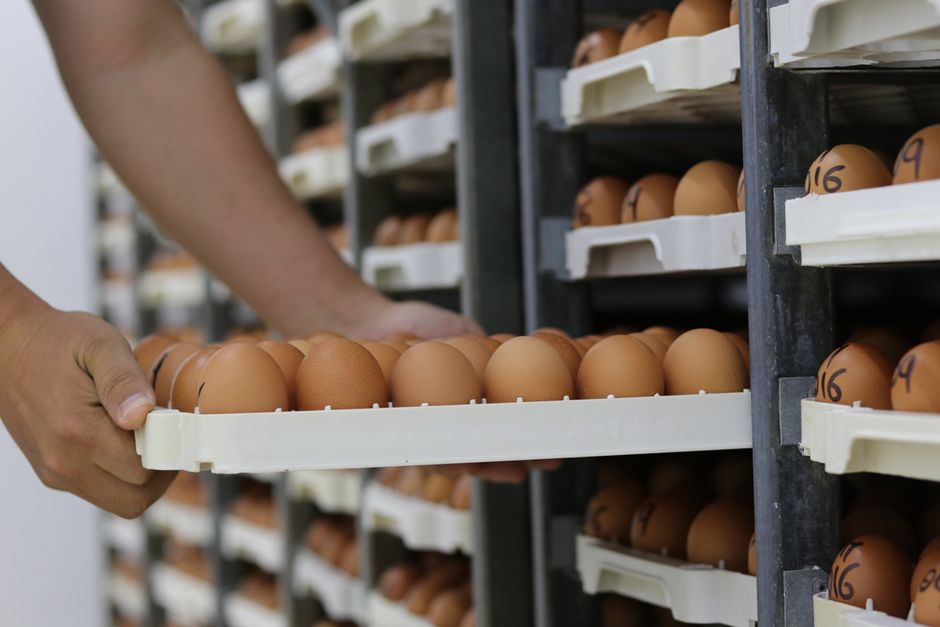
Most eggs need about 30 minutes on the counter to reach room temperature. A large egg straight from a 40°F refrigerator usually takes 30 to 60 minutes to warm to roughly 68°F to 70°F. Smaller eggs warm faster, and a cold kitchen slows the process down.
That timing matters most when you are baking. Room temperature eggs blend into batter more evenly than cold ones, and they whip up with more volume. Cold eggs are also more prone to cracking when you drop them into hot water. So the 30-minute rule is really a practical one, not a food safety rule.
How Long For Eggs To Get To Room Temp?
Thirty minutes is the working number for most home kitchens. A large egg pulled from the fridge and left on the counter will typically reach room temperature in about 30 minutes. Give it up to an hour if your kitchen is cool or the egg is extra large.
The egg doesn’t warm all at once. The shell and outer white warm first, while the yolk stays cool longer. That is why an egg can feel room temperature on the outside while the center is still chilled. If you crack it and the yolk feels cold, it hasn’t fully warmed through.
A few things change the timing:
- Egg size — a small egg warms faster than a jumbo
- Room temperature — a warm kitchen speeds things up, a cold one slows them down
- Starting temperature — an egg from a 40°F fridge takes longer than one from a 45°F spot
- Surface contact — an egg sitting on a cold counter warms slower than one on a wooden board
You can’t rush this with heat. Placing eggs near a warm stove or in sunlight risks uneven warming and bacterial growth on the shell. The slow counter method is the safe one.
Why Do Recipes Call For Room Temperature Eggs?
Room temperature eggs behave differently in baking, and the difference is real. Cold egg whites are more viscous, so they don’t whip into as much volume as warm ones. When you are making a sponge cake or meringue, that volume is the whole point.
Cold eggs also cool down your batter. If a recipe relies on melted butter or a warm mixture, cold eggs can cause the fat to seize up or the batter to look curdled. Room temperature eggs blend in smoothly and keep the batter at a consistent temperature.
The same logic applies to creaming butter and sugar. Cold eggs added to creamed butter can make the mixture look lumpy even though nothing is wrong. Warm eggs incorporate cleanly.
This is a texture and structure issue, not a safety one. A cold egg won’t make you sick in a cake. It will just change how the batter comes together.
Do You Really Need Room Temperature Eggs For Baking?
Not always. For many everyday recipes, cold eggs work fine. Quick breads, pancakes, muffins, and most cookies don’t depend on egg temperature for their structure. The batter may look slightly different, but the finished product is usually the same.
Where temperature matters most:
- Sponge cakes and genoise, which rely on whipped egg volume
- Meringues and angel food cake, where whites must whip to full volume
- Recipes with melted butter or warm batters, where cold eggs can cause curdling
- Delicate custards and some sauces
If you are short on time, you can warm eggs faster than 30 minutes without risking safety. Place them in a bowl of warm — not hot — tap water for a few minutes. Warm water transfers heat faster than air. Just don’t use hot water, which can start cooking the egg and encourage bacteria to multiply on the shell.





Is It Safe To Leave Eggs Out At Room Temperature?
Yes, for a limited time. In the United States, eggs are typically washed during processing, which removes the natural protective coating on the shell. That means they need refrigeration and should not sit out for long.
The general guidance from food safety authorities is that perishable foods, including eggs, should not sit in the temperature range between 40°F and 140°F for more than two hours. That range is where bacteria multiply fastest. Leaving eggs on the counter for 30 to 60 minutes to warm up is well within safe limits.
Two hours is the outer limit, not a target. If your kitchen is warm, or if the eggs will later sit in a warm batter, keep the counter time shorter. Once eggs have been out for more than two hours, food safety guidance says to discard them rather than return them to the fridge.
There’s a wrinkle worth knowing. In many European countries, eggs are not washed the same way and are often stored at room temperature in stores. The rules differ because the processing differs. In the US, follow the refrigeration guidance.
What About Hard-Boiled Eggs And Other Cooking?
For boiling, cold eggs are actually the better choice. Starting eggs in cold water and bringing them up to a boil gradually reduces the chance of the shell cracking. A cold egg going into already-boiling water is more likely to split.
For hard-boiled eggs, the timing question flips. You don’t want them at room temperature before boiling — you want them cold and started in cold water. The gentle temperature rise helps the white set evenly.
For frying and scrambling, temperature matters less. Room temperature eggs cook a bit more evenly, but cold eggs work fine. The main difference is how they behave in the pan, not safety.
For poaching, fresher eggs hold their shape better, and temperature is secondary. Very fresh eggs have firmer whites that stay together in the water.
How Can You Tell An Egg Is At Room Temperature?
Touch is the simplest test. A room temperature egg feels neutral against your skin — neither cool nor warm. A cold egg feels distinctly chilled. If you’re unsure, crack it into a bowl. A cold yolk feels cool to the touch, while a warmed one feels neutral.
You can also weigh the tradeoff in time. If you forgot to pull eggs out early, the warm water bath is the fastest safe method. Five to ten minutes in warm tap water usually does what 30 minutes on the counter would.
One caution: don’t microwave eggs to warm them, even briefly. Microwaving an egg in the shell can cause it to explode, and even cracked eggs can cook unevenly and splatter. It isn’t worth the risk.
Does Egg Temperature Affect Food Safety In The Fridge?
Eggs should be stored in the refrigerator at 40°F or below. Keeping them cold slows bacterial growth and preserves quality. Store them in their original carton rather than the door, where temperatures fluctuate each time the fridge opens.
Bringing eggs to room temperature for 30 minutes does not undo that safety. The interior of the egg stays cool for a while even as the shell warms. As long as you keep counter time under two hours and cook the eggs thoroughly, the risk is minimal.
The bigger safety issue is what happens after cooking. Cooked egg dishes, like custards and quiches, should be refrigerated within two hours and eaten within a few days. That guidance is consistent across food safety authorities.
Frequently Asked Questions
How long does it take for an egg to reach room temperature?
About 30 minutes for a large egg from a 40°F refrigerator. It can take up to an hour in a cool kitchen or for a jumbo egg.
Can I speed up bringing eggs to room temperature?
Yes, place them in a bowl of warm tap water for five to ten minutes. Do not use hot water, which can begin cooking the egg and encourage bacteria on the shell.
Is it safe to leave eggs out for 30 minutes?
Yes. Food safety guidance allows perishable foods, including eggs, to sit out for up to two hours. Thirty minutes is well within that window.
Do eggs really need to be at room temperature for baking?
Only for recipes that depend on whipped egg volume, like sponge cakes and meringues. For most cookies, muffins, and quick breads, cold eggs work fine.
