
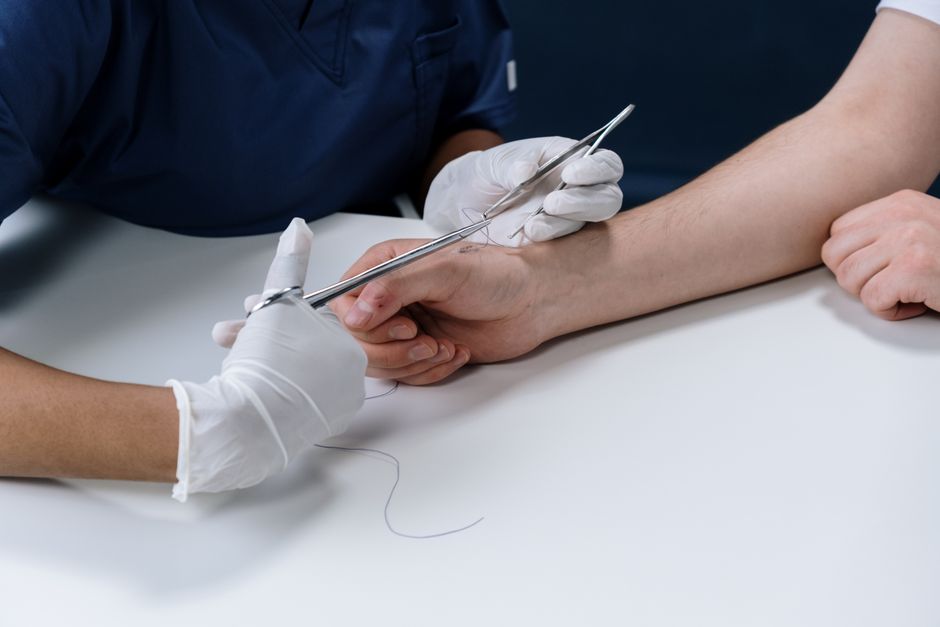
Dissolvable sutures typically lose most of their strength within 1 to 3 weeks and are fully absorbed by the body somewhere between 6 and 8 weeks, though the exact timeline depends on the specific material used. Some sutures dissolve faster, in as little as 10 to 14 days, while others hold on for several months. The type of suture your surgeon chose, where it was placed, and how your body responds all affect how long the process takes.
If you can still see or feel a stitch after a few weeks, that is often normal. It does not automatically mean something is wrong. But knowing what to expect — and when to call your doctor — matters.
What Does “Dissolvable” Actually Mean?
Dissolvable sutures — also called absorbable sutures — are designed to break down inside the body over time. They do not need to be removed by a doctor. The body gradually breaks them down through a process called hydrolysis or enzymatic digestion, depending on the material.
During hydrolysis, water in your tissues slowly breaks the chemical bonds holding the suture thread together. The material weakens, fragments, and eventually gets cleared away by your immune system. This is not the same as the suture “melting.” It is a chemical and biological breakdown that happens at a predictable rate for each material.
The key point: dissolving is not the same as losing strength. A suture can still be visible while providing almost no wound support. That is by design. The wound should be healing on its own by the time the suture weakens significantly.
How Long For Dissolvable Sutures To Dissolve by Type?
Different suture materials dissolve at very different rates. Your surgeon picks a type based on how much tension the wound carries, how fast the tissue heals, and where the suture sits.
Here is a general comparison of common absorbable suture categories. These are established ranges from surgical references, not exact predictions for any one person.
| Suture Category | Loses Most Strength | Fully Absorbed |
|---|---|---|
| Fast-absorbing gut | About 10–14 days | Around 3–4 weeks |
| Plain gut | About 2–3 weeks | Around 4–6 weeks |
| Chromic gut | About 3–4 weeks | Around 6–8 weeks |
| Polyglactin (Vicryl-type) | About 3–4 weeks | Around 8–10 weeks |
| Poliglecaprone (Monocryl-type) | About 2–3 weeks | Around 3–4 months |
| Polydioxanone (PDS-type) | About 6 weeks | Around 6 months |
These ranges are approximate. Individual absorption can vary based on blood supply to the area, infection, and personal healing factors. A suture in the mouth or face tends to dissolve faster than one in a slow-healing area like the foot.
One detail worth knowing: the material name matters more than the brand. Different companies make similar products with different trade names, but the underlying polymer determines the timeline.
Why Do Some Sutures Take Longer Than Others?
The single biggest factor is the polymer the suture is made from. Some materials are designed to hold for months because they support tissue that heals slowly — like fascia or abdominal wall. Others are made to disappear quickly because the tissue underneath heals fast.
Blood supply to the area plays a major role. Tissue with rich blood flow, like the mouth or scalp, breaks down sutures faster. Areas with less circulation, like tendons or the sole of the foot, tend to hold them longer.
Other factors that can affect the timeline:
- Infection or inflammation — can speed up breakdown in unpredictable ways
- Wound tension — high-tension wounds need longer-lasting sutures
- Individual biology — some people break down suture material faster than others
- Location depth — buried sutures dissolve differently than surface ones
Age, nutrition, and certain medical conditions like diabetes can also influence healing and absorption, though the effect on suture breakdown specifically is not fully predictable.





What If You Can Still See or Feel a Stitch?
It is common to see or feel a piece of suture weeks after a procedure. Sometimes a small fragment works its way to the surface and stays there. This does not necessarily mean anything is wrong.
If a visible stitch is not causing pain, redness, or drainage, it often resolves on its own. Your body will eventually break it down or push it out.
Call your doctor if you notice:
- Increasing redness, warmth, or swelling around the wound
- Pus or foul-smelling drainage
- Fever
- A wound that is opening or pulling apart
- Pain that is getting worse instead of better
These can be signs of infection or wound breakdown and need medical attention. Do not try to pull out a suture on your own. You can disrupt healing tissue and introduce bacteria.
Do Dissolvable Sutures Always Disappear Completely?
In most cases, yes. The body clears the material entirely. But “completely” does not mean quickly, and it does not mean you will never notice anything.
Some people develop a small granuloma — a tiny bump of tissue where the body reacted to the suture material. These are usually harmless and may fade over months. In rare cases, a piece of suture can remain visible under the skin for a long time or work its way out.
It is also possible for the body to react to a suture with prolonged inflammation. This is uncommon but can happen. If a wound stays red, tender, or swollen well beyond the expected healing window, it is worth having a clinician look at it.
Does Dissolving Mean the Wound Is Healed?
No. This is one of the most common misunderstandings about absorbable sutures.
A suture can dissolve while the wound underneath is still gaining strength. That is why surgeons choose suture types based on how long the tissue needs support, not on how long the suture lasts. The two timelines are matched on purpose.
For example, skin heals relatively quickly, so a fast-absorbing suture may be used. Deeper tissue like fascia heals slowly, so a longer-lasting suture is chosen. The goal is for the suture to hold long enough for the tissue to support itself, then fade away.
Even after sutures dissolve, a wound may only have a fraction of its original tissue strength. Full tensile strength can take weeks to months to develop, depending on the tissue. This is why doctors give activity restrictions after surgery — not just until sutures dissolve, but until the tissue has regained enough strength.
Following your surgeon’s instructions about activity, wound care, and follow-up matters more than watching for the suture to disappear.
Frequently Asked Questions
How long do dissolvable sutures take to dissolve?
Most absorbable sutures lose their strength within 1 to 3 weeks and are fully absorbed by the body within 6 to 8 weeks. Some types dissolve faster, in about 10 to 14 days, while others take several months.
Can dissolvable stitches fall out too early?
Yes, sutures can come out earlier than expected if the wound is under tension or if the tissue breaks down faster than usual. If a wound starts opening or a stitch falls out and the edges separate, contact your doctor.
What happens if a dissolvable suture doesn’t dissolve?
In some cases, a piece of suture can remain under the skin longer than expected or work its way to the surface. This is usually harmless, but if it causes redness, pain, or drainage, have a clinician evaluate it.
Should I pull out a dissolvable stitch that’s sticking out?
No. Pulling on a suture can disrupt healing tissue and introduce bacteria. Let your doctor remove it if needed, or let it fall out on its own.
