
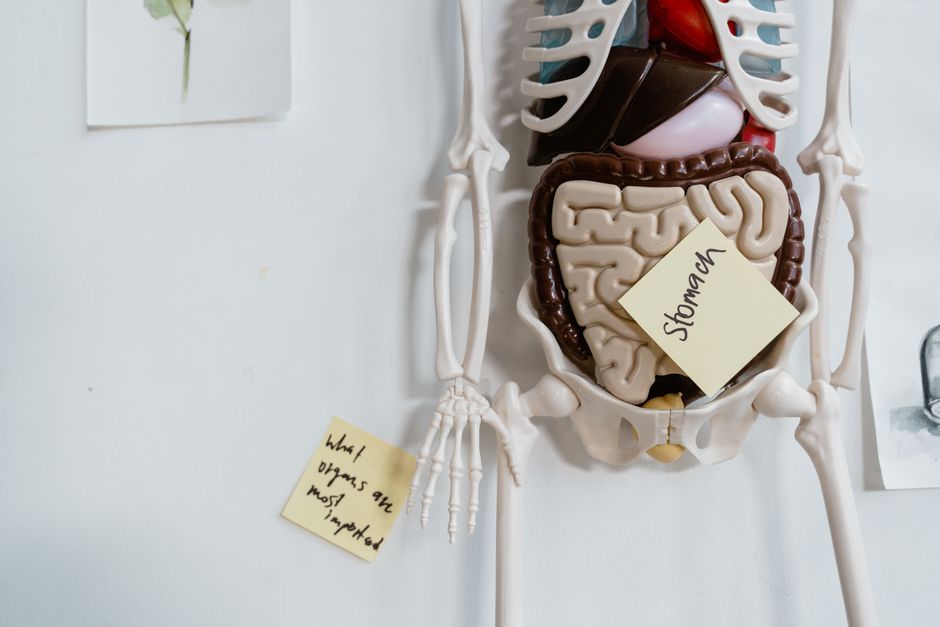
Most food spends about 2 to 4 hours in your stomach before it moves to the small intestine. Total digestion time from the first bite to the end of the process ranges from 24 to 72 hours, depending on the food and your body. The stomach’s job is only the first stage; the small intestine does most of the nutrient absorption over the next 3 to 5 hours, and the large intestine finishes the job over one to two days.
What Happens in Your Stomach After You Eat
Your stomach is a muscular sac that does two main things: it stores food and it breaks it down chemically. When you swallow, food travels down your esophagus and enters the stomach through a valve called the lower esophageal sphincter.
Your stomach then churns the food with strong muscle contractions. At the same time, it releases gastric juice, which contains hydrochloric acid and an enzyme called pepsin. This acid kills most bacteria in your food, and pepsin starts breaking down proteins into smaller pieces.
By the time food leaves the stomach, it is no longer recognizable. It becomes a thick, semi-liquid mixture called chyme. The stomach releases this chyme slowly into the small intestine through another valve, the pyloric sphincter. This slow release matters because the small intestine can only handle small amounts at a time.
How Long Does Your Stomach Take to Digest Food by Type
Not all foods leave the stomach at the same speed. The composition of your meal changes how long the stomach works. This is called the gastric emptying rate.
Carbohydrates leave the stomach fastest. Simple sugars and refined carbs like white bread or juice may empty within about 1 to 2 hours. Complex carbs with fiber, like oats or whole grains, take longer, roughly 2 to 3 hours.
Protein sits in the stomach longer than carbs. A normal serving of chicken, fish, or eggs takes about 3 to 4 hours to empty. High-protein meals slow the process because protein requires more chemical breakdown.
Fat is the slowest. Foods high in fat, such as fried items or fatty cuts of meat, can stay in the stomach for 4 hours or more. Fat triggers a reflex that slows stomach emptying, which is why a fatty meal keeps you feeling full longer.
Mixed meals follow the slowest component. A cheeseburger with fries and a shake will empty more slowly than a plain salad because the fat content controls the pace.
Total Digestion Time Through Your Entire System
Stomach emptying is only part of the story. Full digestion includes the small intestine, the large intestine, and finally elimination.
Once chyme enters the small intestine, it takes about 3 to 5 hours to move through. Here, bile from your gallbladder and enzymes from your pancreas break down fats, carbs, and proteins into molecules small enough to absorb through the intestinal wall.
What remains then enters the large intestine, or colon. The colon absorbs water and electrolytes from the leftover material. This stage is the slowest and most variable. It can take anywhere from 12 to 48 hours for waste to move through the colon and be eliminated.
For most healthy adults, the complete process from eating to elimination takes about 24 to 72 hours. If you eat a meal and see it pass through in under 24 hours, that is fast transit. If it takes three days, that is still within a normal range.




Factors That Speed Up or Slow Down Digestion
Several factors change how quickly your stomach empties and how fast food moves through your system. Some of these are within your control, and some are not.
Meal size matters. A large meal takes longer to empty than a small snack. Your stomach stretches to hold the food, and the stretching itself signals the stomach to work longer.
Your physical state changes digestion speed. Exercise speeds up stomach emptying in most people. Stress and anxiety can slow it down or speed it up, depending on the person. Some people get diarrhea under stress; others get constipation.
Medical conditions can significantly alter digestion. Gastroparesis is a condition where the stomach empties much slower than normal. It is most common in people with diabetes, especially when blood sugar control is poor. It can also occur after stomach surgery or from certain medications.
Medications are a common cause of slower digestion. Opioid painkillers, some antidepressants, and certain blood pressure drugs can slow the entire digestive tract. If you notice a sudden change in your digestion after starting a new medication, talk to your doctor.
Age plays a role as well. Stomach emptying tends to slow slightly as you get older, though the change is modest for most people. The bigger change with age is in the colon, where transit can slow down.
How to Know If Your Digestion Is Normal
Normal digestion looks different for different people. The key is consistency with your own baseline, not comparing yourself to someone else.
You can get a rough sense of your total transit time without any special testing. Eat something you do not normally eat, like corn or sesame seeds, and note when you see it in your stool. The time between eating and seeing it is your total transit time. For most people this falls between 24 and 72 hours.
Pay attention to warning signs that something is wrong. See a doctor if you have any of these:
- Severe or persistent abdominal pain
- Vomiting, especially if you cannot keep fluids down
- Blood in your stool or black, tarry stool
- Unexplained weight loss
- Constipation lasting more than a week despite home treatment
- Frequent heartburn or regurgitation that interferes with daily life
These symptoms can point to conditions that need medical evaluation, including gastroparesis, ulcers, gallbladder disease, or bowel obstruction. Do not assume these symptoms are just slow digestion.
What Actually Helps Digestion
Many products claim to speed up digestion or improve gut health. The evidence for most of them is weak. Here is what the research actually supports.
Chewing food thoroughly is one of the most effective things you can do. Digestion starts in your mouth. Amylase in saliva breaks down starches, and chewing mechanically reduces food into smaller pieces. The smaller the pieces, the less work your stomach has to do.
Eating smaller, more frequent meals can help if you have slow stomach emptying. This is a standard recommendation for people with gastroparesis because it reduces the workload on the stomach at any one time.
Walking after a meal can help. Light activity, like a 10-minute walk, may speed gastric emptying. Intense exercise right after eating can actually slow digestion and cause discomfort, so keep the activity gentle.
Fiber and water both matter, but in different ways. Soluble fiber helps regulate stool consistency. Insoluble fiber adds bulk and speeds colon transit. Water is essential for fiber to work; more fiber without more water can worsen constipation.
Some research suggests that ginger may speed gastric emptying, though the evidence is not strong enough to call it a treatment. Peppermint oil has some evidence for reducing symptoms of irritable bowel syndrome, but it does not speed digestion itself.
No evidence supports the idea that detox teas, colon cleanses, or juice fasts improve digestion. These products can cause dehydration and electrolyte imbalances. Your body does not need help removing waste; it does that on its own.
Digestion Myths That Will Not Go Away
Several myths about digestion circulate online and in casual conversation. Here is what the evidence actually shows.
Eating fruit after a meal does not cause food to rot in your stomach. The stomach acid and digestive enzymes break down all food regardless of order. The idea that fruit digests faster and gets stuck behind slower food is not supported by physiology.
Food and drink do not digest at different rates based on temperature. Cold water does not slow digestion, and hot water does not speed it up. Your body warms or cools whatever you consume to your core temperature quickly.
Combining certain foods incorrectly does not cause toxins to form in your stomach. The acid and enzymes in your digestive tract break down food into basic nutrients. The food-combining diet has no scientific basis.
Eating at night does not cause food to sit in your stomach until morning. Stomach emptying continues while you sleep, though it may be slightly slower. Lying down right after a large meal can cause acid reflux, but the food does not stay in the stomach overnight.
Frequently Asked Questions
How long does food stay in your stomach?
Food typically stays in your stomach for 2 to 4 hours. High-fat meals can take longer, while simple carbohydrates leave the fastest.
Is it normal to see food in your stool 24 hours after eating?
Yes, a total transit time of 24 hours is within the normal range. Most people take 24 to 72 hours from eating to elimination.
What is the fastest way to speed up digestion?
Chewing food thoroughly and taking a short walk after meals are the most evidence-backed ways to help digestion. There is no proven way to dramatically speed up the entire process.
When should I worry about slow digestion?
See a doctor if you have severe abdominal pain, vomiting, blood in your stool, or unexplained weight loss. Slow digestion alone without other symptoms is usually not an emergency.
