
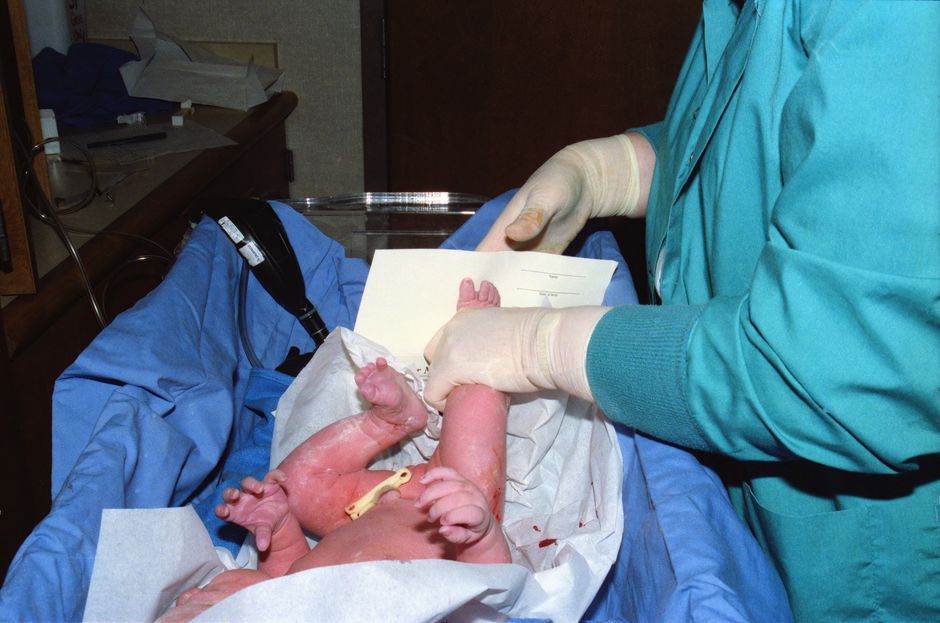
The umbilical cord stump usually falls off between 5 and 15 days after birth. Most stumps separate right around day 7 to day 10. A stump still attached at three weeks is worth a call to your baby’s doctor, though it is not automatically a sign that something is wrong.
Those first few weeks with a newborn come with a lot of small worries. The cord stump is one of the biggest. It looks odd, it changes color, and it can bleed a tiny bit. Knowing what normal looks like makes it much easier to tell when to relax and when to pick up the phone.
How Long Does Umbilical Cord Take To Fall Off?
The stump typically separates somewhere between 5 and 15 days after birth, with the average landing near the one-week to ten-day mark.
The exact timing varies from baby to baby. A few stumps come off as early as day 3 or 4. Others hold on until day 20. Both ends of that range can be normal in an otherwise healthy newborn.
What matters more than the calendar is how the area looks and smells. A stump that is dry, darkening, and shrinking is doing exactly what it should, even if it is taking its time. A stump that is weeping pus, smells foul, or sits on red swollen skin is a different situation and needs medical attention.
Do not pull the stump off, even when it looks like it is barely hanging on. Let it detach on its own. Pulling can cause bleeding and opens a small wound that was already closing.
Why Does the Cord Stump Take Time to Fall Off?
The stump is dead tissue, and the body removes it the same way it removes any dead tissue: by drying it out and separating it from the living skin underneath.
At birth the cord is clamped and cut, leaving a short piece attached to your baby’s belly. That piece has no blood supply of its own anymore. Over the next days, the tissue dries, shrinks, and turns from yellowish-green to brown to black. Meanwhile, your baby’s skin is healing underneath and forming a natural separation line.
Once that line is complete, the stump lifts away. You may find it in a diaper, on a onesie, or nowhere at all.
A small amount of blood at the moment of separation is common and usually stops on its own. Slight oozing for a day or two afterward can also happen as the last bit of the wound closes.
What Affects How Fast the Stump Falls Off?
Several things shift the timeline, and most of them are outside your control.
- How the cord was cared for. Dry care, meaning leaving the stump alone and keeping it clean and exposed to air, is associated with faster separation than routinely applying antiseptics. This is the approach most US hospitals and pediatric guidelines recommend.
- Whether the cord was clamped late. Delayed clamping, generally done about one to three minutes after birth, is recommended for most healthy newborns because it improves iron stores. Some evidence suggests it may slightly lengthen the time to separation.
- Type of birth. Babies born by cesarean delivery sometimes have stumps that separate a little sooner, though the difference is not large.
- Infection. An infected stump can either fall off early with a raw, oozing base or stay attached longer. Either pattern is a reason to call the doctor.
- Prematurity. Stumps in premature babies often take longer to separate.
None of these factors change the basic rule. If the stump looks clean and your baby is feeding and acting normally, the timeline is doing its job.





How Should You Care for the Cord Stump?
Keep it clean and keep it dry. That is the whole job.
Most pediatric guidance now recommends dry care rather than routine alcohol swabbing. Wiping the stump with alcohol several times a day used to be standard practice, but research has generally found that dry care leads to faster separation and does not increase infection risk in low-risk newborns. Some clinicians still recommend alcohol if the stump looks moist or if the baby is in a higher-risk setting. Follow whatever your baby’s doctor tells you for your specific situation.
A few practical steps:
- Clean the area with plain water during bath time and pat it dry.
- Fold the diaper down below the stump so it stays exposed to air and is not rubbed.
- Give sponge baths until the stump falls off, then switch to tub baths.
- Dress your baby in loose clothing that does not press on the stump.
- Do not use creams, oils, or powders on the stump unless a doctor advises it.
If stool or urine gets on the stump, rinse it with water and pat it dry. That is enough.
When Should You Call the Doctor About the Cord Stump?
Call your baby’s doctor if you notice any of the following:
- Redness or swelling of the skin around the base of the stump
- Pus, cloudy discharge, or a foul smell
- Bleeding that does not stop with gentle pressure
- A stump that is still attached after 3 weeks
- Fever in a newborn, which is always a medical emergency
- A pink or red moist lump at the base after the stump falls off
That last one deserves its own note. A small pink or red fleshy bump that appears after the stump separates is called an umbilical granuloma. It is not an infection. It is a small piece of tissue that did not finish healing. It often goes away on its own within a week or two, but doctors sometimes treat it with a simple application of silver nitrate in the office. Do not try to treat it at home.
Signs of a cord infection, called omphalitis, include spreading redness, warmth, tenderness, and discharge. This is uncommon in the US but serious when it happens, and it needs prompt medical care.
What Does a Healing Cord Stump Normally Look Like?
A normal stump changes a lot in a short time, and most of those changes are not a problem.
Right after birth it looks yellowish-green and slightly shiny. Within a day or two it starts to dry and darken. By the end of the first week it is usually brown or black and looks shriveled. A small amount of dried blood at the base is normal. So is a tiny bit of clear or slightly blood-tinged fluid right before it falls off.
Two things are not normal: a foul smell and spreading redness. A faint musty odor can come from the drying tissue itself. A strong, unpleasant smell along with discharge is different and should be checked.
After the stump comes off, you will see a small pink or slightly raw spot. It usually heals within a few days. Keep it clean and dry, and keep folding the diaper down until it closes.
Does Delayed Cord Clamping Change Anything?
Delayed cord clamping is now recommended for most healthy newborns, and it does not appear to cause harm to the stump in most cases.
The practice, which means waiting roughly one to three minutes before clamping, allows more blood to flow from the placenta to the baby. That extra blood improves iron stores in the first months of life, and major obstetric and pediatric organizations support it for term and preterm infants who do not need immediate resuscitation.
Some studies have found that delayed clamping is linked to slightly longer stump separation and a somewhat higher chance of jaundice that needs treatment. The effect on jaundice is small, and the iron benefit is generally considered to outweigh it. If your baby develops jaundice, your doctor will monitor and treat it as needed.
If you have questions about cord clamping, ask before delivery. It is a decision your care team can plan for ahead of time.
Frequently Asked Questions
How long does it take for the umbilical cord to fall off?
Most umbilical cord stumps fall off between 5 and 15 days after birth, with many separating around day 7 to day 10. A stump still attached at 3 weeks should be checked by a doctor.
Should I put alcohol on the umbilical cord stump?
Most current pediatric guidance favors dry care, meaning keeping the stump clean and dry without routine alcohol use. Some clinicians still recommend alcohol in certain situations, so follow your baby’s doctor’s instructions.
What does an infected umbilical cord stump look like?
Signs include spreading redness or swelling around the base, pus or cloudy discharge, a foul smell, and tenderness. A newborn with any of these signs needs prompt medical care.
Can I pull the umbilical cord stump off if it is hanging by a thread?
No. Let the stump detach on its own, because pulling can cause bleeding and reopen a wound that was already healing. A small amount of blood at natural separation is normal.
