
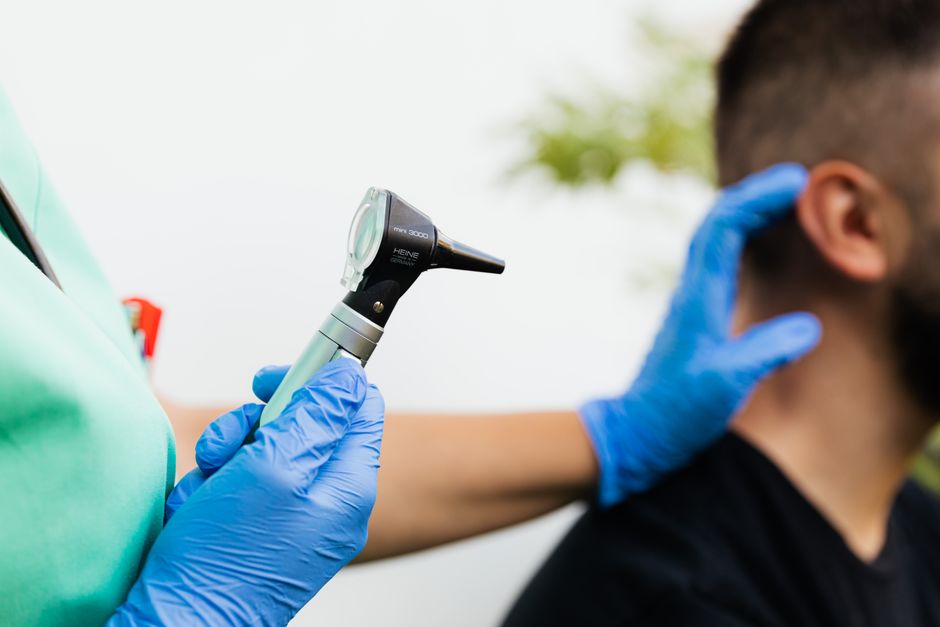
Temporary hearing loss usually resolves within minutes to a few weeks, depending on what caused it. The most common type — a muffled, plugged feeling after a loud concert or a flight — typically clears within 16 to 48 hours. If hearing does not return to normal within 48 hours, or if loss comes on suddenly without an obvious cause, that is a medical situation, not a temporary one. Sudden sensorineural hearing loss is a medical emergency that needs evaluation right away.
What Does “Temporary Hearing Loss” Actually Mean?
Temporary hearing loss means your hearing drops below its normal level and then returns. The key word is returns. If it does not come back, it was not temporary.
Doctors call this condition temporary threshold shift. Threshold is the softest sound you can hear. When that threshold rises, sounds need to be louder before you notice them. After a loud event, your threshold might rise by 10 to 15 decibels for a short time. Then it drifts back down to where it started.
This is different from permanent hearing loss, where the threshold shift never reverses. The difference matters because repeated temporary shifts can eventually turn into permanent damage. The ear does not always fully recover.
There are two broad types of temporary hearing loss. One involves the inner ear and the nerve cells that detect sound. The other involves the outer or middle ear — wax, fluid, or pressure blocking sound before it reaches the inner ear. These two types behave differently and clear on different timelines.
How Long Does Temporary Hearing Loss Last After Loud Noise?
Noise-induced temporary hearing loss typically recovers within 16 to 48 hours. This is the classic “concert ear” or “club ear” — muffled hearing, ringing, and a sense that everything sounds underwater.
What happens inside the ear is well understood. Loud sound overworks the hair cells in the cochlea, the snail-shaped organ in the inner ear. These cells bend and temporarily lose function. They also release fluid and chemicals that create swelling. Once the swelling settles and the cells recover, hearing returns.
Most people notice improvement overnight. By the next morning, hearing is often close to normal. Full recovery can take up to two days for louder exposures.
One detail worth knowing: the ringing you hear is not a sign the ear is “cleaning itself out.” Tinnitus after loud noise is a signal that the hair cells have been stressed. If it fades within a day, that is a good sign. If it lingers beyond 48 hours, that is a warning that the exposure may have caused lasting damage.
Repeated noise exposure is where temporary hearing loss becomes a bigger problem. Each shift that fully recovers may still leave a small permanent mark. Over years, those marks add up. This is why hearing protection matters even when hearing seems to bounce back.
How Long Does It Last From Earwax, Fluid, or Pressure?
Blockage-related hearing loss lasts as long as the blockage does. Once the cause clears, hearing returns — often within hours to a few days.
Earwax is the most common culprit. A plug of wax can block the ear canal and muffle sound. If wax is removed safely, hearing typically returns right away. Do not use cotton swabs to dig it out. That usually pushes wax deeper and can scratch the canal.
Middle ear fluid is common after a cold or an ear infection. The fluid sits behind the eardrum and dampens sound. It usually clears on its own within a few days to a few weeks. In adults, fluid that persists beyond a few weeks should be checked by a doctor.
Pressure changes from flying or driving up a mountain can cause temporary hearing loss. The eustachian tube, which connects the middle ear to the back of the throat, needs to equalize pressure on both sides of the eardrum. When it does not, hearing feels blocked. Swallowing, yawning, or chewing can help it open. This usually resolves within minutes to hours.
A note on the eustachian tube: it is not just a passive channel. It opens and closes with swallowing and yawning. When it stays closed — from a cold, allergies, or swelling — pressure builds and hearing drops. That is why your ears plug up on a plane even when you are healthy.




What Causes Sudden Hearing Loss That Is Not Temporary?
Sudden sensorineural hearing loss is a medical emergency. It is not temporary unless treated, and even then, recovery is not guaranteed.
This condition usually affects one ear. It can happen overnight or over a few hours. Many people wake up with muffled hearing in one ear and assume it is wax or a cold. It often is not.
Sudden sensorineural hearing loss is defined as a hearing drop of at least 30 decibels across three connected frequencies, occurring within 72 hours. That is a specific clinical definition, not a vague feeling of muffled hearing.
The cause is often unknown. Some cases are linked to viral infections, blood flow problems, or autoimmune issues. But in most cases, no clear cause is found.
Treatment usually involves corticosteroids, given orally or injected into the middle ear. These drugs reduce inflammation in the inner ear. Outcomes vary widely. Some people recover fully. Others recover partially. Some do not recover.
The critical point: treatment works best when started early. Waiting to see if it gets better on its own can reduce the chance of recovery. If you lose hearing in one ear suddenly, see a doctor the same day. Do not wait a week to see if it clears.
What Makes Temporary Hearing Loss Last Longer?
Several factors can extend how long temporary hearing loss lasts or make it more likely to become permanent.
- Repeated exposure. Each loud event adds stress. Recovery may slow and become incomplete.
- Existing hearing loss. Ears that are already damaged recover less well.
- Age. Hair cells do not repair as efficiently with age.
- Certain medications. Some drugs are ototoxic, meaning they can harm the inner ear. These include certain antibiotics and chemotherapy drugs. This is a medical issue that needs a doctor’s guidance.
- Underlying conditions. Diabetes and cardiovascular disease can affect blood flow to the inner ear.
One non-obvious point: the ear does not have a fixed “recovery budget.” Each exposure is independent. But the cumulative effect of many exposures is what drives permanent loss over time. This is why two people can attend the same concert and have very different long-term outcomes.
When Should You See a Doctor?
See a doctor the same day if hearing loss comes on suddenly, affects one ear, or is not clearly linked to a loud event or a blocked ear canal.
Also seek care if:
- Hearing does not return to normal within 48 hours after a loud event
- Ringing or muffled hearing persists beyond two days
- You have pain, discharge, or fever with the hearing loss
- Hearing loss comes with dizziness or balance problems
- You have hearing loss in one ear only
For wax or fluid, a doctor can check the ear canal and eardrum. If wax is the issue, removal is quick and hearing usually returns immediately. If fluid is present, the doctor may recommend watching it for a few weeks or treating the underlying cause.
An important distinction: sudden sensorineural hearing loss is not the same as a temporary threshold shift. One is an emergency. The other usually is not. The problem is that they can feel similar at first. When in doubt, get it checked.
Can You Prevent Temporary Hearing Loss?
You can reduce the chance of temporary hearing loss and lower the risk of it becoming permanent. The main tool is reducing how loud and how long you are exposed.
Sound is measured in decibels. Normal conversation is around 60 decibels. A rock concert can reach 110 decibels or more. Prolonged exposure above 85 decibels is considered risky for hearing. The louder the sound, the shorter the safe exposure time.
Practical steps:
- Use earplugs at concerts, sporting events, and loud workplaces
- Move away from speakers when possible
- Take breaks from loud environments
- Keep personal audio devices at a moderate volume
- Use noise-canceling headphones so you do not need to turn the volume up
For earwax, do not use cotton swabs. If wax builds up, a doctor can remove it safely. For pressure changes, swallowing, yawning, or chewing gum can help equalize the ears.
No supplement or device has been shown to prevent temporary hearing loss. If a product claims to protect hearing, ask for the evidence. In most cases, it does not exist.
Frequently Asked Questions
How long does temporary hearing loss last after a concert?
It usually clears within 16 to 48 hours. If hearing does not return to normal within two days, see a doctor.
Can temporary hearing loss become permanent?
Yes. Repeated temporary shifts can cause lasting damage over time. Each exposure that fully recovers may still leave a small permanent mark.
Is sudden hearing loss in one ear an emergency?
Yes. Sudden sensorineural hearing loss needs same-day medical evaluation. Treatment works best when started early.
Does earwax cause temporary hearing loss?
Yes. A wax plug can block the ear canal and muffle sound. Once removed safely, hearing typically returns right away.
