
Tendonitis healing time depends on how long you have had symptoms and how you treat it. Acute cases—those present for less than a few weeks—often improve within 2 to 6 weeks. Chronic cases, where pain has been present for months, can take 3 to 6 months or longer. The exact timeline varies by the tendon involved, your age, and whether you follow a proper rehabilitation plan.
How Long Does It Take For Tendonitis To Heal
There is no single answer because tendonitis is not one condition. The term covers several problems: acute inflammation of the tendon sheath (true tendonitis) and chronic degeneration of the tendon tissue (tendinosis). True tendonitis from a sudden overload often resolves in 2 to 6 weeks if you rest the area and reduce inflammation. But what most people call “tendonitis” is actually tendinosis—a condition where the tendon has accumulated micro-tears and scar tissue over time. Tendinosis heals much slower, often requiring 3 to 6 months of consistent rehabilitation. Some cases, especially in the Achilles or rotator cuff, may take up to a year.
Healing also depends on the tendon. The forearm tendons (tennis elbow) often improve more quickly than the patellar tendon or the Achilles, which bear heavy loads. Age matters too: tendons receive less blood supply as we get older, which slows repair. A 25-year-old with acute wrist tendonitis may be pain-free in three weeks. A 55-year-old with chronic Achilles tendinosis may need six months of eccentric exercises.
What Factors Affect Tendonitis Recovery Time
Several variables influence how fast—or whether—a tendon heals:
- Duration of symptoms. The longer you have had pain, the longer recovery takes. Pain present for less than two weeks usually resolves faster than pain present for three months or more.
- Tendon location. Tendons with better blood supply, like the finger flexors, heal faster. Tendons with poor blood supply, such as the supraspinatus in the shoulder or the Achilles, are slower to repair.
- Activity modification. Continuing the same aggravating activity—whether it is typing, running, or lifting—delays or prevents healing. Real rest (not just “taking it easy”) is essential.
- Rehabilitation quality. Eccentric strengthening exercises have good evidence for chronic tendon problems. Doing them correctly and consistently shortens recovery time.
- Underlying health. Smokers heal slower. People with diabetes or inflammatory arthritis may have prolonged recovery. Obesity adds mechanical load to weight-bearing tendons.
- Severity. A mild strain with minimal pain may resolve in weeks. A tendon with partial tears or calcification requires months of structured treatment.
What Is the Difference Between Tendonitis and Tendinosis
This distinction matters because it changes expectations for healing. True tendonitis involves inflammation of the tendon sheath—swelling, warmth, acute pain. It is relatively short-lived and responds well to anti-inflammatory measures: ice, NSAIDs, rest. Tendinosis, by contrast, involves degeneration of the tendon collagen. There is little to no inflammation. The tendon becomes thickened, weak, and painful. Anti-inflammatory medications do not help tendinosis because the problem is structural damage, not chemical inflammation.
Most chronic “tendonitis” is actually tendinosis. MRI and ultrasound studies show that many people with long-standing pain have no inflammatory cells in the tendon. Instead, the tendon shows disorganized fibers, increased blood flow in abnormal areas, and small tears. Healing requires mechanical loading—the right exercises—to stimulate collagen repair. Timeframes for tendinosis are 3 to 6 months of dedicated rehab, with improvement continuing for up to 12 months.





How Is Tendonitis Treated to Speed Healing
Treatment depends on whether the problem is acute inflammation or chronic degeneration.
For acute tendonitis (first few weeks):
- Relative rest. Stop the activity that caused the pain, but do not immobilize completely unless pain is severe. Gentle movement prevents stiffness.
- Ice. Apply for 15–20 minutes several times a day during the first 48–72 hours. It reduces pain and swelling.
- Compression and elevation for limb tendons to limit swelling.
- Short-term NSAIDs (ibuprofen, naproxen) can reduce pain and inflammation, but prolonged use may interfere with tendon healing. Use them for no more than 7–10 days unless directed by a doctor.
For chronic tendinosis (more than 2–4 weeks):
- Eccentric exercises. This is the single best-supported intervention. You lower a weight slowly (eccentric phase) and let another muscle group lift it back. Examples: heel drops for Achilles tendonitis, slow wrist lowering for tennis elbow.
- Stretching the affected muscle-tendon unit to maintain flexibility.
- Strengthening the surrounding muscles to reduce load on the tendon.
- Manual therapy, such as soft tissue massage or instrument-assisted techniques, can help break up adhesions and improve blood flow, but evidence is mixed.
- Extracorporeal shockwave therapy and platelet-rich plasma (PRP) injections are used for refractory cases. Evidence is moderate for some tendons (Achilles, patellar) but not for all. These are not first-line treatments.
No treatment guarantees fast healing. Be wary of any product or therapy that promises quick relief for chronic tendon pain. Rebuilding a degenerated tendon takes time and consistent effort.
When Should You See a Doctor for Tendonitis
Most tendonitis can be managed at home, but certain signs warrant professional evaluation:
- Pain that has not improved after two weeks of rest and self-care.
- Sudden, severe pain—especially with a pop or tearing sensation—suggesting a possible tendon rupture.
- Inability to move the affected joint or bear weight.
- Signs of infection: redness spreading from the area, warmth, fever, or open wound.
- Numbness or tingling in the limb, which may indicate nerve involvement.
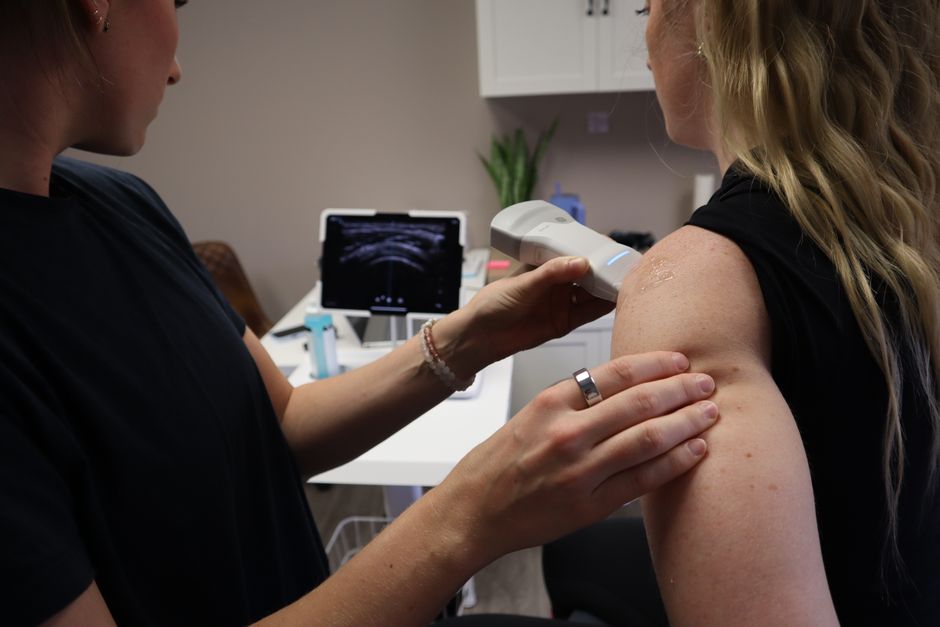
A doctor can confirm the diagnosis, rule out other causes (like fracture or arthritis), and guide appropriate treatment. They may order imaging such as ultrasound or MRI if the diagnosis is unclear or if symptoms persist beyond several months of conservative care.
What Happens If Tendonitis Does Not Heal
If tendonitis (or tendinosis) does not resolve with conservative treatment, a few things can happen:
- The condition becomes chronic. Pain may wax and wane but never fully go away. Activities that load the tendon cause persistent discomfort. This is common in tendons like the patellar (jumper’s knee) and the common extensor origin (tennis elbow).
- The tendon may develop a partial or full-thickness tear. Chronic degeneration weakens the tendon, making it more likely to rupture under normal loads. An Achilles or rotator cuff tear is a serious event that often requires surgery.
- Calcific tendonitis can develop, where calcium deposits form within the tendon. This is more common in the shoulder and can cause sudden, intense pain.
When conservative management fails after 6 to 12 months, doctors may consider advanced treatments. Shockwave therapy has reasonable evidence for chronic heel and elbow tendinopathy. PRP injections remain controversial—some studies show benefit for specific tendons, others show no advantage over placebo. Surgery (tenotomy, debridement, or repair) is reserved for cases that do not improve with at least 6 months of nonsurgical care, or for acute ruptures. Even after surgery, recovery takes months.
Frequently Asked Questions
Frequently Asked Questions
Can tendonitis heal on its own without treatment?
Yes, acute tendonitis often resolves on its own if the aggravating activity stops for a few weeks. However, chronic tendinosis usually requires active rehabilitation—without it, symptoms may persist for months or years.
Does ice help tendonitis heal faster?
Ice reduces pain and inflammation during the first few days of acute tendonitis, but it does not speed tissue repair. For chronic tendinosis, ice provides temporary pain relief but does not treat the underlying degeneration.
Is massage good for tendonitis?
Massage can help by increasing blood flow and reducing muscle tightness around the tendon, but it should not be applied directly to an acutely inflamed area. Deep friction massage over a chronic tendon may help break adhesions, though evidence is limited.
Can tendonitis keep coming back?
Yes, especially if the underlying activity pattern or movement problem is not corrected. Tendons that have been injured remain more vulnerable. Strength training, proper ergonomics, and gradual return to activity reduce the risk of recurrence.
