
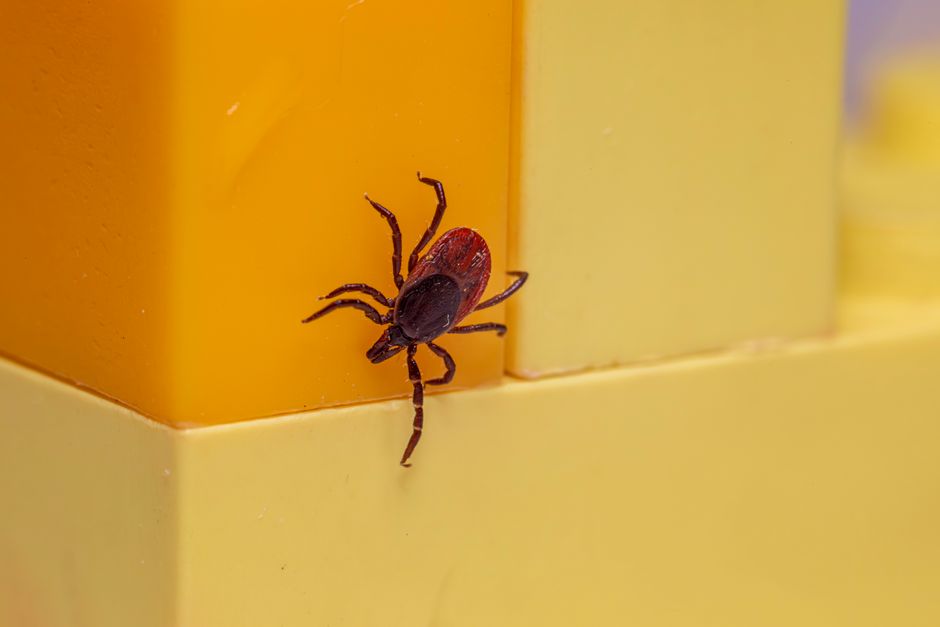
A tick’s life span depends on its species and whether it finds a host to feed on. Most ticks live for about two years, but some species can survive as long as three years. Hard ticks go through four life stages — egg, larva, nymph, and adult — and each active stage needs a blood meal before it can move to the next one.
How Long Does a Tick Live at Each Life Stage?
A tick’s total life span is not a single number. It is the sum of four stages, and each stage can stretch out or shorten depending on temperature, humidity, and whether the tick finds a host.
Here is the general timeline for a hard tick, the family that includes the deer tick and the American dog tick:
- Egg: A female tick lays a single batch of eggs, often thousands at once, then dies. The eggs hatch in roughly a few weeks to a few months, depending on warmth and moisture.
- Larva: Newly hatched larvae are tiny, about the size of a poppy seed. They need one blood meal, usually from a small animal like a mouse. This stage can last from a few weeks to several months.
- Nymph: After feeding, the larva molts into a nymph. Nymphs are about the size of a poppy seed to a sesame seed and are the stage most likely to bite humans. They also need one blood meal. This stage can last several months to over a year.
- Adult: Adults are the largest stage. Females need a blood meal to produce eggs, while males generally do not feed. Adults can live for many months, often overwintering before they find a host.
The key point is that ticks do not move through these stages on a fixed schedule. A tick that cannot find a host can wait. Some hard ticks enter a dormant state called diapause, which helps them survive cold winters or dry periods.
Do All Ticks Live the Same Amount of Time?
No. Life span varies widely by species. The two-year figure is a common average for many hard ticks, but it is not universal.
Soft ticks, which are a different family, can live much longer. Some soft tick species live for several years, and a few can survive for more than a decade in the right conditions. Soft ticks are less common in the United States and rarely transmit the diseases people worry about most, such as Lyme disease.
Among hard ticks, the blacklegged tick (also called the deer tick) typically has a two-year life cycle. The American dog tick and the lone star tick follow similar two-year patterns in many regions, though local climate can shift the timing.
One clarification worth making: a tick’s life span is not the same as how long it can survive off a host. Those are two different questions, and the second one is where things get surprising.
How Long Can a Tick Survive Without Feeding?
A tick can survive without a blood meal for a long time — often much longer than people expect. Many hard ticks can live for several months to over a year between feedings, and some can survive even longer under cool, humid conditions.
This matters because it explains why ticks are so persistent. A tick does not need to feed every few days the way a mosquito does. It can wait. It can sit in leaf litter or tall grass through a cold winter and still be ready to bite when a host walks by in spring.
Humidity plays a large role. Ticks lose water through their bodies and are vulnerable to drying out. In dry, hot conditions, a tick may die within days or weeks. In damp, shaded environments, it can survive far longer. This is one reason ticks are more common in wooded, grassy, and humid areas.
Temperature matters too. Cold does not automatically kill ticks. Many species simply become inactive and wait out the winter. Some remain active on warm winter days.





Why Does a Tick’s Life Span Matter for Disease?
The length of a tick’s life is directly tied to how diseases spread. A tick does not hatch carrying Lyme disease or other pathogens. It picks them up when it feeds on an infected animal, usually a small mammal or bird.
Once a tick acquires a pathogen, it can pass that pathogen along to the next host it feeds on — sometimes months or years later. A long life span gives a tick more chances to feed, and each feeding is a chance to transmit disease.
This is why the nymph stage is so important. Nymphs are small, easy to miss, and often active in spring and summer when people are outdoors. Because they are the second feeding stage, they may already carry pathogens picked up as larvae.
It is also why removing a tick quickly matters. In many cases, disease transmission does not happen instantly. For some pathogens, a tick needs to be attached for a period of time before the bacteria can move into the host. The exact timing varies by disease and by the specific pathogen, so the safest approach is to remove any attached tick as soon as you notice it.
How Long Does a Tick Live on a Host?
Feeding itself is short compared to the tick’s total life. Most hard ticks feed for a few days to about a week at each stage.
Larvae and nymphs typically feed for a shorter time, often a few days. Adult females feed longer, sometimes up to a week or more, because they need a large blood meal to produce eggs. After feeding, the female drops off the host, lays her eggs, and dies.
So the time a tick spends on a person or animal is a small slice of its overall life. The rest of its life is spent waiting in the environment for the next host to come along.
Can a Tick Live in Your House?
Most ticks cannot complete their life cycle indoors. They need humidity and access to hosts, and a typical heated home is too dry for them to survive for long.
That said, a tick that comes inside on a person, pet, or clothing can survive for a while and may bite. It will not usually reproduce or establish an infestation the way fleas or bed bugs can. Ticks are not household pests in the same sense.
If you find a tick indoors, the practical step is to remove it and dispose of it. Do not crush it with your fingers. The CDC recommends flushing it down the toilet, putting it in alcohol, or sealing it in tape or a container. Washing clothing in hot water and drying on high heat can kill ticks that are still on fabric.
What Affects How Long a Tick Lives?
Several factors decide whether a tick lives two years, three years, or just a few weeks:
- Species: Soft ticks generally live longer than hard ticks.
- Temperature: Warmth speeds up development but can also dry ticks out. Cold slows them down but often does not kill them.
- Humidity: Moist environments extend survival. Dry environments shorten it.
- Host availability: A tick that finds hosts quickly moves through its life cycle faster. A tick that cannot find a host waits, extending its life span.
- Predators and parasites: Some insects, birds, and other animals eat ticks. Certain fungi and nematodes can also kill them.
The relationship between host availability and life span is a bit counterintuitive. Finding a host quickly does not make a tick live longer — it makes the tick develop faster and finish its life sooner. Ticks that struggle to find hosts may live longer simply because they stay in a waiting state.
Does Killing a Tick Stop the Life Cycle?
Killing one tick does not stop the local tick population. A single female can lay thousands of eggs, and the environment may hold ticks at every stage at once.
Reducing ticks around your home is more about habitat than about killing individual ticks. Keeping grass short, clearing leaf litter, and creating a dry barrier between woods and yard can make an area less hospitable. These steps do not eliminate ticks, but they may reduce how many you encounter.
For pets, tick prevention products are the main tool. Which product is appropriate depends on the animal, its health, and local tick species, so a veterinarian is the right person to ask. No single product works the same way for every pet or every region.
Frequently Asked Questions
How long does a tick live without a host?
Many hard ticks can survive several months to over a year without feeding, especially in cool, humid conditions. In hot, dry environments, they may die within days or weeks.
How long does a tick live on a human?
Most ticks feed for a few days to about a week before dropping off. Adult females tend to feed longer than larvae or nymphs.
Can ticks live for years?
Yes. Many hard ticks live about two years, and some species can live three years or longer. Certain soft tick species can survive for several years or more.
Do ticks die in the winter?
Cold weather does not usually kill ticks. Many species become inactive and wait out the winter, and some stay active on warm winter days.
