
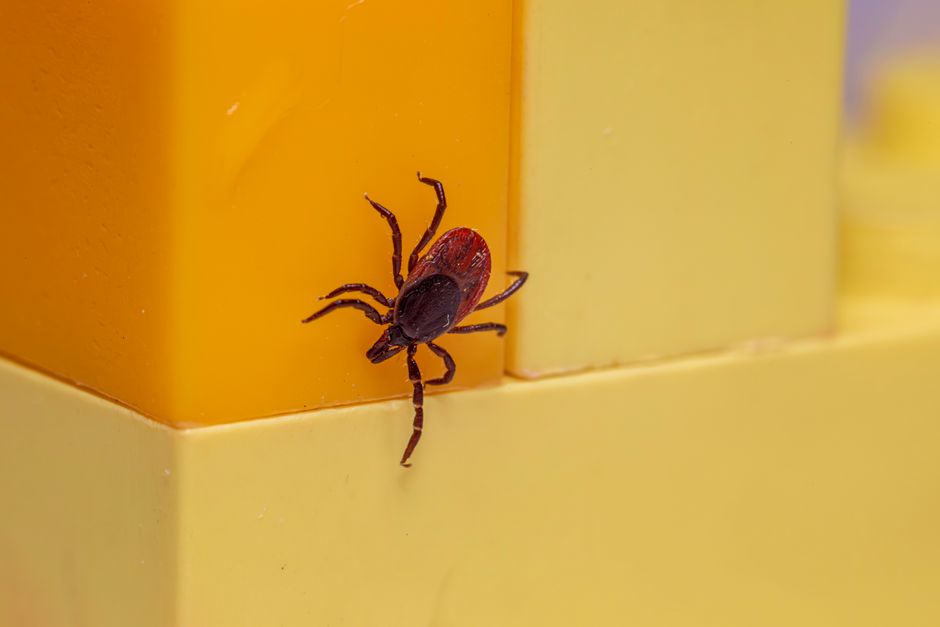
A tick bite can stay red for a few days to a couple of weeks, and that redness is usually a mild reaction to the bite itself. A Lyme disease rash is different. It often appears days to weeks after the bite, tends to expand over time, and may form a bullseye pattern. The timing and the way each one changes are the main clues that tell them apart.
How Long Does a Tick Bite Stay Red Vs Lyme Rash?
A routine tick bite reaction usually shows up within hours to a day or two and fades within about a week. It stays roughly the same size or shrinks. A Lyme rash typically appears three to thirty days after the bite, and it grows larger over days. That direction of change — shrinking versus expanding — is often more telling than the color or size alone.
Many people expect every Lyme rash to look like a bullseye. That expectation causes missed cases. The classic bullseye, called erythema migrans, is common but not universal. Some Lyme rashes are a solid expanding patch with no clear center clearing at all.
So the honest answer has two parts. A plain bite reaction is short-lived and stable or fading. A Lyme rash is delayed, and it spreads.
What Does a Normal Tick Bite Reaction Look Like?
A normal reaction is the skin responding to the physical bite and to tick saliva. It usually looks like a small red bump or a slightly raised spot. It may itch. It can feel tender.
The size is usually modest — often under a couple of centimeters. It tends to peak quickly, within the first day or two, then settle down. Some people have a stronger local reaction with more swelling and itching, especially if they are sensitive to insect bites generally. That is still usually a local reaction, not infection.
One detail worth knowing: a small red bump right after removing a tick is expected. It does not mean you have Lyme disease. The body is reacting to the wound and the saliva, not necessarily to the Lyme bacterium.
What Does a Lyme Disease Rash Look Like?
The Lyme rash, erythema migrans, is the most common early sign of Lyme disease. It usually begins as a red spot or patch at the bite site and then expands. Over days, it can reach several centimeters or more across.
The expanding edge is often more intensely colored, and the center may fade as it grows. When that fading is pronounced, you get the bullseye look. When it is not, you get a solid red or pinkish expanding patch. Both are consistent with early Lyme disease.
The rash is often not painful and not very itchy. That quiet quality is one reason people ignore it. It can appear anywhere on the body, not only at the bite site, because the bacterium can spread through the bloodstream.
It is worth separating two things that get blurred together. The tick bite is the wound. The Lyme rash is the infection announcing itself. They are not the same event, even when they happen near each other.





Why the Timing Matters So Much
Timing is one of the most useful clues you have. A red mark that appears the same day you find a tick is almost always a bite reaction. A red patch that shows up a week later and keeps growing points more toward infection.
This is because of how Lyme disease develops. The bacterium that causes it, Borrelia burgdorferi, is not transmitted instantly when a tick attaches. Transmission generally takes time, and the rash reflects the infection spreading after that. This is also why prompt tick removal matters — the longer an infected tick stays attached, the greater the chance of transmission.
Not every tick carries the bacterium. Many tick bites never lead to Lyme disease. And not everyone infected develops a rash, which is one reason diagnosis can be tricky.
How to Tell Them Apart
The clearest differences come down to timing, size change, and feel.
- Timing: A bite reaction appears within hours to about two days. A Lyme rash usually appears three to thirty days after the bite.
- Direction of change: A bite reaction stays the same or fades. A Lyme rash expands over days.
- Size: A bite reaction is usually small. A Lyme rash often grows beyond a couple of centimeters and can become quite large.
- Feel: A bite reaction often itches or feels tender. A Lyme rash is often not painful and not very itchy.
- Pattern: A bite reaction is a simple bump or spot. A Lyme rash may form a bullseye, though many do not.
No single feature is perfect. When in doubt, the pattern of change over a few days tells you more than any one snapshot.
When to See a Doctor
See a doctor if a red patch appears days after a tick bite and keeps growing, or if you notice a bullseye-shaped rash. Early Lyme disease is generally treatable, and treatment tends to work best when started early.
Also seek care if you have a rash along with fever, chills, headache, muscle aches, or fatigue. These can accompany early Lyme disease. Symptoms can also appear without any rash at all.
If you are unsure whether a tick was attached or how long it was there, that uncertainty is itself a reason to get checked. You do not need to have seen the tick to have been bitten.
Can You Prevent Lyme Disease After a Bite?
Removing a tick promptly is the main step within your control. Use fine-tipped tweezers, grasp the tick close to the skin, and pull straight up with steady pressure. Do not twist or crush it, and do not use home remedies like petroleum jelly or a lit match to make it let go.
After removal, clean the bite area and your hands. Note the date. Watching the site over the following weeks helps you judge whether any redness is behaving like a simple reaction or like something that is expanding.
Whether to take preventive antibiotics after a tick bite is a decision for a clinician. It depends on factors like the type of tick, how long it was attached, and where you live. This is not something to decide on your own.
Common Mistakes People Make
One common mistake is assuming a rash has to look like a bullseye to be Lyme disease. Many do not. Waiting for that specific pattern can delay care.
Another is treating every red bump as Lyme disease. Most tick bites do not transmit the bacterium, and most small reactions are just local irritation.
A third is relying on the size of the tick. Tiny ticks can transmit the bacterium too, and they are easy to miss.
The most useful habit is simple: pay attention to change over time. A spot that fades is reassuring. A spot that grows deserves a call.
Frequently Asked Questions
How long does a normal tick bite stay red?
A normal bite reaction usually fades within about a week and often sooner. It typically appears within hours to two days and does not keep expanding.
Can a Lyme rash appear the same day as the bite?
It usually does not. A Lyme rash most often appears three to thirty days after the bite, which is why a same-day red mark is more likely a bite reaction.
Does a Lyme rash always look like a bullseye?
No. The bullseye pattern is common but not universal, and many Lyme rashes are solid expanding patches without a clear center clearing.
Should I see a doctor for a red ring after a tick bite?
Yes. A red patch that appears days later and keeps growing, or any bullseye-shaped rash, is a reason to get medical care promptly.
