
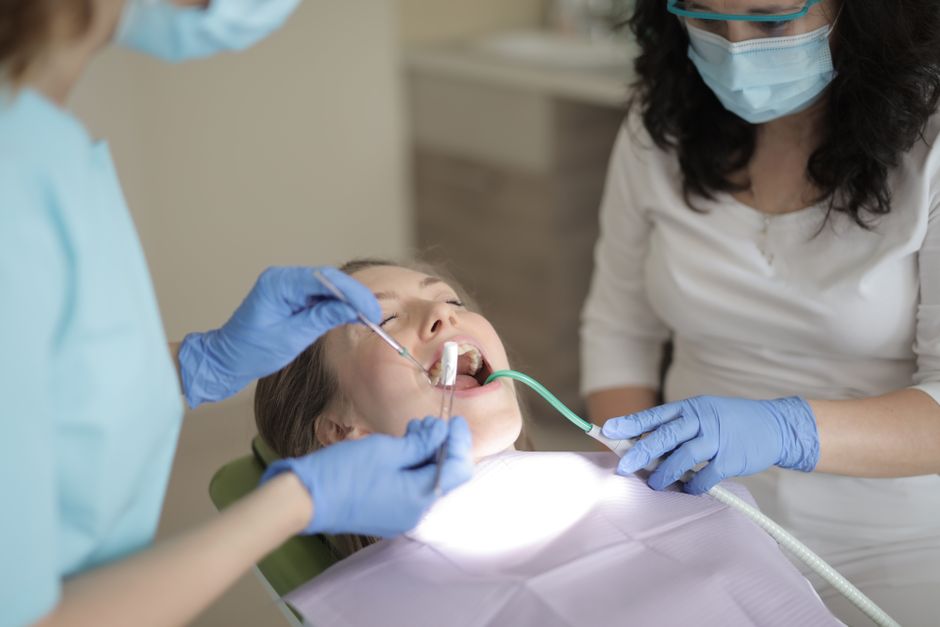
What Happens During a Dental Cleaning?
A routine cleaning is not just one step. It is a sequence of distinct actions performed by a dental hygienist. Understanding each step helps explain why the appointment takes as long as it does.
The process typically begins with a physical exam. The hygienist uses a small mirror to check your teeth and gums for visible signs of inflammation, decay, or other concerns. They will also ask about any pain or sensitivity you have noticed at home.
Next comes plaque and tartar removal. This is the “scraping” sound you hear. Using a tool called a scaler, the hygienist removes hard deposits (tartar) that brushing cannot remove. Tartar forms when plaque is left on the teeth and hardens. The more tartar you have, the longer this step takes.
After scaling, the hygienist polishes your teeth. A rotating rubber cup with gritty toothpaste removes surface stains and smooths the enamel. This step is quick, usually taking a few minutes.
The final step is flossing. The hygienist flosses between every tooth to remove any debris left behind. They may also apply a fluoride treatment, which involves placing a high-concentration fluoride gel or varnish on your teeth for a short period.
A standard cleaning without complications takes about 30 minutes. If you have significant tartar buildup, gum inflammation, or need extensive polishing, expect closer to 60 minutes.
How Long Does A Dentist Cleaning Take With X-Rays?
X-rays add time to your appointment. Bitewing X-rays, which show the crowns of your back teeth, take about 5 to 10 minutes to capture. A full series, which shows all teeth and the surrounding bone, takes longer.
If you are a new patient, the dentist will likely order a full set of X-rays. These provide a baseline for comparison at future visits. Returning patients typically get bitewing X-rays once a year.
Adding X-rays to a routine cleaning usually extends the total appointment to about 45 to 75 minutes. The actual X-ray process is fast. The extra time comes from positioning the sensor, taking multiple images, and having the dentist review them.
Why Some Cleanings Take Longer Than Others
Not all cleanings are the same. The condition of your teeth and gums directly affects the appointment length.
People who brush and floss consistently may have minimal tartar. Their cleaning can finish in under 30 minutes. People who have skipped cleanings for years or who have heavy buildup need more time.
Gum disease changes the cleaning process. If you have gingivitis or periodontitis, the hygienist may need to perform a deep cleaning, also called scaling and root planing. This is not a routine cleaning. It involves numbing your gums and cleaning below the gumline. A deep cleaning can take 60 to 90 minutes per session, and it often requires two visits to complete the whole mouth.
Another factor is the dentist’s schedule. Some practices book 30-minute slots for cleanings. Others book 60-minute slots. The booked time does not always equal the time you spend in the chair, but it gives you a rough idea of what the practice expects.





Does a Cleaning Include the Dentist’s Exam?
Yes. After the hygienist finishes, the dentist comes in for a final check. This is a separate step from the cleaning itself.
The dentist reviews your X-rays, checks your bite, and looks for cavities, gum recession, or signs of oral cancer. They may also discuss treatment recommendations, such as fillings or crown work.
This exam usually takes 5 to 10 minutes. It is included in the total appointment time. If the dentist finds something that needs discussion, the appointment runs longer.
How Often Should You Get a Cleaning?
Most adults should have a professional cleaning every six months. This is a general recommendation, not a universal rule.
People with healthy gums and no history of cavities can often go 12 months between cleanings. People with gum disease, heavy tartar buildup, or a history of frequent cavities may need cleanings every 3 to 4 months.
Your dentist decides the interval based on your individual risk. If you are unsure, ask at your next visit. The six-month schedule works well for many people, but it is not a medical requirement for everyone.
What Can You Do to Shorten the Appointment?
The most reliable way to keep your cleaning short is to maintain good oral hygiene at home. Brushing twice a day and flossing once a day reduces the amount of tartar the hygienist has to remove.
You cannot remove tartar yourself. Once plaque hardens into tartar, only a professional scaler can remove it. But you can prevent it from forming in the first place.
Arriving on time also helps. Most practices run on a tight schedule. If you are late, the cleaning may be shortened or rescheduled. Arriving 10 minutes early gives you time to complete paperwork and settle in.
Tell the hygienist about any new medications, medical conditions, or dental concerns before they start. This information affects the cleaning plan and can prevent surprises that extend the appointment.
Are Electric Toothbrushes Better at Reducing Tartar?
Research consistently shows that electric toothbrushes remove more plaque than manual brushes. The oscillating heads break up biofilm more effectively than hand motion alone. This means less plaque left behind, which means less tartar formation over time.
However, technique matters more than the tool. A manual brush used correctly can be just as effective as an electric brush used poorly. The best toothbrush is the one you will use properly twice a day.
If you have heavy buildup at every cleaning, consider switching to an electric model. Some studies suggest they reduce plaque and gingivitis more effectively over several months of use. This can translate into shorter cleaning appointments over time.
Does Insurance Affect the Length of the Appointment?
No. Insurance does not determine how long the cleaning takes. The clinical need determines the time.
Insurance does affect what is covered. Most dental plans cover two routine cleanings per year at 100 percent. Deep cleanings are often covered at a lower percentage and may require pre-authorization.
If you need a deep cleaning and your insurance denies coverage, the dentist may split the treatment into quadrants to spread out the cost. This does not change the time each session takes. It only changes how many sessions you need.
Frequently Asked Questions
How long does a dentist cleaning take for a new patient?
A new patient appointment typically takes 60 to 90 minutes. This includes a full exam, a complete set of X-rays, and the cleaning itself.
Why did my dental cleaning take almost two hours?
Long appointments usually mean heavy tartar buildup, gum disease treatment, or multiple X-rays. If the hygienist had to scale deep below the gumline, that adds significant time.
Can a dental cleaning be done in 15 minutes?
No. The scaling, polishing, flossing, and dentist exam cannot be completed safely in 15 minutes. A cleaning that short would almost certainly be incomplete.
How long does a deep cleaning take at the dentist?
A deep cleaning takes about 60 to 90 minutes per session. It usually requires two sessions to treat the entire mouth.
