
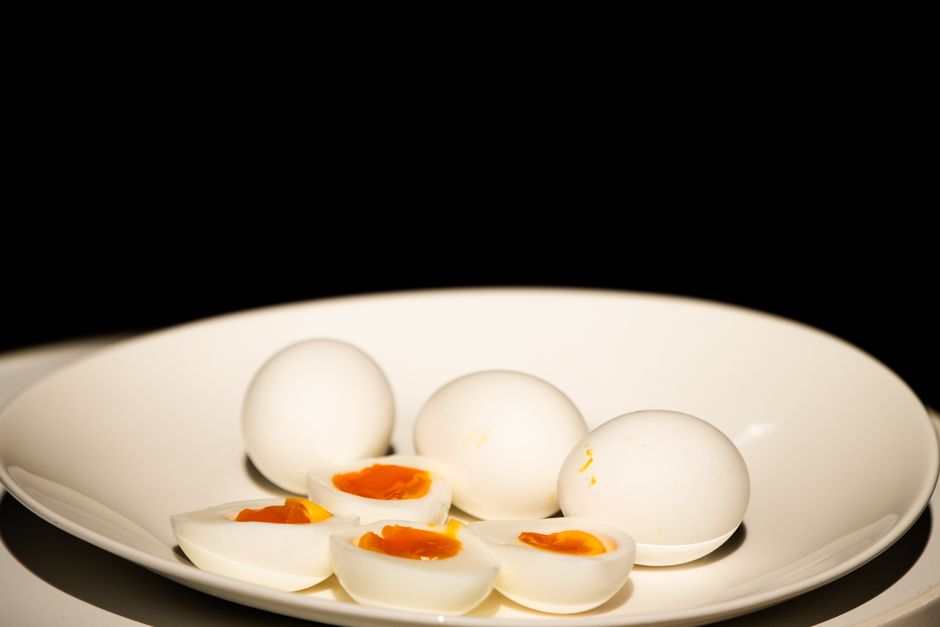
Boiling an egg until the yolk is fully set takes about 9 to 12 minutes, depending on your stove, pot, and altitude. For a classic hard-boiled egg, place the eggs in a pot of cold water, bring it to a rolling boil, then remove the pot from the heat, cover it, and let the eggs sit for 10 to 12 minutes. This method is more forgiving than boiling the eggs the entire time, and it produces a firm yolk without the rubbery white that comes from overcooking.
How Long Do You Boil Eggs For Hard Boiled
For a fully cooked, firm yolk, the answer is 10 to 12 minutes off the heat. The exact time depends on how you cook them. If you keep the water at a gentle boil for the entire cooking time, 9 to 10 minutes usually works. If you use the off-heat method, 10 to 12 minutes is the standard range.
Here is a quick time guide for different yolk textures:
- Soft-boiled (runny yolk): 4 to 6 minutes
- Medium-boiled (jammy yolk): 7 to 8 minutes
- Hard-boiled (fully set yolk): 10 to 12 minutes
These times assume large eggs straight from the refrigerator. If your eggs are at room temperature, subtract about a minute. If you use extra-large or jumbo eggs, add a minute or two.
Why the Off-Heat Method Works Best
Leaving eggs in boiling water the entire time often leads to overcooking. The white becomes rubbery, and the yolk develops a greenish-gray ring around the outside. That ring is not harmful, but it signals the egg was cooked too long or too hot.
The off-heat method solves this by using residual heat. Once the water reaches a rolling boil, you turn off the burner, cover the pot, and let the eggs finish cooking in the hot water. The temperature drops gradually, which cooks the eggs evenly without toughening the whites.
This method is also more forgiving. If you leave the eggs in the water for 12 minutes instead of 10, they will still come out fine. With constant boiling, an extra two minutes can ruin the texture.
How Altitude Affects Boiling Time
Water boils at a lower temperature at higher altitudes. At sea level, water boils at 212°F (100°C). In Denver, about 5,280 feet above sea level, water boils at roughly 202°F (94°C). That lower temperature means eggs cook more slowly.
If you live above 3,000 feet, add 1 to 2 minutes to the recommended cooking time. At very high altitudes, above 7,000 feet, you may need to add 3 minutes or more. The off-heat method still works at altitude, but the eggs will need more time to reach a fully set yolk.
There is no exact formula for altitude adjustments because stove output and pot size also matter. Start with the standard 10 to 12 minutes, test one egg, and adjust from there.





Fresh Eggs vs. Older Eggs
Fresh eggs are harder to peel. The membrane inside the shell sticks to the white more tightly when the egg is very fresh. Eggs that are a week or two old peel more easily because the egg naturally loses some moisture and carbon dioxide through the shell, which makes the white shrink slightly from the membrane.
If you are using eggs from your own chickens or a local farm, they may be fresher than supermarket eggs. For easier peeling, let them sit in the refrigerator for 7 to 10 days before boiling. If you need to use them right away, the eggs will still cook fine, but peeling will require more patience.
Adding a teaspoon of baking soda to the cooking water is a common trick to make peeling easier. Some research suggests it helps by raising the water’s pH, which weakens the membrane’s bond to the white. The effect is modest, but it does not hurt the taste.
How to Peel Hard-Boiled Eggs Without Tearing Them
Peeling is the most frustrating part of making hard-boiled eggs. The best method starts with shocking the eggs in ice water immediately after cooking. This stops the cooking process and causes the egg to contract slightly inside the shell, which helps separate the membrane.
After the eggs have cooled for at least 5 minutes in ice water, tap them gently on a hard surface to crack the shell all over. Roll the egg between your hands to loosen the shell, then peel starting at the wider end, where the air pocket sits. Peeling under running water helps wash away shell fragments and makes the process smoother.
If you have trouble peeling eggs, try steaming them instead of boiling. Steaming produces consistently easy-to-peel eggs for many people. Place a steamer basket in a pot with about an inch of water, bring it to a boil, add the eggs, cover, and steam for 12 to 13 minutes for hard-boiled.
How to Store Hard-Boiled Eggs
Hard-boiled eggs should go in the refrigerator within 2 hours of cooking. Do not leave them at room temperature longer than that, because bacteria can multiply quickly in cooked eggs. The USDA recommends refrigerating hard-boiled eggs and using them within one week.
Keep them in their shells until you are ready to eat them. The shell protects the egg from absorbing odors and keeps it from drying out. If you have already peeled them, store them in a covered container with a damp paper towel to keep them from drying.
Hard-boiled eggs are safe to eat cold, but they are not safe to reheat and then cool again repeatedly. Once you take them out of the refrigerator, eat them and put the rest back within 2 hours.
How to Tell If a Hard-Boiled Egg Is Done
You can crack one open to check, but if you are making a batch, you do not want to ruin one just to test. The most reliable way is to use a timer and trust the method. If you use the off-heat method with large eggs, 10 minutes gives you a fully set yolk with a slightly soft center, and 12 minutes gives you a completely firm yolk.
Another option is to spin the egg on a flat surface. A hard-boiled egg spins easily and quickly because the inside is solid. A raw egg wobbles and stops quickly because the liquid inside shifts and slows the motion. This trick works well, but it does not tell you if the yolk is fully set, only that the egg is cooked at all.
If you are unsure, cut into the largest egg in the pot. If it is done, the smaller ones will be too.
Common Mistakes That Ruin Hard-Boiled Eggs
The most common mistake is boiling the eggs at a full rolling boil for the entire cooking time. This makes the whites tough and increases the chance of cracking. The off-heat method avoids both problems.
Starting with boiling water instead of cold water is another frequent error. Dropping cold eggs into boiling water can crack the shells and cause the whites to cook unevenly. Starting with cold water and bringing everything to a boil together gives more even cooking.
Overcrowding the pot is a third mistake. Eggs need room to move slightly so the water circulates around them. If you pack too many in, some eggs will cook faster than others. Use a single layer of eggs in the pot, and make sure the water covers them by at least an inch.
Finally, skipping the ice bath leads to overcooked yolks and difficult peeling. The residual heat inside the egg continues cooking it after you remove it from the water. An ice bath stops that process immediately.
Frequently Asked Questions
How long do you boil eggs for hard boiled?
For the off-heat method, let the eggs sit in hot water for 10 to 12 minutes after the water reaches a rolling boil. If you keep the water boiling the whole time, 9 to 10 minutes is enough.
Why do my hard-boiled eggs have a green ring around the yolk?
The green ring is a harmless reaction between iron in the yolk and sulfur in the white, and it happens when eggs are overcooked or cooled too slowly. An ice bath right after cooking prevents it.
How long can hard-boiled eggs stay in the refrigerator?
Hard-boiled eggs in their shells keep for up to one week in the refrigerator. Peeled eggs should be stored in a covered container and eaten within a few days.
Can you eat hard-boiled eggs left out overnight?
No. Cooked eggs left at room temperature for more than 2 hours should be thrown out because bacteria can multiply quickly. Refrigerate them within 2 hours of cooking.
