
Sutures stay in for anywhere from a few days to several weeks. The exact time depends on where the wound is, how much tension the skin there carries, and what kind of suture material was used. Most skin stitches on the face come out in about 3 to 5 days, while stitches on the back or legs often stay in for 10 to 14 days or longer.
Those ranges are general clinical norms, not fixed rules. Your own clinician sets the removal date based on the specific wound, and that date matters. Taking stitches out too early can let the wound pull apart. Leaving them in too long can leave a more visible scar or cause other problems.
How Long Do Sutures Stay In on Different Parts of the Body?
Location is the single biggest factor in how long skin sutures stay in place. The guiding principle is blood supply and skin tension. Areas with rich blood flow and little stretching heal fast. Areas that stretch, move, or bear weight heal more slowly and need support for longer.
The ranges below reflect common clinical practice for skin wounds in healthy adults. They are general guides, not a schedule you should apply yourself.
- Face and neck: about 3 to 5 days
- Scalp: about 7 to 10 days
- Chest and abdomen: about 7 to 10 days
- Arms and hands: about 7 to 14 days
- Legs: about 10 to 14 days
- Back, feet, and joints (areas under high tension): about 14 days or more
These are typical ranges. A deep or contaminated wound, a wound under unusual tension, or a patient with conditions that slow healing may need a different timeline. The clinician who placed the sutures is the person who should decide when they come out.
Does Suture Material Change How Long Stitches Stay In?
Yes, but less than most people assume. The material mainly determines whether the stitches need to be removed at all.
Sutures fall into two broad groups. Absorbable sutures break down in the body over time and usually do not need removal. Non-absorbable sutures hold their strength and must be taken out. Most visible skin stitches placed in an emergency room or clinic are non-absorbable and require a removal visit.
Absorbable sutures are often used in deeper layers of tissue, in the mouth, and in some surgical closures. How long an absorbable suture lasts depends on the specific product. Some lose strength within a week or two. Others are designed to hold for several weeks before dissolving. This is why you should not assume a stitch will dissolve on its own just because you were told it is absorbable.
Non-absorbable material — nylon, silk, and similar threads — does not dissolve. It stays exactly where it was placed until someone removes it. If a non-absorbable stitch is left in too long, the skin can grow over it, and removal becomes harder and more uncomfortable.
What Happens If Sutures Stay In Too Long or Come Out Too Soon?
Both timing errors cause real problems, and they are not symmetric.
Removing stitches too early is the more serious mistake. The surface skin may look closed, but the wound has not yet regained enough strength to hold itself together. The edges can separate — a process called dehiscence — and the wound may reopen or heal with a wider scar. Surface skin regains only a small fraction of its final strength in the first week or two. Full wound strength takes months to develop, even though the stitches come out far sooner.
Leaving stitches in too long causes different issues. The thread acts as a small foreign body, and skin can start to grow along it. This is sometimes called “railroad tracking” because of the marks it leaves. Stitches left in place also tend to collect debris and can increase the risk of a minor infection around the thread. The scar may also end up more visible.
That gap between “skin looks closed” and “wound is actually strong” is the reason removal timing is set by a clinician rather than by how the wound appears. A wound that looks fine on the surface can still be fragile underneath.
How Are Sutures Removed, and Does It Hurt?
Removal is quick and usually causes only brief discomfort. Most people describe it as a small pinch or tug rather than real pain.
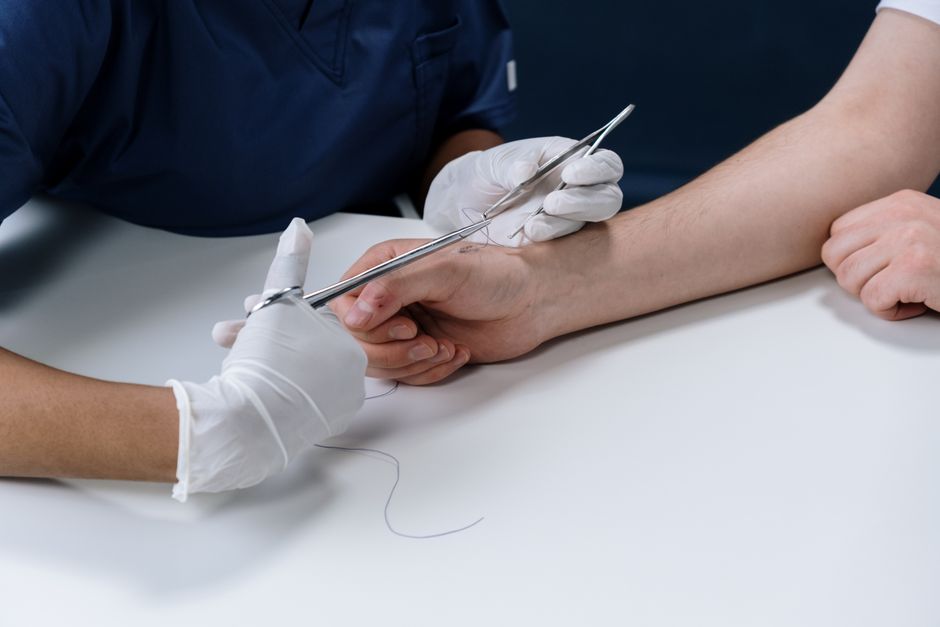
The clinician cleans the area, lifts each stitch slightly with a small instrument, and cuts the thread on one side of the knot. The stitch is then pulled out through the opposite side, so the portion of thread that was outside the skin does not get dragged through the wound. The whole process for a typical wound takes only a few minutes.
You should not remove your own stitches. Home removal raises the risk of cutting the skin, leaving a fragment of thread behind, or pulling the wound open. If you cannot get to a clinic on the scheduled date, call and ask what to do rather than improvising.
How Should You Care for Sutures While They Are In?
Good care while stitches are in place supports healing and lowers the chance of infection. The core steps are well established.
- Keep the wound clean and dry according to the instructions you were given. Many clinicians allow gentle washing after the first day or two, but follow your own discharge instructions.
- Pat the area dry rather than rubbing it.
- Do not soak the wound in baths, pools, or hot tubs until you are cleared to do so.
- Avoid activities that pull or stretch the area — heavy lifting, vigorous exercise, or movements that tug at the stitches.
- Watch for signs of infection: increasing redness, warmth, swelling, pus, or fever. Contact a clinician if these appear.
- Keep the scheduled removal appointment. Do not delay it because the wound “looks fine.”
Some clinicians recommend applying a thin layer of petroleum jelly to keep the wound surface moist, which can support healing. This is common practice, though specific instructions vary by provider and wound type. Follow the guidance you were given rather than a general rule.
When Should You Call a Clinician About Sutures?
Contact a clinician if the wound starts to look or feel worse rather than better. Signs that warrant a call include spreading redness, increasing pain, swelling that grows instead of shrinking, pus or cloudy drainage, a fever, or a wound that appears to be pulling apart.
Also call if a stitch comes loose on its own, if you notice a stitch working its way out early, or if you cannot make your removal appointment. These are common situations and usually manageable, but they should be assessed rather than ignored.
Seek urgent care for a wound that opens widely, bleeds heavily and does not stop with pressure, or shows red streaks spreading from the wound. Those signs need prompt medical attention.
Frequently Asked Questions
How long do sutures stay in on the face?
Facial sutures typically stay in about 3 to 5 days because the face has strong blood flow and low skin tension. Your clinician sets the exact removal date based on the wound.
Do all stitches need to be removed?
No. Absorbable sutures break down on their own and usually do not need removal, while non-absorbable sutures must be taken out. Most visible skin stitches are non-absorbable and require a removal visit.
What happens if stitches stay in too long?
Skin can begin to grow over the thread, and the stitch may leave small marks or collect debris that raises infection risk. Leaving them in longer than advised can also make the scar more visible.
Can I take my own stitches out?
No. Removing them yourself risks cutting the skin, leaving thread behind, or pulling the wound open. Have a clinician remove them on the scheduled date or call if you cannot make the appointment.
