
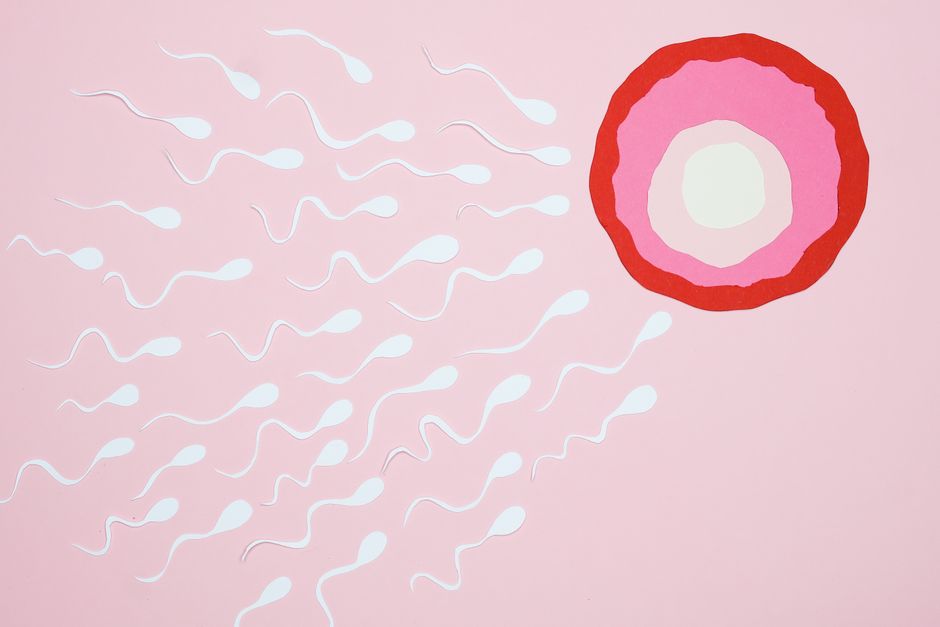
If sperm are deposited near the cervix during sex, the fastest of them can reach the fallopian tube — where an egg may be waiting — in as little as 30 minutes. Most take longer. The commonly cited range for sperm to complete the journey from the vagina to the site of fertilization is roughly 30 minutes to a few hours. But the more useful number for anyone trying to conceive is not how fast sperm swim. It is how long they survive once they get there.
How Long Do Sperm Take To Reach The Egg?
Sperm reach the fallopian tube in about 30 minutes to a few hours after ejaculation. That is the short answer, and it is well established.
What surprises many people is that sperm do not simply race straight to the egg. The journey involves the cervix, the uterus, and finally the fallopian tube. Along the way, a large majority of sperm are lost — through the acidic environment of the vagina, through the immune response of the reproductive tract, and through physical barriers. Only a small fraction ever get close to an egg.
The sperm that do arrive do not all swim there under their own power in a straight line. Muscular contractions of the uterus and fallopian tube help move sperm along. Sperm motility matters, but so does the female reproductive tract’s own activity.
Once sperm reach the fallopian tube, they can survive and remain capable of fertilization for several days — commonly cited as up to about five days. That survival window is what makes the timing of intercourse matter so much more than the raw swimming speed.
How Fast Do Sperm Actually Swim?
Healthy sperm move at roughly 1 to 4 millimeters per minute in laboratory conditions. That sounds slow, and it is. At that speed, a sperm could not cross the full length of the female reproductive tract in a reasonable time on its own.
This is why the “race to the egg” picture is misleading. The distance from the cervix to the fallopian tube is far too long for sperm to cover by swimming alone in 30 minutes. Uterine contractions do much of the work, propelling sperm forward. Sperm motility is still essential — sperm that cannot swim properly struggle to reach and penetrate the egg — but the female body is an active partner in the process, not a passive tube.
This matters clinically. When doctors evaluate male fertility, they look at sperm count, motility (how well sperm swim), and morphology (shape). All three affect whether sperm can complete the journey, but none of them work in isolation from the reproductive tract environment.
Why Sperm Survival Time Matters More Than Speed
Sperm can live inside the female reproductive tract for up to about five days. The egg, by contrast, survives only about 12 to 24 hours after it is released during ovulation.
That mismatch is the single most important fact for anyone trying to conceive. It means intercourse that happens before ovulation can still lead to pregnancy, because sperm can wait for the egg. Intercourse that happens well after ovulation generally cannot, because the egg is already gone.
This is why fertility guidance focuses on the days leading up to ovulation rather than the day of ovulation alone. The fertile window — the days when pregnancy is possible — is generally described as the five days before ovulation plus the day of ovulation itself. That window exists because of how long sperm survive, not because of how fast they swim.
A common misconception is that sperm must “catch” the egg at the exact moment of release. In reality, sperm are often already waiting in the fallopian tube when the egg arrives.
What Happens To Sperm That Do Not Reach The Egg?
Most sperm never get close. Of the millions released in a single ejaculation, only a few hundred typically reach the fallopian tube, and usually just one fertilizes the egg.
The rest are lost at various stages:
- Many are destroyed by the acidic environment of the vagina within minutes to hours.
- Some are cleared by the immune system, which treats sperm as foreign cells.
- Others get trapped in cervical mucus or lost through the uterus.
- Many simply do not have the motility or structure to make the full journey.
This loss is normal. A high sperm count in an ejaculation does not mean a high number reach the egg — it means the odds improve that enough will make it. This is one reason sperm count and motility are measured together in a semen analysis, rather than treated as separate numbers.
Does Sperm Speed Change With Age Or Health?
Sperm motility tends to decline with age, though the change is gradual and varies widely between individuals. Lifestyle and health factors can affect sperm quality more noticeably than age alone in many men.
Factors that research has linked to poorer sperm motility or count include:
- Smoking
- Heavy alcohol use
- Obesity
- Heat exposure to the testicles, such as frequent hot tub use or prolonged laptop use on the lap
- Certain medications and medical conditions
What is less clear is how much any single lifestyle change improves the speed at which sperm reach the egg. Sperm take roughly 2 to 3 months to mature, so changes in sperm quality typically take that long to show up in a semen analysis. The evidence that specific lifestyle adjustments improve fertility outcomes is mixed, and no single change guarantees a result.
If you are concerned about sperm speed or fertility, a semen analysis is the standard first step. It measures count, motility, and morphology directly rather than relying on assumptions.
Does Position Or Gravity Affect How Fast Sperm Reach The Egg?
No reliable evidence shows that sexual position changes how quickly sperm reach the fallopian tube. Sperm are mobile and the reproductive tract actively moves them, so gravity and position do not appear to be limiting factors.
Common advice — like lying still after sex or elevating the hips — is widely repeated but not supported by strong clinical evidence. Some clinicians still suggest it because it is harmless, but it should not be presented as a proven method to improve conception odds.
The factors that genuinely affect whether sperm reach the egg are sperm health, the timing of intercourse relative to ovulation, and the health of the reproductive tract itself. Position is not on that list based on current evidence.
How Long After Sex Can Fertilization Happen?
Fertilization can occur within minutes to hours if an egg is already present and sperm reach it quickly. More often, fertilization happens hours to a day or more after sex, because sperm may need to wait for ovulation.
The key point is that the timeline is not fixed. If intercourse happens on the day of ovulation, fertilization could occur within hours. If it happens several days before ovulation, sperm may wait in the fallopian tube for up to about five days before the egg is released.
This is why tracking ovulation — through methods like basal body temperature, ovulation predictor kits, or cervical mucus changes — can help identify the fertile window. None of these methods is perfectly precise, and they work best when used together rather than relying on any single sign.
Frequently Asked Questions
How long does it take for sperm to reach the egg after sex?
Sperm can reach the fallopian tube in about 30 minutes to a few hours after sex. Most of that movement is helped by contractions of the uterus and fallopian tube, not just sperm swimming.
Can sperm survive for days before reaching the egg?
Yes. Sperm can survive in the female reproductive tract for up to about five days. This is why sex in the days before ovulation can still lead to pregnancy.
How long does the egg survive after ovulation?
The egg survives for roughly 12 to 24 hours after it is released. If sperm are not already present or do not arrive in that window, fertilization cannot occur.
Does lying down after sex help sperm reach the egg faster?
No strong evidence supports this. Sperm movement depends mainly on sperm health and the reproductive tract, not on gravity or position after sex.
