
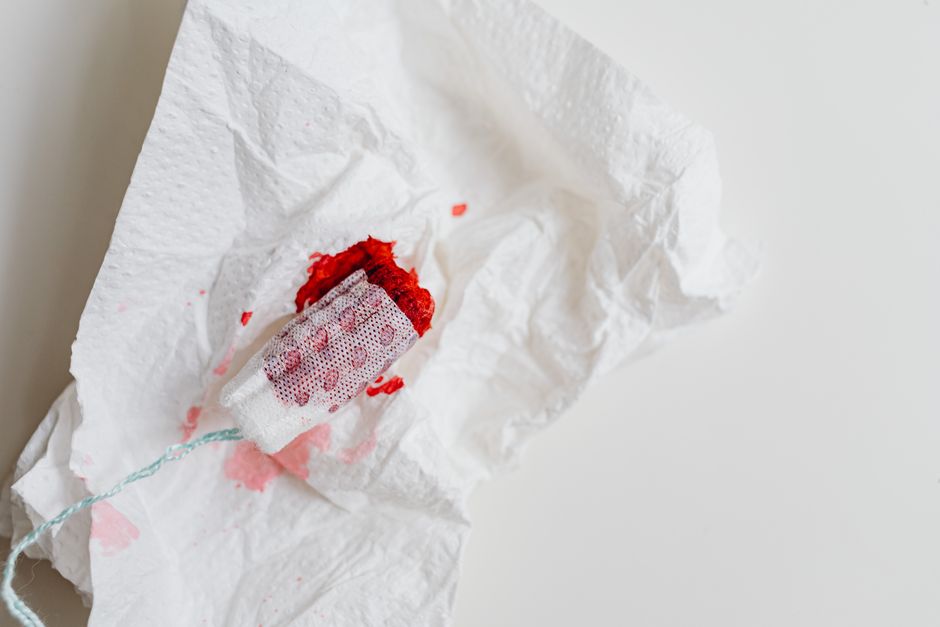
Most bleeding from hemorrhoids stops within a few days, though mild spotting can come and go for a week or longer depending on the type and severity. The bleeding itself is usually brief — a few drops on toilet paper or a streak on the stool — not a steady flow. What matters more than the exact number of days is the pattern: hemorrhoid bleeding tends to be intermittent, painless, and tied to bowel movements. Bleeding that is heavy, dark, or ongoing needs a doctor’s evaluation, because other conditions can cause the same symptom.
How Long Do Hemorrhoids Bleed?
A single bleeding episode from a hemorrhoid typically lasts seconds to a few minutes and stops on its own. You may see bright red blood on the toilet paper, in the toilet bowl, or coating the outside of the stool.
The larger question is how long the underlying hemorrhoid keeps bleeding. For many people, symptoms settle within a few days with basic care. For others, bleeding recurs off and on for weeks, especially if constipation or straining continues. There is no single timeline that fits everyone, because it depends on the size of the hemorrhoid, whether it is internal or external, and what is triggering it.
Internal hemorrhoids are the ones most likely to bleed. They sit inside the anal canal above the point where pain-sensitive nerves are located, which is why internal hemorrhoid bleeding is usually painless. External hemorrhoids sit under the skin near the opening and are more likely to cause pain or itching than bleeding — unless a blood clot forms.
Bright red blood is the hallmark. If blood is dark, tarry, or mixed throughout the stool, that points away from a hemorrhoid and toward a source higher up in the digestive tract. That distinction matters and is one reason bleeding should never be self-diagnosed for long.
What Causes Hemorrhoids to Bleed?
Hemorrhoids are normal cushions of blood vessels and connective tissue that line the anal canal. Everyone has them. They only become a problem when they swell, stretch, and their surface becomes fragile.
The bleeding comes from the thin wall of these swollen vessels. When pressure builds up — from straining, hard stools, or sitting too long — the surface can crack or erode slightly and release blood. Because the vessels are close to the surface, even a small tear produces visible red blood.
Common triggers include:
- Chronic constipation or straining during bowel movements
- Diarrhea, which irritates the area repeatedly
- Prolonged sitting, especially on the toilet
- Low-fiber diets that produce hard stools
- Pregnancy, due to increased pressure and hormonal changes
- Lifting heavy objects or other activities that raise pressure in the abdomen
Aging plays a role too. The connective tissue that holds the cushions in place weakens over time, which is part of why hemorrhoids become more common in adults between 45 and 65. This is a structural change, not a sign of anything dangerous on its own.
How Do You Know the Bleeding Is From a Hemorrhoid?
You often cannot know for certain without an exam. That is the honest position, and it is why doctors do not rely on symptoms alone to make the call.
Several features point toward hemorrhoids:
- Bright red blood, not dark or tarry
- Blood on the surface of the stool or on toilet paper, not mixed through it
- No pain with the bleeding (for internal hemorrhoids)
- A sensation of a lump or tissue near the opening
- Bleeding that happens with bowel movements and then stops
But other conditions produce nearly identical bleeding. Anal fissures — small tears in the lining — bleed bright red too, though they usually hurt. Colon polyps and colorectal cancer can also bleed without pain, and early colorectal cancer often causes no symptoms at all.
This is why any new rectal bleeding in an adult should be evaluated rather than assumed to be hemorrhoids. The two problems can also exist at the same time, so finding a hemorrhoid does not rule out something else.





When Should You See a Doctor About Bleeding?
See a doctor for any rectal bleeding that is new to you. That is the standard guidance, and it exists because bleeding has many possible causes.
Certain signs make an evaluation more urgent:
- Bleeding that lasts more than a week or keeps returning
- Heavy bleeding or blood that fills the toilet bowl
- Dark, tarry, or black stools
- Blood mixed throughout the stool rather than on the surface
- Dizziness, weakness, or fainting
- Unintended weight loss
- A change in bowel habits lasting more than a few weeks
- Bleeding in anyone over 45 who has not had colorectal cancer screening
Age matters here. Colorectal cancer screening is generally recommended starting at age 45 for average-risk adults. If you are in that range and have rectal bleeding, getting screened and getting the bleeding checked are both reasonable steps. Guidelines on screening ages have shifted in recent years, so it is worth confirming the current recommendation with your doctor.
Do not let embarrassment delay a visit. Rectal bleeding is one of the most common reasons people see a gastroenterologist, and doctors evaluate it routinely.
What Helps Hemorrhoid Bleeding Stop?
Most hemorrhoid bleeding improves with measures that reduce pressure and soften stools. These steps target the cause rather than just the symptom.
Fiber and fluids. Increasing dietary fiber and drinking enough water softens stool and reduces straining. This is one of the most consistently supported steps for hemorrhoid symptoms.
Don’t strain or sit too long. Spending long periods on the toilet raises pressure in the anal veins. Keep bathroom visits brief.
Sitz baths. Warm water soaks can ease discomfort and irritation. They are widely recommended, though the evidence for how much they reduce bleeding specifically is limited.
Over-the-counter creams and pads. These can relieve itching and irritation. Whether they stop bleeding is not well established, and some products are better supported than others. Ask a pharmacist if you are unsure.
Stool softeners. These can help if constipation is the trigger. They are not meant for long-term use without medical advice.
For persistent or severe hemorrhoids, doctors may offer procedures such as rubber band ligation, which cuts off blood flow to the hemorrhoid so it shrinks. These are common clinical options. How well any treatment works varies by person and by the type and grade of hemorrhoid, so outcomes are not guaranteed.
Can Hemorrhoid Bleeding Be Prevented?
You cannot always prevent hemorrhoids, but you can lower the odds of flare-ups. The same habits that help bleeding stop also help keep it from coming back.
- Eat a fiber-rich diet with fruits, vegetables, and whole grains
- Drink enough water throughout the day
- Stay physically active to support regular bowel movements
- Avoid straining and holding your breath during bowel movements
- Go when you feel the urge rather than waiting
- Avoid prolonged sitting, especially on the toilet
Pregnancy deserves a note. Hemorrhoids are common during pregnancy and after childbirth because of increased pressure and hormonal changes. Most improve after delivery, but bleeding during pregnancy should still be reported to your doctor rather than managed on your own.
One point worth clarifying: hemorrhoids are not caused by sitting on cold surfaces, and spicy food does not cause them. Those are common beliefs without good evidence behind them. The real drivers are pressure and stool consistency.
Does Bleeding Mean the Hemorrhoid Is Getting Worse?
Not necessarily. Bleeding can happen with a mild hemorrhoid that is simply irritated, and a larger hemorrhoid may not bleed at all.
Doctors grade internal hemorrhoids by how far they protrude. Grade I stays inside and may bleed. Grade II prolapses during a bowel movement but returns on its own. Grade III needs to be pushed back. Grade IV stays out and cannot be pushed back. Bleeding can occur at any grade, so the amount of blood does not reliably tell you the grade.
What does matter is the trend. Bleeding that becomes more frequent, heavier, or is joined by pain, a persistent lump, or a change in bowel habits is a reason to get checked. Steady, unchanged spotting over a long period is also worth a look, because ongoing blood loss can slowly lead to anemia.
Frequently Asked Questions
How long does hemorrhoid bleeding usually last?
A single episode typically stops within minutes, and symptoms often settle within a few days. Bleeding that lasts more than a week or keeps returning should be checked by a doctor.
Is it normal for hemorrhoids to bleed every day?
Daily bleeding is not typical and should be evaluated. It may point to an ongoing trigger like constipation, or to another cause that needs a doctor’s assessment.
Can hemorrhoids bleed without pain?
Yes. Internal hemorrhoids sit above the area with pain-sensitive nerves, so they often bleed without any discomfort. Painless bleeding is actually a common reason people delay getting checked.
When is rectal bleeding an emergency?
Heavy bleeding, black or tarry stools, fainting, or dizziness are reasons to seek urgent care. These signs suggest significant blood loss or a source other than a hemorrhoid.
