
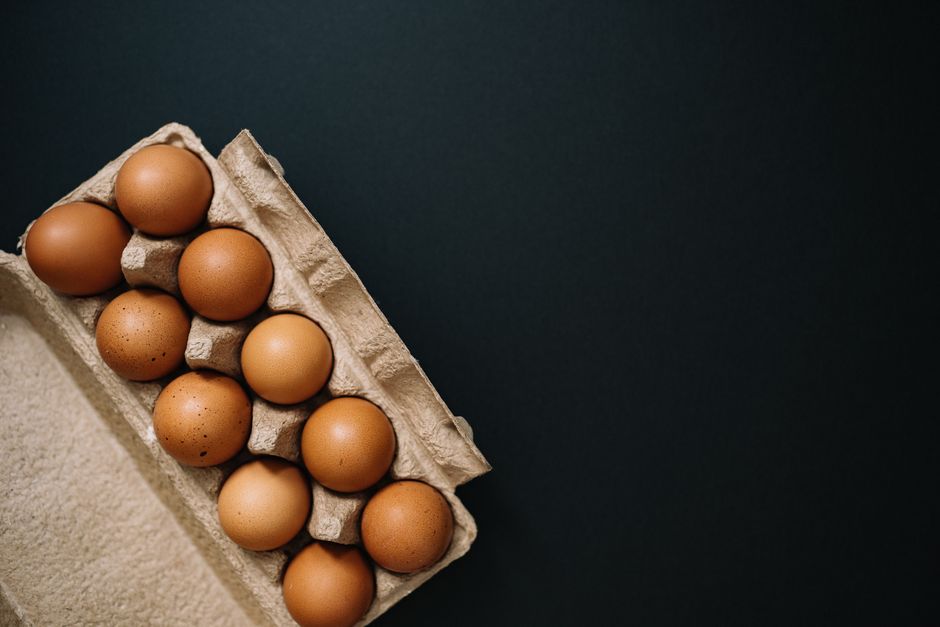
How long eggs stay good depends almost entirely on one thing: whether they are still in the shell or already cracked open. Fresh whole eggs in the refrigerator generally keep for three to five weeks from the day you bring them home, and often longer if they were packed recently. Once you crack an egg, the clock resets hard — raw beaten eggs last about two days in the fridge, and a hard-boiled egg keeps for about one week.
Those numbers come from US federal food safety guidance, not from a marketing label. What matters more is that eggs can stay perfectly safe past a printed date, and that the printed date itself often means something different from what shoppers assume.
How Long Do Eggs Stay Good in the Refrigerator?
Refrigerated whole eggs in their shells keep for three to five weeks after purchase. That is the standard timeline from the US Food and Drug Administration and the US Department of Agriculture, and it holds whether the eggs are white, brown, organic, or conventional.
The reason refrigeration matters so much is the shell. An eggshell looks solid but is porous — it has thousands of tiny pores that allow gas and moisture to move through. In the US, commercial eggs are washed and then coated with a thin layer of food-grade mineral oil to replace the natural protective bloom that washing removes. That coating slows moisture loss and helps block bacteria.
Cold temperatures do two things at once. They slow the evaporation of water from inside the egg, which is what makes old eggs watery and flat. They also slow the growth of bacteria, including Salmonella, which can be present on the shell or, less commonly, inside the egg itself.
One practical point people get wrong: moving eggs between the fridge and the counter repeatedly is worse than leaving them in one place. Each warm-up causes condensation on the shell, and moisture on the surface can help bacteria move. Keep them in the coldest part of the fridge, not in the door, where the temperature swings every time you open it.
What Does the Date on the Egg Carton Actually Mean?
The date printed on a US egg carton is usually a sell-by or expiration date, and it is not a safety deadline. In most cases it falls within 30 days of the pack date, and eggs are typically still good for a while after it passes.
Look for the pack date instead. Federal rules require egg cartons to carry a three-digit Julian date — a number from 001 to 365 that shows the day of the year the eggs were washed, graded, and packed. An egg packed on day 045 was packed on February 14. That number is the most useful piece of information on the carton.
Here is the non-obvious part: the sell-by date is set by the retailer or the state, not by a federal safety standard. Some states require eggs to be sold within a certain number of days of packing. Others have no rule at all. So two cartons from the same farm can carry different dates depending on where they were sold.
If you are unsure and the date has passed, the float test and a simple sniff will tell you more than the label will.
How Can You Tell If an Egg Has Gone Bad?
Three checks work well together: smell, appearance, and the float test. No single test is perfect, but together they are reliable enough for home use.
- Smell. A spoiled egg has a distinct sulfurous or rotten odor. Crack it into a separate bowl and smell before adding it to anything else.
- Appearance. A fresh yolk sits up firm and round. The white stays thick and close to the yolk. As an egg ages, the white thins and spreads, and the yolk flattens. That is a quality change, not necessarily a safety problem.
- Float test. Place the egg in a bowl of water. A very fresh egg sinks and lies flat. An older egg sinks but stands upright. An egg that floats to the surface has lost enough moisture through the shell that its air pocket has grown large — it is old and should be discarded.
The float test measures age, not bacteria. An egg can sink and still be contaminated with Salmonella, which is why cooking eggs thoroughly matters more than any freshness test. Conversely, a floating egg is not automatically dangerous, but it is old enough that the quality will be poor and the risk is not worth taking.
If an egg has a pinkish, greenish, or iridescent tint to the white, or if you see dark patches or mold, throw it out. Do not taste it to check.





How Long Do Hard-Boiled and Cooked Eggs Last?
Hard-boiled eggs keep for about one week in the refrigerator. That is shorter than raw eggs, and the reason is simple: boiling strips away the protective coating on the shell, leaving the pores open to bacteria and moisture.
Keep hard-boiled eggs in their shells in a covered container in the fridge, and use them within seven days. Peeled hard-boiled eggs dry out faster and should be eaten within a few days.
Other cooked egg forms follow similar rules:
- Deviled eggs: about two days, because the yolk mixture and handling add risk
- Egg salad: three to five days if kept cold and tightly covered
- Raw beaten eggs: two days in a sealed container in the fridge
- Egg dishes like quiche or frittata: three to four days refrigerated
Any egg dish left at room temperature for more than two hours should be thrown away. That two-hour limit drops to one hour if the temperature is above 90°F.
Do You Need to Refrigerate Eggs?
In the US, yes. In much of Europe and parts of Asia, no. The difference is not the egg — it is how the egg was handled before it reached you.
US commercial eggs are washed to remove dirt and bacteria from the shell. That washing also removes the cuticle, a natural protective film. Because the cuticle is gone, US eggs must be refrigerated to stay safe. European Union rules generally prohibit washing eggs for the same reason — the cuticle stays intact, so the eggs can sit at room temperature.
This means the advice you see online about storing eggs on the counter is not wrong everywhere. It is wrong in the US, where the eggs you buy have been washed. If you buy eggs directly from a farm that does not wash them, the counter can work — but once you refrigerate an egg, keep it refrigerated. Warming it back up causes condensation that undoes the benefit.
Can You Freeze Eggs?
Yes, but not in the shell. A whole egg frozen in its shell will expand and crack, and the texture of the yolk becomes gummy after thawing.
Crack the eggs into a bowl, beat them lightly, and freeze them in a sealed container. Raw beaten eggs keep for up to one year in the freezer. You can also separate yolks and whites and freeze them individually. Thaw them in the refrigerator overnight, never on the counter.
Frozen and thawed eggs work well in baked goods and scrambled dishes. They do not work for frying or poaching, because the yolk structure has changed.
What About Salmonella Risk?
Salmonella is the main food safety concern with eggs, and it is worth being clear about what the evidence shows. The US Centers for Disease Control and Prevention estimates that Salmonella causes about 1.35 million infections in the US each year, and eggs are one of several common sources.
Most Salmonella associated with eggs comes from the shell surface, not from inside the egg. That is why washing, refrigeration, and cooking all help. The risk from a properly cooked egg is very low. The risk from raw or lightly cooked eggs — runny yolks, homemade mayonnaise, raw cookie dough — is higher, especially for people who are pregnant, young children, adults over 65, and anyone with a weakened immune system.
Cooking eggs until both the white and yolk are firm kills Salmonella. Pasteurized eggs, sold in some stores, have been heat-treated to kill bacteria and can be used raw, but they cost more and are not available everywhere.
If you are in a higher-risk group, the CDC recommends avoiding raw or undercooked eggs entirely. That is a clear, established recommendation, not a cautious guess.
How Should You Store Eggs to Make Them Last?
Keep eggs in their original carton on a shelf in the main body of the refrigerator, not in the door. The door is the warmest part of the fridge and the temperature changes every time it opens.
The carton itself matters more than most people realize. It protects the eggs from absorbing odors from other foods and keeps them from rolling and cracking. It also holds the pack date where you can find it.
Do not wash eggs before storing them. If an egg has visible dirt, wipe it with a damp cloth just before using it. Washing removes the protective coating and shortens shelf life.
If you are buying eggs at a farmers market or from a farm that does not wash them, ask how they were handled. The answer determines whether the counter or the fridge is the right place.
Frequently Asked Questions
How long do eggs last after the expiration date?
Eggs are often still good for three to five weeks from the day you buy them, even if the sell-by date has passed. The pack date on the carton is a better guide than the expiration date.
Can you eat eggs that float in water?
No. A floating egg has lost enough moisture that its air pocket has grown large, which means it is old and should be thrown away.
How long do hard-boiled eggs last in the fridge?
About one week in the shell. Peeled hard-boiled eggs dry out faster and are best eaten within a few days.
Do eggs need to be refrigerated?
In the US, yes, because commercial eggs are washed and lose their natural protective coating. In countries where eggs are not washed, room-temperature storage is common and considered safe.
