
Eggs cook fast, but the exact time depends on how you cook them and how you like them done. A boiled egg takes anywhere from about 4 minutes for a soft yolk to 12 minutes for a firm, fully set one. Fried, scrambled, and poached eggs each have their own timing. The single biggest factor is temperature, not the clock.
What follows is a practical guide to egg cooking times, plus the food safety side most people skip. That part matters more than most cooks realize.
How Long Does It Take to Boil an Egg?
Boiling is the most timing-sensitive method. A difference of 60 to 90 seconds can move an egg from jammy to chalky.
The standard approach is to place eggs in a pot, cover them with cold water by about an inch, bring the water to a rolling boil, then remove the pot from the heat and let the eggs sit covered. The resting time determines the result:
- About 4 minutes for a very soft, runny yolk
- About 6 minutes for a jammy, partly set yolk
- About 8 minutes for a mostly set yolk
- About 10 to 12 minutes for a fully hard-cooked egg
These times assume large eggs straight from the refrigerator. Smaller eggs cook faster. Larger eggs take longer. Starting with cold water makes the timing more predictable than dropping eggs into already-boiling water, though both methods work if you adjust.
Altitude changes things too. Water boils at a lower temperature at higher elevations, so eggs need more time. At 5,000 feet, water boils at roughly 203°F instead of 212°F. That lower heat means slower cooking.
One detail worth knowing: the green-gray ring that sometimes shows up around a hard-boiled yolk is not a sign of spoilage. It comes from a reaction between sulfur in the white and iron in the yolk, and it forms when eggs are overcooked or cooled slowly. It is harmless, but it does mean the egg went past its ideal time.
How Long Do You Fry, Scramble, or Poach an Egg?
Pan-cooked eggs are faster and more forgiving than boiled eggs because you can watch them.
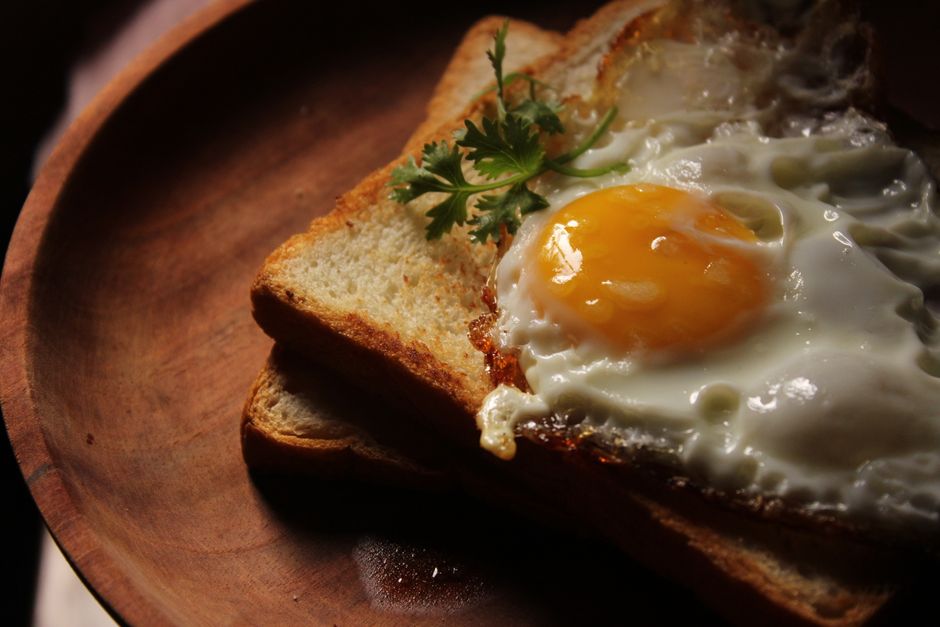
A fried egg cooked over medium heat takes about 2 to 3 minutes for a runny yolk and 4 to 5 minutes if you want the yolk set. Covering the pan with a lid traps steam and sets the top of the white without flipping.
Scrambled eggs take about 2 to 4 minutes over medium-low heat. Lower heat and constant stirring produce a creamier texture. High heat makes them rubbery fast, and the window between done and overcooked is short.
Poached eggs take about 3 to 4 minutes in barely simmering water. A rolling boil breaks the whites apart. Vinegar in the water is a common trick, though its effect on holding the egg together is modest at best.
Omelets fall in the same range as scrambled eggs, roughly 2 to 4 minutes depending on fillings and pan size.
Why Does Cooking Time Matter for Food Safety?
This is the part that gets less attention than it should. Raw and undercooked eggs can carry Salmonella, a bacteria that causes foodborne illness. The CDC estimates that Salmonella causes about 1.35 million infections in the United States each year, though only a fraction of those are linked to eggs.
The key fact for cooking is temperature, not time. Egg dishes are considered safely cooked when they reach an internal temperature of 160°F. At that temperature, Salmonella is killed. This is the standard used by food safety agencies including the USDA.
Here is what that means in practice:
- A fully hard-cooked egg reaches a safe internal temperature throughout
- A runny or soft-boiled yolk does not reliably reach 160°F in the center
- Scrambled eggs should look firm, not wet, before you take them off the heat
- Fried eggs with runny yolks carry some risk, especially for certain groups
People at higher risk from foodborne illness include pregnant women, young children, adults over 65, and anyone with a weakened immune system. For these groups, the guidance from public health agencies is to cook eggs until both the white and yolk are firm. That is an established recommendation, not a cautious guess.
If you prefer runny eggs, pasteurized in-shell eggs are available in some stores. Pasteurization uses heat to kill bacteria without cooking the egg. These are safe to eat undercooked, though they cost more and are not stocked everywhere.





Does the Cooking Method Change the Nutrition?
Cooking time affects texture and safety far more than it affects the basic nutrition of an egg. A large egg provides about 72 calories, 6 grams of protein, and 5 grams of fat whether you boil it or fry it.
Where things shift is in what you add. Butter or oil used in frying adds fat and calories. That is a cooking choice, not a property of the egg itself.
One nuance worth noting: how thoroughly an egg is cooked can slightly change how well your body absorbs certain nutrients. Some research suggests that cooked eggs allow for better protein digestion than raw eggs, and that very long cooking times may reduce levels of some heat-sensitive vitamins. The practical impact of these differences is small for most people eating a normal diet.
Raw egg consumption is a separate topic. Beyond the Salmonella risk, raw egg whites contain a protein called avidin that binds to biotin, a B vitamin. Over time, eating a lot of raw egg whites can interfere with biotin absorption. Cooking deactivates avidin. This is not a concern for people eating cooked eggs.
How Can You Tell When an Egg Is Done?
For boiled eggs, the timer is your main tool, but a quick spin test can help. Spin a cooked egg on a counter. A hard-cooked egg spins fast and steady. A raw or undercooked egg wobbles because the liquid inside sloshes around.
For fried and scrambled eggs, visual cues work better than the clock. The white should be fully opaque, not translucent or jiggly. Scrambled eggs should hold together in soft curds with no visible liquid.
An instant-read thermometer is the most reliable method for any egg dish. Insert it into the thickest part. If it reads 160°F, the egg is safely cooked. This matters most for casseroles, quiches, and other dishes where visual cues are harder to read.
Cooling matters for boiled eggs too. Placing them in ice water right after cooking stops the cooking process and makes peeling easier. Eggs left in hot water keep cooking from residual heat, which is how yolks turn dry and gray.
Do Fresh Eggs Take Longer to Cook?
Very fresh eggs are harder to peel when boiled, but their cooking time is about the same. The peeling issue comes from the egg’s internal pH and how the membrane sticks to the shell. Eggs that are a week or two old peel more cleanly, which is why many cooks buy eggs ahead of time for boiling.
Freshness does not meaningfully change how long an egg needs to reach a safe temperature. What changes is how easy it is to get a clean peel afterward.
Storage matters more than most people think. Eggs should stay refrigerated at 40°F or below. An egg left at room temperature ages faster than one kept cold. If you are unsure whether an egg is still good, place it in a bowl of water. A fresh egg sinks. An old egg floats. A floating egg should be discarded.
Frequently Asked Questions
How long should I boil an egg for a hard yolk?
About 10 to 12 minutes produces a fully hard-cooked egg using the cold-water method. Times vary slightly with egg size and altitude, so adjust up for larger eggs or higher elevations.
Is it safe to eat runny eggs?
Runny eggs carry some risk of Salmonella because the yolk may not reach 160°F, the temperature that kills the bacteria. Pregnant women, young children, older adults, and people with weakened immune systems should cook eggs until both white and yolk are firm.
How long do scrambled eggs take to cook?
Scrambled eggs take about 2 to 4 minutes over medium-low heat. They are done when the curds are firm with no visible liquid, which also indicates they have reached a safe temperature.
Why do hard-boiled eggs sometimes have a green ring around the yolk?
The green-gray ring forms when eggs are overcooked or cooled slowly, causing sulfur and iron to react. It is harmless and does not mean the egg is spoiled.
