
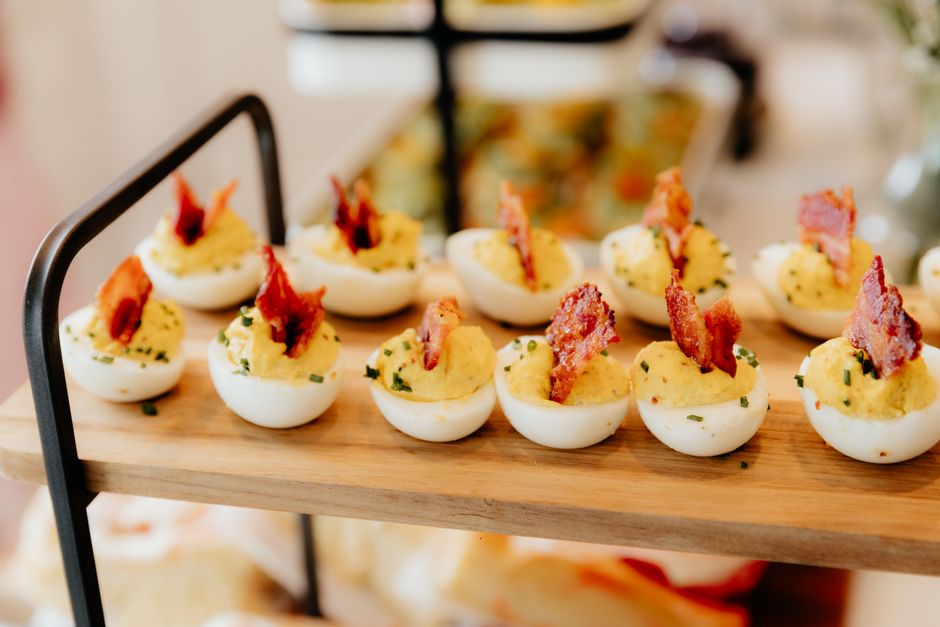
You made deviled eggs for a party and now you have leftovers sitting in the fridge. The question is simple: how long can you keep deviled eggs in the fridge before they are unsafe to eat? The direct answer is 3 to 4 days maximum. This is the standard recommendation from the USDA for any hard-boiled egg dish. After that window, the risk of bacterial growth increases significantly. Do not rely on smell alone. Bacteria that cause food poisoning do not always change the way food looks or smells.
How Long Can You Keep Deviled Eggs In The Fridge Safely?
The USDA sets the safety limit for deviled eggs at 3 to 4 days when stored properly in a refrigerator at 40°F or below. This is not a guess. It is based on how quickly bacteria like Staphylococcus aureus and Salmonella can multiply in cooked egg protein at temperatures above 40°F.
Day one is the safest. By day three, the texture of the yolk filling starts to change. The filling may become watery or develop a slight off-odor. By day four, you are at the outer edge of the safety window. After day four, the risk of foodborne illness climbs sharply. Even if the eggs look fine, throw them out.
If you are serving deviled eggs at a gathering, keep them on ice if they sit out for more than two hours. The two-hour rule applies to all perishable foods. In hot weather above 90°F, that drops to one hour.
What Happens to Deviled Eggs After 4 Days in the Fridge?
Two things happen. First, the protein in the egg white and yolk begins to break down. This is a natural process called proteolysis. It creates sulfur compounds that smell like rotten eggs. Second, bacteria that survive refrigeration begin to multiply. Refrigeration slows bacterial growth but does not stop it entirely.
The filling is the most vulnerable part. Mayonnaise, mustard, and egg yolk create a moist environment where bacteria thrive. Even if the egg white still looks firm, the filling can harbor harmful levels of bacteria by day five.
Some people report eating deviled eggs after a week with no problem. This is survivorship bias. It does not mean it is safe. The people who got sick from week-old deviled eggs are not the ones posting about it online. The USDA recommendation exists because clinical data on foodborne illness outbreaks shows that day four is the realistic cutoff.
Does the Type of Mayonnaise Matter for How Long Deviled Eggs Last?
Store-bought mayonnaise is actually safer than homemade mayonnaise for deviled eggs that need to sit. Commercial mayonnaise contains pasteurized eggs and added acidifiers like lemon juice or vinegar. These ingredients create an environment that slows bacterial growth slightly. Homemade mayonnaise made with raw eggs carries a higher Salmonella risk and should not be used for deviled eggs that will be stored for multiple days.
That said, the type of mayonnaise does not change the 3 to 4 day rule. Even the most acidic commercial mayonnaise cannot stop bacterial growth indefinitely. It buys you a small margin of safety within the recommended window, but it does not extend it.
If you are using a mayonnaise substitute like vegan mayo or avocado-based spreads, the same rule applies. These products may have different preservative profiles, but the egg itself is still the primary risk factor. Stick to 3 to 4 days regardless of the binder you use.





How Should You Store Deviled Eggs to Maximize Freshness?
Storage method directly affects how long deviled eggs stay safe. Here are the evidence-based steps:
- Use an airtight container. A sealed container prevents the eggs from absorbing odors from other foods in the fridge. It also reduces moisture loss that dries out the filling.
- Keep them on a middle shelf. The middle shelf of a refrigerator maintains the most stable temperature. Door shelves are warmer because they are opened frequently. Avoid storing deviled eggs in the door.
- Refrigerate within two hours of preparation. This is non-negotiable. If the eggs sat out at room temperature for longer than two hours before going into the fridge, the 3 to 4 day clock starts earlier.
- Do not freeze deviled eggs. Freezing ruins the texture of both the egg white and the filling. The water in the egg white expands and creates a rubbery, spongy texture when thawed. The mayonnaise-based filling separates and becomes grainy.
A comparison of storage methods and their effects on deviled egg quality:
| Storage Method | Maximum Safe Time | Effect on Texture |
|---|---|---|
| Airtight container on middle shelf | 3-4 days | Filling stays firm for 2 days, then begins to soften |
| Plastic wrap on plate | 2-3 days | Filling dries out faster, edges crack |
| Door shelf of fridge | 2 days | Temperature swings cause condensation and watery filling |
| Freezer | Not recommended | Egg white becomes rubbery, filling separates |
Can You Tell If Deviled Eggs Have Gone Bad Without Tasting Them?
Yes, but not always. Some signs are reliable. Others are not. Here is what to look for:
Reliable signs of spoilage: A sour or sulfurous smell. Visible mold growth on the filling or egg white. A slimy or sticky film on the surface of the egg. These are definite indicators that bacteria have multiplied to unsafe levels. Discard immediately.
Unreliable signs: Slight discoloration of the yolk filling. The filling turning slightly gray or brown is often just oxidation from exposure to air, not spoilage. A watery texture in the filling is common by day three and does not always mean the eggs are unsafe, though it is a reason to be cautious.
Research published in the Journal of Food Protection has shown that pathogenic bacteria like Listeria monocytogenes can grow on refrigerated egg products without producing any noticeable smell or visual change. This is why the 3 to 4 day rule exists. You cannot reliably detect all forms of spoilage with your senses. When in doubt, throw it out.
What About Deviled Eggs Made With Different Fillings?
The base rule of 3 to 4 days applies to classic deviled eggs made with mayonnaise, mustard, and yolk. But if you add other ingredients, the timeline can change.
Deviled eggs with bacon or ham: Processed meats introduce additional bacteria. These eggs should be eaten within 2 to 3 days. The meat can spoil faster than the egg itself.
Deviled eggs with avocado: Avocado oxidizes and browns quickly. More importantly, avocado has a higher risk of Listeria contamination. These eggs are best eaten within 24 hours. Do not push past 2 days.
Deviled eggs with cheese: Hard cheeses like cheddar or parmesan are stable and do not shorten the shelf life. Soft cheeses like cream cheese or goat cheese add moisture and can support faster bacterial growth. Stick to 3 days maximum for soft cheese fillings.
Deviled eggs with seafood: Crab, shrimp, or smoked salmon fillings are highly perishable. These should be treated like seafood leftovers and eaten within 2 days. Do not leave them out for more than one hour at room temperature.
If you are unsure about a specific ingredient combination, assume the shortest shelf life applies. The most perishable ingredient sets the clock, not the egg.
Common Misconceptions About Deviled Egg Storage
There is a lot of bad advice circulating online about deviled egg storage. Here are three myths that need to stop.
Myth: You can leave deviled eggs out all day if they have vinegar in them. Vinegar is a mild preservative, but it cannot overcome the combined risks of egg protein, mayonnaise, and room temperature. The two-hour rule still applies.
Myth: If the eggs were boiled long enough, they stay safe longer. Cooking time does not affect post-cooking spoilage. Boiling kills bacteria present in the raw egg, but it does not prevent new bacteria from landing on the surface after cooking. Contamination happens after cooking, during handling and storage.
Myth: Deviled eggs with store-bought mayo last a week. This is the most dangerous myth. Commercial mayonnaise contains preservatives, but those preservatives are designed to keep the mayonnaise itself stable, not the eggs mixed into it. The egg protein spoils independently of the mayonnaise. Stick to 3 to 4 days.
Frequently Asked Questions
Can you eat deviled eggs after 5 days in the fridge?
No. The USDA recommends a maximum of 3 to 4 days. By day 5, bacterial levels may be high enough to cause food poisoning even if the eggs look and smell fine.
How can you tell if deviled eggs have gone bad?
Look for a sour or sulfur smell, slimy texture, or visible mold. But remember that some harmful bacteria do not produce any noticeable signs, so always follow the 3 to 4 day rule.
Can you freeze deviled eggs to make them last longer?
Freezing is not recommended. The egg whites become rubbery and the mayonnaise-based filling separates and turns grainy. The texture is poor after thawing.
Should deviled eggs be stored with the filling facing up or down?
Store them with the filling facing up. This prevents the filling from sticking to the container lid and keeps the presentation intact. It also reduces moisture loss from the filling.
