
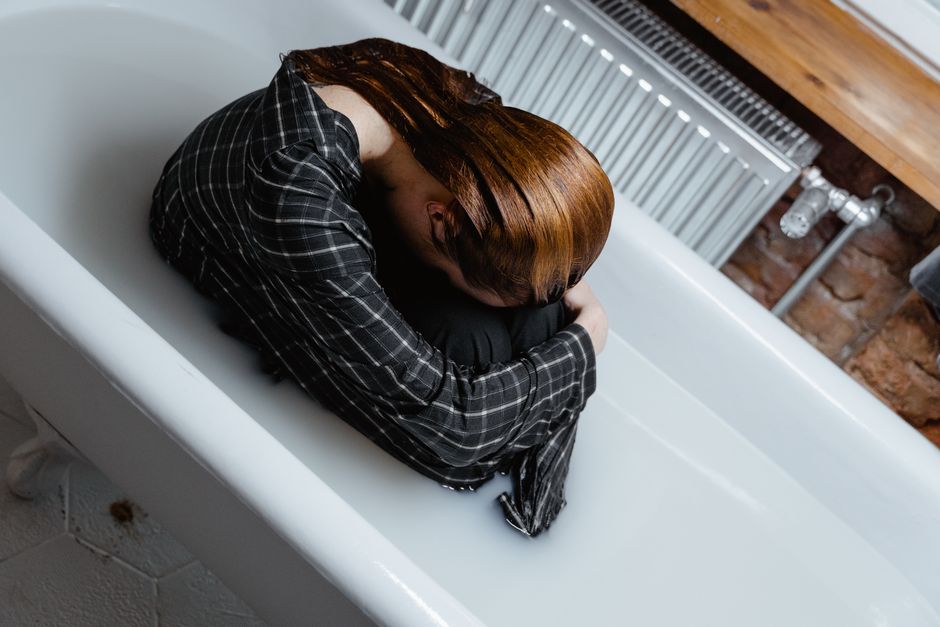
Most people expect the weeks after birth to feel hard. Few expect to still feel this way months later. Postpartum depression and postpartum anxiety are common, treatable conditions — and for many women they last longer than the “baby blues” that fade within about two weeks. Without treatment, postpartum depression often runs for several months, and some women still have symptoms at one year or beyond.
Postpartum anxiety can follow a similar course. Many women improve within the first three to six months, especially with treatment. But research suggests that for a meaningful share of women, symptoms persist well past the first year. There is no single timeline that fits everyone, and that is not a failure on your part.
What Is the Difference Between Baby Blues and Postpartum Depression?
Baby blues are not a psychiatric disorder. They are a predictable response to the massive hormonal shift that happens in the days after delivery.
Up to about 80 percent of new mothers experience some version of this. Mood swings, tearfulness, irritability, and feeling overwhelmed usually start two to three days after birth and resolve on their own within about two weeks. No treatment is needed beyond rest, support, and time.
Postpartum depression is different in duration, intensity, and effect on daily life. Symptoms last longer than two weeks and are severe enough to interfere with functioning. They include persistent sadness, loss of interest in things you used to enjoy, guilt, sleep problems that are not explained by the baby’s schedule, and sometimes difficulty bonding with the baby.
The two-week mark is the dividing line clinicians use. If symptoms are still going strong past that point, it is worth talking to a doctor rather than waiting it out.
Postpartum anxiety can show up on its own or alongside depression. It often looks like constant worry, racing thoughts, physical tension, and a feeling of dread that something bad will happen. Some women describe it as an inability to switch off. It can be present even when sadness is not.
How Long Can Postpartum Depression and Anxiety Last?
Postpartum depression typically starts within the first four to six weeks after delivery, though it can begin any time in the first year. Without treatment, it often lasts for several months. Some women recover within three to six months. Others continue to have symptoms at one year.
Research on this question gives a range rather than a single number. Some studies indicate that a substantial proportion of women still meet criteria for depression at six and twelve months postpartum. Others recover sooner. The pattern varies widely depending on symptom severity, access to care, and life circumstances.
Postpartum anxiety follows a similar arc. Some women notice it lifts within a few months. Others find it becomes a longer-term pattern, particularly if it is not treated. Anxiety and depression frequently overlap, and when both are present the course tends to be longer.
One thing is clear: untreated symptoms are more likely to persist than treated ones. Seeking help early does not mean you are weak. It means you are giving yourself the best chance of a shorter recovery.
Why Does Postpartum Depression Last Longer for Some Women?
Several factors are linked to a longer course. These are risk factors, not predictions. Many women with several of them recover fully and relatively quickly.
- Symptom severity. More intense symptoms at the start tend to predict a longer duration.
- Earlier onset. Symptoms that begin very early, especially within the first few weeks, are sometimes linked to a more persistent course.
- History of depression or anxiety. A prior episode — including one before pregnancy — raises the risk of both developing postpartum depression and having it last longer.
- Limited support. Isolation, relationship strain, and lack of practical help are consistently linked to worse outcomes.
- Sleep deprivation. Fragmented sleep is almost universal after birth, but severe ongoing sleep disruption is associated with more persistent symptoms.
- Stressful life events. Financial strain, housing instability, infant health problems, and other major stressors all play a role.
- Untreated symptoms. Not getting care is one of the most modifiable factors.
Some of these you can change. Some you cannot. The point of naming them is not to assign blame. It is to help you and your clinician see where support might make the most difference.





Does Treatment Shorten How Long It Lasts?
Yes. Treatment is the single most reliable way to shorten the course of postpartum depression and anxiety.
The evidence base here is strong. For moderate to severe postpartum depression, both therapy and medication have been shown in clinical trials to reduce symptoms. For mild symptoms, talk therapy and peer support are often the first step. For more severe symptoms, medication may be recommended, sometimes alongside therapy.
Cognitive behavioral therapy and interpersonal therapy have the most research support for perinatal depression. Both focus on practical skills — changing thought patterns, improving relationships, building coping strategies.
For some women, antidepressants are appropriate. Certain medications are considered compatible with breastfeeding, but this is a decision to make with your doctor based on your specific situation. Do not start or stop any medication without medical guidance.
What is less clear is exactly how much treatment shortens the timeline. Studies show improvement, but they do not give a precise number of weeks or months saved. What they do show is that women who receive care tend to recover sooner than those who do not.
Some women recover with treatment in a matter of weeks. Others need months. Recovery is often not a straight line — better weeks followed by harder ones are common and do not mean treatment is failing.
What Happens If Postpartum Depression Goes Untreated?
Untreated postpartum depression tends to last longer and can affect both mother and child.
For the mother, prolonged symptoms are associated with a higher risk of developing a chronic mood disorder. The episode does not always resolve on its own, and it can set the stage for future depressive episodes.
For the baby, the picture is more nuanced. Maternal depression can affect bonding, responsiveness, and the quality of early interactions. These effects are real but not permanent. When a mother receives effective treatment, the developmental picture tends to improve. This is one of the strongest arguments for seeking care early rather than waiting for symptoms to pass.
Postpartum anxiety carries its own risks. Severe anxiety can interfere with sleep, make it hard to care for yourself or your baby, and increase the risk of depression. In rare cases, untreated postpartum mental illness can become severe enough to require urgent care. If you have thoughts of harming yourself or your baby, that is a medical emergency. Contact emergency services or a crisis line right away.
When Should You Get Help?
Do not wait for a specific number of weeks to pass before reaching out. If symptoms are interfering with your daily life, that is reason enough.
Signs it is time to talk to a doctor include:
- Symptoms lasting more than two weeks
- Feeling unable to care for yourself or your baby
- Persistent anxiety that you cannot control
- Sleep problems that continue even when you have a chance to rest
- Loss of interest in things you normally enjoy
- Feeling hopeless, worthless, or like your family would be better off without you
Obstetricians, midwives, and primary care doctors are all trained to screen for postpartum mood disorders. Many clinics screen at the postpartum visit and again at later checkups. If you were not screened, ask. If you were screened and it felt rushed, ask again.
You do not need to have “severe” symptoms to deserve help. You do not need to wait until you cannot function. Reaching out early is not an overreaction. It is good medical care.
What Helps Recovery Alongside Treatment?
Treatment is the foundation. A few other things consistently support recovery, though none of them replace professional care.
Sleep is not a luxury here. It is a biological necessity for mood regulation. Protecting stretches of sleep — even four or five uninterrupted hours — matters. If a partner, family member, or friend can take a night feeding, that is not a small favor. It is part of your treatment.
Practical support helps. Someone to cook, clean, or hold the baby while you rest reduces the load that feeds depression and anxiety. Asking for specific help — “Can you bring dinner Tuesday?” — usually works better than a general “Let me know if you need anything.”
Movement helps mood, but the evidence for exercise as a standalone treatment for postpartum depression is limited. It is a useful addition, not a substitute for therapy or medication when those are needed.
Connection matters. Isolation makes symptoms worse. Time with people who do not require you to perform being fine is genuinely restorative.
And it helps to remember that this is an illness, not a character flaw. Postpartum depression and anxiety are medical conditions with biological roots. They respond to treatment. They are not a sign that you are a bad mother.
Frequently Asked Questions
How long does postpartum depression usually last without treatment?
Without treatment, postpartum depression often lasts several months, and some women still have symptoms at one year. The range varies widely, and earlier treatment is linked to faster recovery.
Can postpartum anxiety last longer than postpartum depression?
Postpartum anxiety can follow a similar or longer course, especially when it goes untreated or overlaps with depression. Some women notice it lifts within a few months, while others have persistent symptoms beyond the first year.
Does postpartum depression ever go away on its own?
Mild symptoms sometimes improve without formal treatment, particularly with good support and rest. Moderate to severe symptoms are less likely to resolve on their own and usually need therapy, medication, or both.
When should I see a doctor about postpartum depression or anxiety?
See a doctor if symptoms last more than two weeks or interfere with your daily life. If you have thoughts of harming yourself or your baby, seek emergency help right away.
