
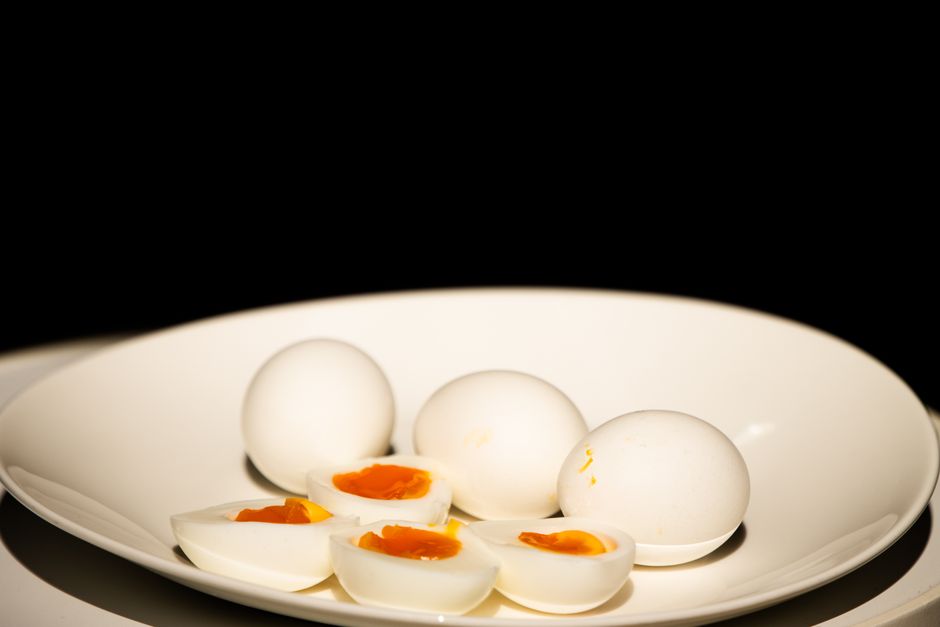
Hard boiled eggs should not sit out at room temperature for more than two hours. After two hours, they enter the danger zone where bacteria multiply quickly. If the room is warmer than 90°F, that window shrinks to just one hour. This rule applies to eggs still in their shells and peeled eggs alike. The two-hour limit is a food safety standard, not a guess.
Why Is There a Two-Hour Rule for Hard Boiled Eggs?
The two-hour rule exists because of how bacteria grow. Cooked eggs are moist and rich in protein. That makes them an ideal food source for bacteria like Salmonella and Staphylococcus aureus. These bacteria can double in number every 20 minutes at room temperature. After two hours, a small number of bacteria can become a large enough population to cause food poisoning.
The USDA and food safety agencies use the two-hour rule as a general guideline for all perishable foods. It applies to cooked meats, dairy products, and cooked eggs. The rule is not specific to hard boiled eggs, but hard boiled eggs are especially vulnerable because cooking removes the protective coating on the eggshell. This coating, called the bloom, seals the pores of a raw egg. Boiling washes it away, leaving the shell porous and open to bacteria.
The temperature range between 40°F and 140°F is called the danger zone. Within this range, bacteria grow at their fastest rate. Room temperature usually falls right in the middle of this zone. Refrigeration slows bacterial growth dramatically. Boiling kills existing bacteria, but it does not protect the egg from new bacteria that land on it after cooking.
Do Hard Boiled Eggs Spoil Faster Than Raw Eggs?
Yes. Hard boiled eggs actually spoil faster than raw eggs in the shell. This surprises many people because cooking usually preserves food. The reason comes down to the protective coating on the shell.
Raw eggs have a natural protective layer called the bloom. This thin coating seals the shell’s pores and keeps bacteria out. It also slows moisture loss. When you boil an egg, you wash away the bloom. The shell becomes porous again, and bacteria can enter through the pores. The cooking process also changes the egg’s chemistry, making it slightly more vulnerable to spoilage.
A raw egg can sit on the counter for a few hours without significant risk. A hard boiled egg cannot. The two-hour rule is strict for hard boiled eggs because they have lost their natural defenses. If you plan to keep hard boiled eggs for later, refrigeration is not optional. It is the only safe way to store them beyond two hours.
How Long Can Hard Boiled Eggs Be Left Out in the Shell?
Hard boiled eggs left out in the shell follow the same two-hour rule as peeled eggs. The shell does not protect them the way it protects raw eggs. Because boiling removes the bloom, the shell is no longer a reliable barrier against bacteria.
Some people believe the shell keeps the egg safe. That belief is incorrect. The shell is porous, and without the bloom, bacteria can pass through it. The two-hour limit applies to eggs in the shell and eggs out of the shell. There is no difference in safety between the two.
If you are unsure how long eggs have been sitting out, use time as your guide. If they have been out for more than two hours, throw them away. Do not taste them to check for spoilage. Bacteria that cause food poisoning do not always change the smell or taste of food. A hard boiled egg can look and smell fine and still make you sick.





What Happens If You Eat a Hard Boiled Egg Left Out Too Long?
Eating a hard boiled egg that sat out too long can cause food poisoning. Symptoms typically include nausea, vomiting, stomach cramps, and diarrhea. These symptoms usually appear within 6 to 48 hours after eating the contaminated food. Most healthy adults recover within a few days without medical treatment.
Some people are at higher risk for severe illness. This includes pregnant women, young children, older adults, and people with weakened immune systems. For these groups, food poisoning can lead to dehydration and more serious complications. If symptoms are severe or last longer than a few days, medical attention is appropriate.
The risk is real but the math is simple. After two hours at room temperature, bacterial growth reaches levels that can cause illness. The longer the eggs sit out, the higher the bacterial count. Refrigeration stops this growth by slowing bacterial metabolism to near standstill. Cold does not kill bacteria, but it keeps them from multiplying to dangerous levels.
What Is the Best Way to Store Hard Boiled Eggs?
Refrigerate hard boiled eggs within two hours of cooking. Place them in the refrigerator as soon as they are cool enough to handle. You do not need to wait for them to cool completely. Cooling them quickly is actually better for safety.
Store hard boiled eggs in the refrigerator at 40°F or below. Keep them in a covered container. If the eggs are peeled, place them in a bowl of cold water in the refrigerator and change the water daily. This keeps them moist. Peeled eggs stored this way last about one week. Unpeeled hard boiled eggs also last about one week in the refrigerator.
Do not store hard boiled eggs in the refrigerator door. The door is the warmest part of the refrigerator and the temperature fluctuates every time you open it. Store them on an interior shelf where the temperature is more stable. This small habit makes a real difference in how long the eggs stay safe.
Can You Reboil Hard Boiled Eggs to Make Them Safe Again?
No. Reboiling a hard boiled egg that sat out too long will not make it safe to eat. The bacteria that grow on the egg produce toxins as waste products. Boiling kills the bacteria, but it does not destroy the toxins they already produced. These toxins can still cause food poisoning even after the bacteria are dead.
This is a common misconception. People think reheating kills bacteria, so the food becomes safe. That is only true if the food was refrigerated and the bacteria never had time to multiply. Once bacteria have multiplied and produced toxins, heat cannot undo the damage. The egg should be discarded, not reboiled.
The same logic applies to any perishable food left out too long. If you are uncertain whether the eggs are safe, the safest choice is to throw them out. A hard boiled egg costs very little. A trip to the emergency room costs much more.
How Can You Tell If a Hard Boiled Egg Has Gone Bad?
Trust your senses, but understand their limits. A spoiled hard boiled egg may have a sulfur or rotten smell. It may have a slimy or chalky texture. The yolk may develop a greenish-gray ring, though this is not a sign of spoilage. A green ring simply means the egg was overcooked or cooked at too high a temperature. It is safe to eat.
The limitation is that bacteria that cause food poisoning do not always produce visible or smelly changes. An egg can look and smell perfectly normal and still contain enough bacteria to make you sick. This is why time and temperature are more reliable indicators than smell or appearance.
If you know the eggs have been out for more than two hours, do not rely on smell or sight to judge them. Discard them. If you do not know how long they have been out, the conservative choice is to discard them as well. The cost of wasting an egg is far lower than the cost of food poisoning.
Frequently Asked Questions
Can I leave hard boiled eggs out overnight?
No. Hard boiled eggs left out overnight have been at room temperature far longer than the two-hour safety limit. Discard them.
How long can hard boiled eggs stay in the refrigerator?
Hard boiled eggs keep for about one week in the refrigerator at 40°F or below. Keep them in a covered container on an interior shelf, not in the door.
Do peeled hard boiled eggs spoil faster than unpeeled ones?
Peeled eggs may dry out faster and absorb refrigerator odors, but the two-hour room temperature rule is the same for both. Refrigerated peeled eggs last about one week if stored in cold water.
Can I eat a hard boiled egg that has been out for 3 hours?
No. Three hours exceeds the two-hour safety limit. The egg should be thrown away even if it looks and smells fine.
