
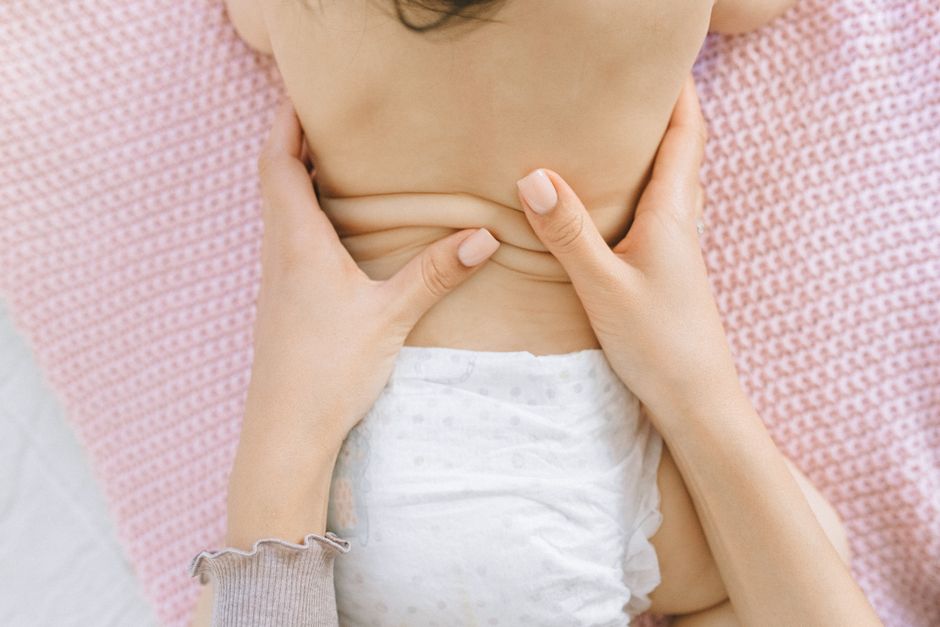
Burping a newborn usually takes anywhere from one to five minutes. Some babies burp within seconds of being lifted to the shoulder. Others need several minutes of gentle patting, or they simply do not burp at all. There is no single correct duration, and a missed burp is not a failure. The goal is to give trapped air a chance to come up, then move on with feeding or settling.
What matters more than the clock is how your baby seems. A baby who is calm, feeding well, and comfortable does not need to be patted indefinitely. A baby who squirms, pulls away, or cries mid-feed is telling you something — often that air is trapped and a pause is useful. This guide covers how long to try, the techniques that tend to work, and when a lack of burping is worth a mention to your pediatrician.
How Long Should You Try to Burp a Newborn Before Giving Up?
Give it a few minutes, then stop if nothing is happening. A common approach is to pat or rub for about one to two minutes, pause, and try a change of position. If your baby is comfortable and relaxed after several minutes with no burp, it is reasonable to stop and continue feeding or settle them.
The reason a strict time limit helps is practical. Endless patting can overstimulate a baby who was content, and it can make a parent anxious about a normal process. Air that does not come up as a burp will usually move through the digestive tract and pass as gas later.
Two situations call for a different response:
- Your baby is fussy, arching, or refusing the breast or bottle mid-feed. Pause and try burping again — this is often the clearest signal air is trapped.
- Your baby seems uncomfortable after a full feed. A few minutes of upright holding and gentle patting is reasonable, even if you already tried once.
If you have tried for several minutes across a couple of positions and your baby is peaceful, you can stop. The burp is a comfort measure, not a required step in feeding.
Why Do Newborns Need Burping in the First Place?
Newborns swallow air along with milk. This happens because their suck-swallow-breath coordination is still developing, and because feeding from a breast or bottle is not a perfectly airtight seal. The air collects in the stomach and upper digestive tract and can cause pressure, fullness, and discomfort.
Burping helps release that swallowed air before it moves further down. Adults and older children swallow air too, but they can burp on their own more easily and their digestive systems handle it with less fuss. A newborn relies on you to help create the conditions for a burp.
Two feeding factors make air swallowing more likely:
- Bottle feeding. Milk flows faster and a baby may gulp, taking in more air. A nipple that is too fast or a bottle held at a steep angle can increase this.
- Fast let-down during breastfeeding. When milk comes quickly, a baby may pull off or gulp to keep up, swallowing air in the process.
Crying also causes air swallowing, which is why a baby who cried before feeding may have more trapped air afterward.
What Are the Best Positions and Techniques for Burping a Newborn?
There are three standard positions, and most parents settle on the one their baby tolerates best. All of them keep the baby upright or semi-upright, which lets gravity help move air up and out of the stomach.
Over the shoulder. Hold your baby upright against your chest with their chin resting near your shoulder. Support the head and back with one hand and pat or rub the upper back gently with the other. A burp cloth over your shoulder saves your shirt.
Sitting on your lap. Sit your baby upright facing away from you, supporting the chest and jaw with one hand so the head does not flop. Lean them slightly forward and pat or rub the back. This position works well for babies who resist being held against the shoulder.
Face down across your lap. Lay your baby on their stomach across your thighs, head turned to one side and slightly higher than the chest, and pat the back. Keep a firm hold so they cannot roll.
On technique: gentle pats or firm circular rubs both work. Patting harder does not speed things up and can be uncomfortable. A slow, steady rhythm from the lower back upward tends to be effective.
One clarification that surprises many parents: you do not need to burp a baby after every single feed, and breastfed babies are not exempt. Some breastfed babies swallow less air and burp rarely; others need it every time. Watch your baby rather than following a fixed rule.
When During a Feed Should You Stop to Burp?
Burp at natural pauses, not on a rigid schedule. A common approach is to try burping when your baby pauses sucking, pulls away, or slows down — often after the first several minutes of feeding and again at the end.
For bottle-fed babies, burping partway through the bottle can help, especially if your baby feeds quickly or seems uncomfortable. For breastfed babies, switching sides is a natural moment to sit them upright briefly.
If your baby is feeding calmly and steadily, there is no need to interrupt just to burp. Interrupting a good feed can make a baby fussy and take in more air when they resume. Let the pauses guide you.
Does Every Baby Need to Burp After Feeding?
No. Not every baby burps, and not every feed produces a burp. Some babies swallow very little air, some release it without a loud burp, and some simply pass it as gas later. A baby who does not burp but is comfortable and feeding well is not a problem.
This is where many parents get stuck — patting for ten minutes because a book or a relative said a burp must happen. It does not. The purpose of burping is comfort, and if your baby is comfortable, the purpose is already met.
That said, some babies are more prone to trapped air and benefit from consistent burping:
- Babies who feed very fast or gulp
- Bottle-fed babies, particularly with a fast-flow nipple
- Babies who cry a lot before or during feeds
- Babies who seem gassy or uncomfortable after eating
For these babies, trying to burp after each feed is reasonable. For others, it can be more relaxed.
How Do You Know When Burping Is Done?
You are done when your baby is comfortable, not when a specific number of burps has happened. One burp, several small burps, or none at all can all be normal for a single feed.
Signs it is reasonable to stop:
- Your baby has burped and settled
- Your baby is relaxed, not squirming or pulling away
- You have tried a few minutes and a change of position with no burp, and your baby seems fine
Signs it may be worth one more try:
- Fussiness or arching after feeding
- Pulling legs up toward the belly
- Refusing to continue feeding until paused
After burping, keeping your baby upright for a short while can help, particularly for babies who spit up easily. This is a comfort measure, and it is widely recommended for babies with reflux symptoms.
When Should You Talk to a Pediatrician About Burping and Spit-Up?
Occasional spit-up is normal in newborns and usually not a sign of a problem. Burping and upright holding can reduce it, but some spit-up happens regardless. Talk to your pediatrician if spit-up is forceful, happens repeatedly, or seems to cause your baby pain.
Also check in if:
- Your baby is not gaining weight as expected
- Feeding is consistently difficult or painful for your baby
- Your baby seems uncomfortable most of the time, not just around feeds
- You see blood in the spit-up or stool
These signs do not mean something is wrong, but they are worth a conversation. A pediatrician can assess whether feeding technique, reflux, or another issue is involved.
One honest note: burping is a comfort practice supported by common clinical guidance, not by large trials proving it changes long-term outcomes. It is widely recommended because it helps many babies feel better in the moment. If your baby does not seem to benefit, there is no evidence that skipping it causes harm.
Frequently Asked Questions
How long should you burp a newborn after feeding?
About one to five minutes is typical, and a few minutes with a change of position is a reasonable attempt. If your baby is calm and comfortable with no burp, you can stop.
What if my newborn won’t burp at all?
Not every baby burps, and that is normal. If your baby is comfortable and feeding well, there is no need to keep patting — trapped air will usually pass as gas.
Should you burp a breastfed newborn?
Yes, if your baby seems to need it, though some breastfed babies swallow little air and burp rarely. Watch for fussiness or pulling away rather than following a fixed rule.
Can you burp a newborn too much?
Excessive patting can overstimulate a baby who was content, so stop once your baby is calm. There is no evidence that normal burping causes harm.
