
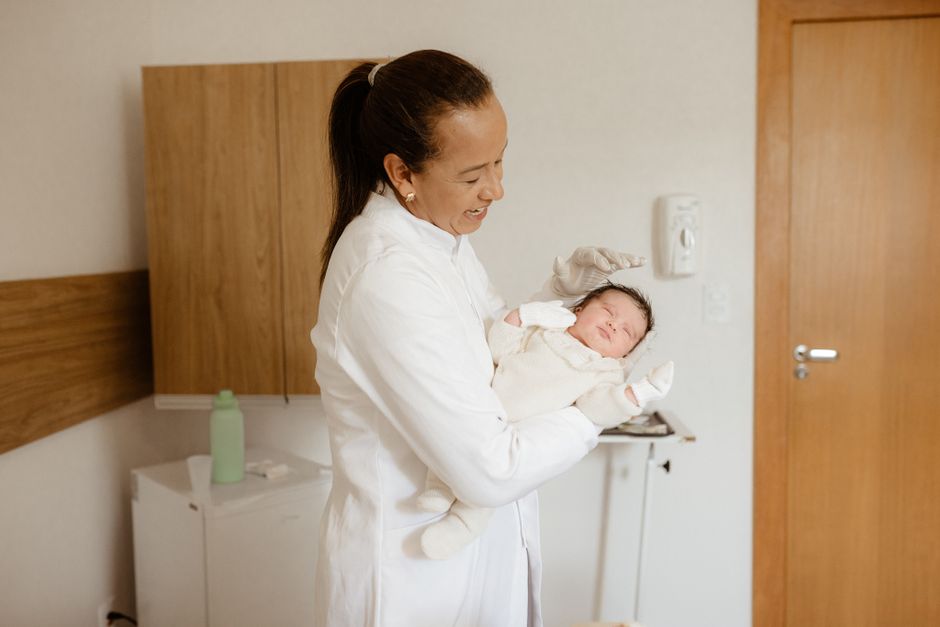
Newborns are typically 18 to 22 inches long at birth, with an average of about 20 inches. Boys tend to be slightly longer than girls on average, and length can vary widely depending on genetics, gestational age, and other factors. A full-term baby born between 37 and 40 weeks is usually longer than a baby born prematurely. Length is one of the first measurements taken after delivery, along with weight and head circumference.
How Long Are Newborns at Birth?
Most full-term newborns measure between 18 and 22 inches (about 46 to 56 centimeters) from head to heel. The average is roughly 20 inches (about 51 centimeters).
A range of factors influence birth length. Genetics play a significant role — taller parents tend to have longer babies. Gestational age matters too. A baby born at 39 weeks has had more time to grow than one born at 35 weeks. Sex is another factor: on average, newborn boys are slightly longer than newborn girls.
Other influences include maternal nutrition during pregnancy, whether the baby is a singleton or a twin, and certain health conditions affecting the pregnancy. These are broad patterns. Individual babies vary, and a shorter or longer length does not by itself predict anything about a child’s future height.
Medical staff measure length right after birth. The measurement is taken from the top of the head to the heel, usually with the baby lying flat. It is a standard part of the newborn assessment.
What Is a Normal Newborn Length Range?
A length between 18 and 22 inches is considered normal for a full-term newborn. Babies outside this range can still be perfectly healthy, but doctors may monitor them more closely.
Length is plotted on a growth chart along with weight and head circumference. Growth charts show how a baby compares to others of the same age and sex. Being at the 5th percentile or the 95th percentile is not automatically a problem. What matters more is whether growth follows a consistent pattern over time.
Preterm babies are often shorter than full-term babies at birth. That is expected, since they have had less time in the womb. Many catch up in length during the first year or two, though the timeline varies. Some very premature babies may take longer to reach typical ranges.
Babies born small for gestational age — meaning they are smaller than expected for how far along the pregnancy is — may also be shorter. Pediatricians track these babies carefully to make sure they are growing adequately after birth.
How Does Newborn Length Compare to Weight and Head Size?
Length, weight, and head circumference are measured together because they give a fuller picture of a baby’s growth. Each measurement tells doctors something different.
- Length reflects overall skeletal growth and can be influenced by genetics and gestational age.
- Weight is the most closely tracked measurement in the early weeks, partly because newborns normally lose some weight right after birth before regaining it.
- Head circumference reflects brain growth and is an important indicator of neurological development.
These three numbers are evaluated together. A baby who is shorter but has a proportionate weight and head size may simply be constitutionally small. A baby whose head circumference is growing much faster or slower than expected may need further evaluation.
Doctors use these measurements at every well-baby visit during the first year. The pattern over time matters more than any single measurement on any single day.





How Fast Do Newborns Grow in Length?
Newborns grow quickly. In the first month, most babies gain about 1 to 1.5 inches in length. By the time a baby is 6 months old, length often increases by roughly 5 to 6 inches from birth. By 12 months, many babies have grown about 10 inches total from their birth length.
This growth is not perfectly linear. Babies sometimes grow in bursts rather than at a steady pace. A baby might seem to grow slowly for a few weeks and then have a period of faster growth.
Growth in length is driven largely by nutrition, hormones, and genetics. During the first year, nutrition plays an especially important role. Breast milk or formula provides the calories and nutrients a baby needs. Solid foods are introduced around 6 months, but breast milk or formula remains the primary source of nutrition through the first year.
Pediatricians track length at every well-baby visit and plot it on a growth chart. If a baby’s length is consistently falling further behind the expected curve, the doctor may look for underlying causes. But isolated measurements are rarely cause for concern on their own.
What Factors Affect How Long a Newborn Is?
Several factors influence a baby’s length at birth. Some are genetic, some are environmental, and some relate to the health of the pregnancy.
Genetics are a major factor. Parents who are taller tend to have longer babies. But genetics are not destiny — a baby’s length at birth does not reliably predict adult height.
Gestational age is another key factor. Babies born earlier have had less time to grow. A baby born at 34 weeks will typically be shorter than one born at 40 weeks. This difference usually narrows over time as the premature baby catches up.
Maternal health and nutrition during pregnancy affect fetal growth. Conditions such as gestational diabetes, high blood pressure, or infections can influence birth size. Smoking during pregnancy is associated with lower birth weight and shorter length. So is poor maternal nutrition.
Multiple births — twins, triplets, or more — often result in shorter babies because the babies share space and nutritional resources in the womb. Twins are frequently born smaller than singletons.
Sex plays a modest role. On average, newborn boys are slightly longer and heavier than newborn girls. The difference is small and not a reliable way to predict anything about an individual baby.
When Should You Be Concerned About Newborn Length?
Most variation in newborn length is normal. A baby who is shorter or longer than average is usually healthy. The concern arises when length falls significantly outside the expected range or when growth stalls after birth.
Doctors may investigate if a baby’s length is below the 3rd percentile or above the 97th percentile on a growth chart, especially if other measurements are also atypical. They may also look further if a baby’s length is not increasing over time or if the growth curve is flattening.
Some medical conditions can affect length. Skeletal dysplasias — a group of disorders affecting bone and cartilage growth — can cause shorter-than-expected length. Hormonal conditions, such as growth hormone deficiency or thyroid problems, can also affect growth, though these are more commonly identified later in infancy or childhood.
For most babies, no intervention is needed. The pediatrician monitors growth at regular checkups. If there is a concern, they may refer the family to a pediatric endocrinologist or other specialist for further evaluation.
It is worth remembering that growth charts are tools, not verdicts. A baby at the 10th percentile who is growing steadily is generally doing fine. A baby at the 50th percentile whose growth is slowing may need a closer look. The trend matters more than the number.
Frequently Asked Questions
How long is the average newborn?
The average full-term newborn is about 20 inches (51 centimeters) long. Normal range is generally 18 to 22 inches.
Is 19 inches a normal length for a newborn?
Yes, 19 inches is within the normal range for a full-term newborn. Length varies based on genetics, gestational age, and other factors.
Do premature babies catch up in length?
Many premature babies catch up in length during the first year or two, though the timeline varies. Some very premature babies take longer to reach typical ranges.
Does newborn length predict adult height?
No, newborn length does not reliably predict adult height. Genetics and growth during childhood and puberty are stronger predictors.
