
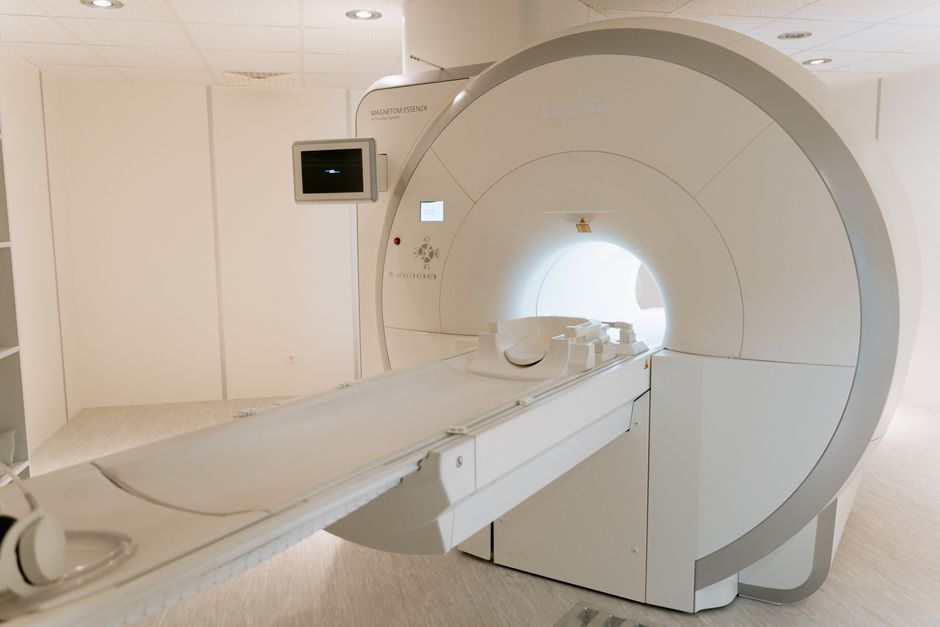
An MRI scan takes between 15 and 90 minutes depending on the body part being examined and the type of images needed. Most single-area scans like a knee or brain fall in the 30 to 45 minute range. If you are getting multiple areas scanned at once expect closer to 60 to 90 minutes total.
How Long Are MRIs by Body Part
The biggest factor in scan time is what body part your doctor ordered. Different areas require different numbers of image sequences and each sequence adds time.
A brain MRI without contrast usually takes 30 to 45 minutes. A knee or shoulder scan runs 30 to 40 minutes. Spine MRIs for the neck or lower back are typically 30 to 45 minutes per section. An abdomen or pelvis MRI can take 45 to 60 minutes because you may need to hold your breath during sequences to stop movement from breathing.
Full body scans for cancer screening or inflammatory conditions can take 60 to 90 minutes. These are rare and usually done in specialized centers.
Does Contrast Dye Make the Scan Longer
Yes contrast dye adds about 5 to 15 minutes to the total time. The technician injects the dye through an IV line about halfway through the scan. Then they run additional sequences to capture how the dye moves through your tissue.
The dye itself is not painful but the IV placement takes a few minutes before the scan starts. If you are claustrophobic or anxious the extra time inside the machine can feel longer than it actually is.
Contrast is used when doctors need to see blood vessels tumors inflammation or infection more clearly. Not every MRI requires it. Your doctor will tell you beforehand if contrast is part of your exam.
What Actually Happens During Those Minutes
An MRI machine works by using a strong magnetic field and radio waves to create detailed images of your organs and tissues. It does not use radiation. The machine makes loud knocking and humming sounds during operation.
Each scan is made up of several sequences. A sequence is a set of images taken from one angle or with one type of settings. Between sequences the machine may pause for 30 seconds to a minute while the technician checks the images. These short breaks are normal and do not mean anything is wrong.
You need to stay completely still during each sequence. Even small movements can blur the images and require the technician to repeat that sequence which adds time. The technician can see you through a window and talk to you through an intercom.





Why MRI Times Vary Between Facilities
Not all MRI machines are the same. Newer machines with higher magnetic field strength like 3 Tesla scanners can produce images faster than older 1.5 Tesla machines. A 3T scanner might complete a brain scan in 20 minutes while the same scan on a 1.5T machine takes 35 minutes.
The experience of the technician also matters. An experienced technologist sets up positioning and sequences efficiently. A trainee or a busy department with multiple patients may have longer wait times between sequences.
Some facilities schedule 45-minute slots for a single body part. Others schedule 60-minute slots to allow for positioning setup and unexpected repeats. Always ask when booking how long your specific appointment is expected to take.
How to Prepare So Your Scan Finishes Faster
Preparation directly affects scan time. Here are the most important things you can do:
- Remove all metal including jewelry watches glasses and clothing with zippers or snaps. Metal interferes with the magnetic field and can cause image artifacts or safety issues.
- Tell the technician about any implants or medical devices before the scan. Pacemakers cochlear implants and some surgical clips can be unsafe in an MRI or require special protocols that take extra time.
- Use the restroom right before the scan. A full bladder can cause discomfort and movement during longer scans.
- Stay still. This is the single biggest factor in avoiding repeat sequences. If you know you struggle to stay still ask about sedation or relaxation techniques beforehand.
If you are claustrophobic tell the staff before the scan. They can offer a mild sedative or position you head-first versus feet-first depending on the body part. Some facilities have open MRI machines that are less enclosed though image quality may be slightly lower.
What If You Have Multiple Body Parts Scanned
When your doctor orders scans for multiple areas like brain and cervical spine or lumbar spine and hip the total time adds up. Each body part is scanned as a separate exam with its own positioning and sequences.
Two adjacent areas like the brain and cervical spine can sometimes be done in a single session lasting 50 to 70 minutes. Non-adjacent areas like the brain and knee require repositioning which adds 10 to 15 minutes between scans. Total time for two non-adjacent areas is typically 70 to 90 minutes.
Insurance usually approves multiple body parts in one visit if the ordering doctor justifies medical necessity. Check with your insurance beforehand to avoid surprise denials.
Does Insurance or Scheduling Affect Scan Length
No the scan itself takes the same amount of time regardless of insurance. But your total time at the facility can vary. Arrive 15 to 20 minutes early for check-in paperwork and changing into a gown. If the facility is behind schedule your wait before the scan may be longer.
Some imaging centers run on time consistently. Others especially hospital-based departments frequently run behind. If you have a tight schedule call ahead to confirm the facility’s on-time track record. Morning appointments generally have less delay than afternoon ones.
Emergency MRIs done in a hospital for acute conditions like stroke or spinal cord compression are prioritized and started quickly. These scans are the same length as scheduled ones but the turnaround for results is faster.
Frequently Asked Questions
How long does an MRI take for a knee?
A knee MRI typically takes 30 to 40 minutes. Contrast dye adds about 10 minutes to this time.
How long does a brain MRI take without contrast?
A brain MRI without contrast takes 30 to 45 minutes. The exact time depends on the number of sequences ordered by your doctor.
Can an MRI be done in 15 minutes?
Some very focused scans like a single wrist or ankle sequence can be done in 15 to 20 minutes on a newer machine. Most standard scans take at least 30 minutes.
Why did my MRI take longer than scheduled?
Common reasons include needing to repeat sequences due to movement equipment adjustments or the technician checking additional images ordered by the radiologist during the scan.
