
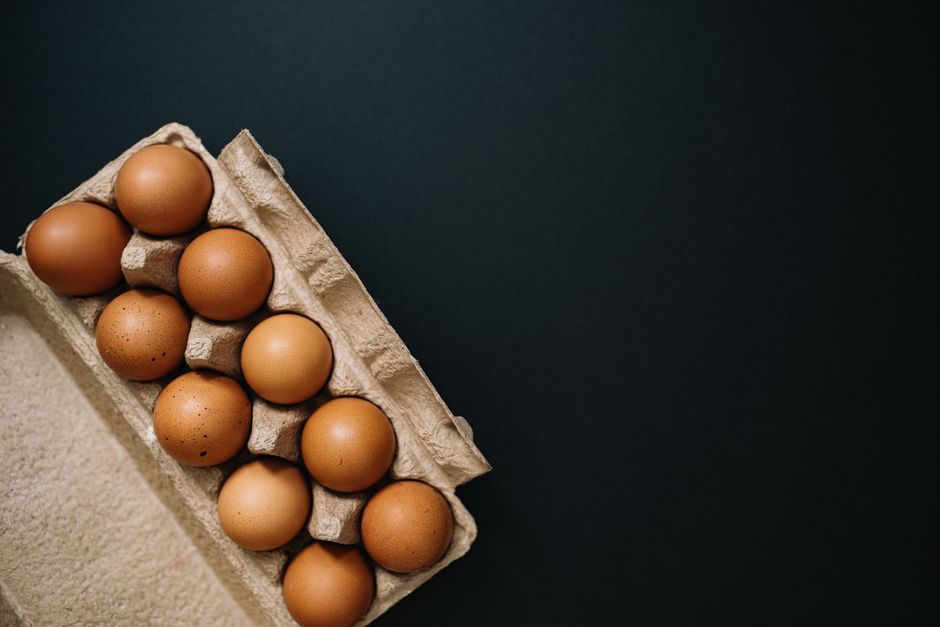
Eggs are usually still good for three to five weeks after you bring them home, even if the carton date has passed. That date is not an expiration date in the safety sense. It is a pack-by or sell-by date, and it tells the store how long to display the carton, not when the eggs go bad. Stored properly in the refrigerator, eggs stay safe and usable well beyond that printed number.
What Does the Date on an Egg Carton Actually Mean?
The date stamped on an egg carton is a freshness or sell-by date. It is set by the producer or state rules, not by a federal safety deadline.
In the United States, the USDA grades eggs for quality, but grading is voluntary. Egg cartons may carry a three-digit Julian date that shows the day the eggs were packed. That number runs from 001 (January 1) to 365 (December 31). If you see a date like 042, those eggs were packed on February 11.
Federal rules require the pack date on cartons that carry a USDA grade shield. A sell-by date can appear too, but it is not required nationwide. Some states set their own rules. Others leave it to the producer.
This matters because people read “sell by” as “use by.” They are not the same thing. A sell-by date is about inventory rotation in the store. A use-by date would be about the last day the food is at peak quality. For eggs, neither one is a hard safety cutoff.
One clarification worth knowing: the USDA states that a pack date of 365 or less means the eggs are good for at least four to five weeks from that date when refrigerated. That gives you a real window to work with.
How Long Are Eggs Good Past the Expiration Date?
As a general rule, eggs remain safe to eat for three to five weeks after the date you bought them, not the date on the carton. If the carton has a sell-by date, that date usually falls within the first week or two after packing. So counting from the sell-by date, you often have another one to three weeks of good use.
Refrigeration is the key factor. In the US, eggs are washed before sale. That washing removes a natural protective coating called the bloom. Once the bloom is gone, the shell is more porous and bacteria can pass through more easily. That is why US eggs need to stay cold.
In many European countries, eggs are not washed, so they keep the bloom and are often stored at room temperature. This is a real difference in handling, not a difference in the eggs themselves.
Temperature matters more than time. An egg left on the counter ages faster in one day than an egg in the fridge ages in a week. The USDA advises storing eggs at 40°F (4°C) or below. That is the same temperature range recommended for your refrigerator overall.
If you keep eggs cold and handle them cleanly, the printed date is a guide for quality, not a line where safety ends.
How Can You Tell If an Egg Has Gone Bad?
Your senses catch most problems before anything else does. A spoiled egg announces itself.
The most reliable test is smell. Crack the egg into a separate bowl and sniff. A fresh egg has almost no odor. A bad egg has a clear sulfur or rotten smell. If it smells off, throw it out and do not taste it.
The float test is popular but less reliable than people think. An egg that floats in a bowl of water is older, because the air pocket inside has grown as moisture escapes through the shell. But floating does not prove the egg is spoiled. It only shows the egg is older. An egg can float and still be safe, or sink and still be bad. Use the float test as a hint, not a verdict.
Appearance helps too. A cloudy egg white is a sign of freshness, not spoilage. A thin, watery white or a yolk that breaks easily suggests an older egg. Those eggs are still usually fine for cooking, even if they are not ideal for frying.
If you are unsure after checking, the safest choice is to discard the egg. The cost of one egg is not worth a foodborne illness.





Does an Older Egg Still Work for Cooking and Baking?
Older eggs are not wasted eggs. They behave differently, and that difference matters in the kitchen.
Fresh eggs hold their shape. The white is thick and the yolk sits high. These are best for frying, poaching, and boiling, because the white stays together.
As eggs age, the white thins and the yolk flattens. That makes older eggs harder to poach cleanly. But it makes them easier to peel after boiling, because the membrane inside the shell loosens over time.
For baking and scrambling, age barely matters. The egg is mixed in, so shape is irrelevant. Older eggs whip well too, which is why some bakers prefer them for certain recipes.
Hard-cooked eggs should be refrigerated within two hours of cooking and used within one week. That is a separate timeline from raw eggs and worth keeping straight.
What Are the Food Safety Risks With Old Eggs?
The main concern with eggs is Salmonella. This bacterium can be present on the shell or inside the egg, and it causes food poisoning.
In the US, eggs are washed and often refrigerated specifically to reduce this risk. The CDC estimates that Salmonella causes a large number of foodborne illnesses each year, and eggs are one recognized source.
Some eggs are pasteurized. Pasteurization uses heat to kill bacteria without cooking the egg. Pasteurized eggs are a good option for anyone who wants to eat raw or lightly cooked eggs, such as in homemade mayonnaise or certain desserts. People with weakened immune systems, older adults, pregnant women, and young children are advised to avoid raw or undercooked eggs.
Signs of foodborne illness usually appear within hours to a few days after eating contaminated food. Symptoms include stomach cramps, diarrhea, fever, and vomiting. Most people recover without treatment, but some cases are serious. If symptoms are severe or last more than a few days, seek medical care.
Cross-contamination matters as much as the egg itself. Wash your hands after handling eggs. Clean surfaces and utensils that touch raw egg. Do not let raw egg sit at room temperature for long periods.
How Should You Store Eggs to Make Them Last?
Keep eggs in the refrigerator at 40°F (4°C) or below. That single habit does more for shelf life than anything else.
Leave eggs in their original carton. The carton protects them from odors and temperature swings, and it keeps the date visible. Do not move them to the door, where the temperature changes each time the fridge opens. The main body of the refrigerator is more stable.
Store eggs with the pointed end down if you can. This keeps the yolk centered and slows the loss of moisture. It is a small thing, but it helps.
Do not wash eggs before storing them. Commercial washing already happened, and re-washing at home can push bacteria through the shell. If an egg is visibly dirty, wipe it and use it soon.
Eggs freeze well, but not in the shell. The liquid expands and cracks the shell. If you want to freeze eggs, crack them into a container, beat them lightly, and freeze. Raw whole eggs and whites freeze well. Yolks need a pinch of salt or sugar to keep from getting gummy.
Can You Trust the Date More Than Your Own Judgment?
Neither the date nor your nose is perfect on its own. Used together, they work well.
The date gives you a rough window. Your senses give you the final word. A carton past its sell-by date that smells clean and has been kept cold is usually fine. A carton within date that smells wrong is not.
The evidence on egg safety is strong on the basics: refrigeration slows bacterial growth, cooking kills bacteria, and smell detects spoilage. The exact number of days an egg lasts varies with storage conditions, so no single figure fits every kitchen.
When in doubt, throw it out. That rule has never failed anyone.
Frequently Asked Questions
Can I eat eggs after the expiration date?
Yes, in most cases. Refrigerated eggs are generally safe for three to five weeks after you buy them, even if the carton date has passed. Check for a bad smell before using them.
How long do eggs last in the fridge?
Eggs kept at 40°F (4°C) or below usually stay safe for three to five weeks from purchase. The pack date on the carton can help you track this.
What happens if you eat a bad egg?
You may get food poisoning, with symptoms like stomach cramps, diarrhea, and fever appearing within hours to a few days. Most people recover on their own, but severe cases need medical care.
Is a floating egg safe to eat?
A floating egg is older, not necessarily spoiled. The float test shows age, not safety, so use smell and appearance to decide.
