
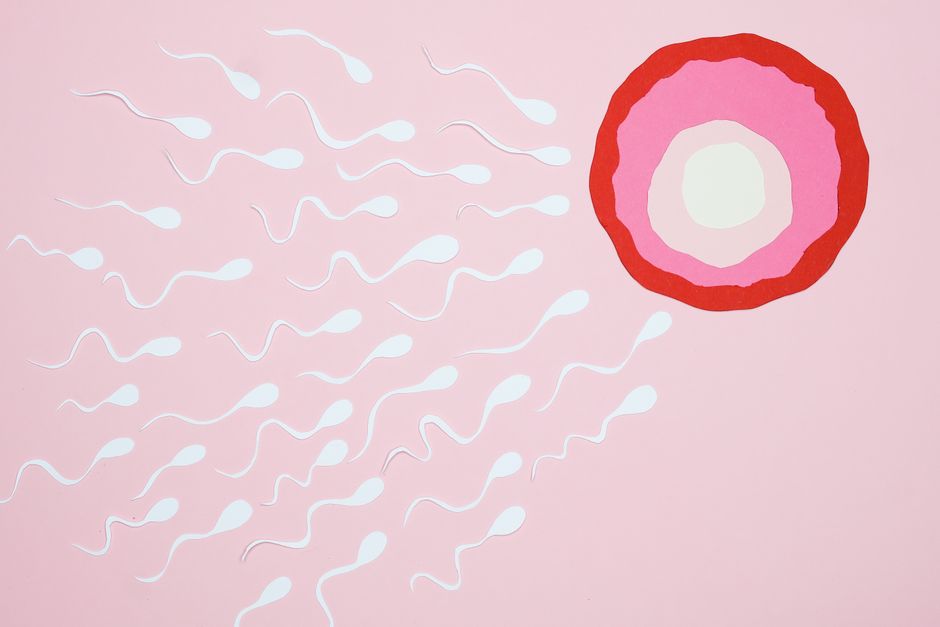
Ovulation is not a moment. It is a short window, and the egg released during it has an even shorter life. Once an egg leaves the ovary, it survives for roughly 12 to 24 hours. If sperm do not reach it in that time, it breaks down and is absorbed by the body. That number matters because it defines the outer edge of the fertile window — the stretch of days when pregnancy is actually possible.
How Long After Ovulation Does The Egg Last?
An unfertilized egg lives about 12 to 24 hours after it is released. That range is widely cited in reproductive medicine and reflects how fragile the egg is outside the ovary.
The egg is not built to wait. Unlike sperm, which can survive inside the female reproductive tract for up to five days under favorable conditions, the egg has no mechanism to stay viable for long. Its cellular structure begins to degrade within a day. If fertilization does not happen in that window, the egg can no longer be fertilized.
This asymmetry is the single most important fact in understanding fertility timing. Sperm can wait. The egg cannot. That is why the days before ovulation matter more than the days after.
What Actually Happens During Ovulation?
Ovulation is the release of a mature egg from a follicle in one of the ovaries. It is triggered by a surge in luteinizing hormone, or LH, which causes the follicle to rupture and expel the egg.
The egg is then picked up by the fimbriae — finger-like projections at the end of the fallopian tube. From there, it begins to travel down the tube toward the uterus. Fertilization, if it happens, typically occurs in the ampulla, the wider section of the fallopian tube near the ovary.
Here is a detail many people miss. The egg does not travel quickly. It moves through the fallopian tube over several days, and its viability is tied to the moment of release, not to how far it has traveled. An egg that has been in the tube for 20 hours is not “fresher” than one that has been there for 20 hours in a different person. The clock starts at ovulation.
If sperm are already present in the fallopian tube when the egg arrives, fertilization can occur within hours. If sperm arrive after the egg has degraded, fertilization does not happen.
Why Is the Fertile Window Longer Than the Egg’s Life?
The fertile window is about five days before ovulation plus the day of ovulation itself. That is roughly six days total. The egg only lives for part of one of those days.
The reason the window is longer is sperm survival. Sperm deposited in the cervix and fallopian tube can remain viable for up to five days. That means intercourse or insemination several days before ovulation can still lead to pregnancy, because sperm are waiting when the egg is released.
The reverse is not true. Intercourse after ovulation has a very narrow window — essentially the 12 to 24 hours the egg remains viable. Once that passes, pregnancy cannot occur during that cycle.
This is why fertility tracking focuses on predicting ovulation rather than confirming it. By the time you can confirm ovulation happened, the fertile window is nearly closed.
Can You Get Pregnant the Day After Ovulation?
Pregnancy the day after ovulation is possible but unlikely, and it depends on timing within that 12-to-24-hour window.
If ovulation occurred late in the day and sperm are already present, fertilization can still happen the following morning. If ovulation occurred early and more than 24 hours have passed, the egg is no longer viable.
The problem is that you usually cannot know exactly when ovulation happened. Ovulation predictor kits detect the LH surge, which typically occurs 24 to 36 hours before ovulation — not at the moment of release. Basal body temperature rises after ovulation, which confirms it happened but does not tell you precisely when.
So “the day after ovulation” is a fuzzy concept. Some people who think they ovulated yesterday actually ovulated today, and vice versa. This uncertainty is why the days before ovulation are the most reliable time to try to conceive.
How Do You Know When Ovulation Has Happened?
No method tells you the exact moment of ovulation with certainty. Each sign gives you a different piece of the picture.
- LH surge (ovulation predictor kits): Detects the hormone rise that precedes ovulation by roughly 24 to 36 hours. It predicts, it does not confirm.
- Basal body temperature: Rises slightly after ovulation due to progesterone. It confirms ovulation happened but only in hindsight, typically a day or more later.
- Cervical mucus: Becomes clear, stretchy, and slippery near ovulation. This is a sign of approaching fertility, not proof of release.
- Mid-cycle pain: Some people feel a twinge on one side. It can coincide with ovulation but is not reliable on its own.
- Progesterone blood test: A clinician can measure progesterone in the second half of the cycle to confirm that ovulation occurred.
None of these methods pin down the hour of release. That gap between prediction and confirmation is the core challenge in fertility timing.
Does Egg Viability Change With Age?
Egg viability after ovulation does not appear to change much with age. What changes is egg quality and the number of eggs available.
Age affects the likelihood that a released egg is chromosomally normal, which influences whether fertilization leads to a viable pregnancy. It does not extend or shorten the 12-to-24-hour post-ovulation window in any well-established way.
What does shift with age is cycle regularity. People in their late 30s and 40s are more likely to have shorter cycles, earlier ovulation, or irregular ovulation. That makes timing harder to predict, even though the egg’s lifespan itself stays roughly the same.
What If You Are Trying to Conceive?
The practical takeaway is simple. Have sex in the days leading up to ovulation, not just on the day you think it happens.
Because sperm survive up to five days and the egg survives about one, the highest chance of conception comes from intercourse every one to two days during the fertile window — roughly the five days before ovulation and the day of ovulation.
If you are tracking with LH kits, the surge is your signal to try that day and the next. If you are using cervical mucus, the appearance of clear, stretchy mucus is a good cue to start.
If you have been trying for a year without success — or six months if you are over 35 — it is reasonable to talk to a doctor. That timeline is a general guideline used in clinical practice, not a hard rule. The point is not to wait indefinitely before getting help.
What About the “Egg Lasts 48 Hours” Claim?
You may see claims that the egg lives 48 hours. That figure is not supported by the standard reproductive physiology literature.
The widely accepted range is 12 to 24 hours. Some sources cite “up to 24 hours” as the upper bound. A 48-hour figure appears in some consumer fertility content, but it does not match what is taught in reproductive medicine.
Why does this matter? If you believe the egg lasts two days, you might delay trying to conceive, thinking you have more time than you do. The evidence does not support that buffer.
Frequently Asked Questions
How long does an egg live after ovulation?
An unfertilized egg lives about 12 to 24 hours after it is released. If it is not fertilized in that window, it breaks down and cannot be fertilized.
Can you get pregnant 2 days after ovulation?
Pregnancy two days after ovulation is very unlikely because the egg is usually no longer viable by then. The fertile window is essentially closed once 24 hours have passed since release.
How long after ovulation can sperm fertilize an egg?
Fertilization can occur only while the egg is viable, which is roughly 12 to 24 hours after ovulation. Sperm must already be present in the fallopian tube when the egg arrives.
Is the egg’s lifespan the same for everyone?
The 12-to-24-hour range is considered standard across individuals. Age affects egg quality and cycle regularity, but it does not appear to change how long the egg survives after release.
