
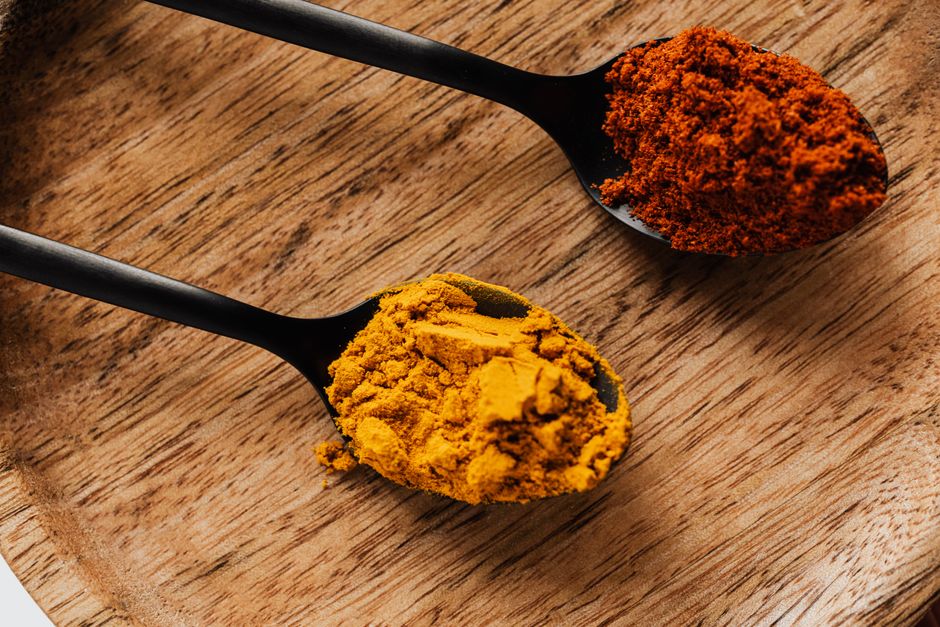
Turmeric is poorly absorbed on its own. Most of the curcumin in turmeric passes through the gut without entering the bloodstream in meaningful amounts. Two things change that: fat and black pepper. Curcumin is fat-soluble, so it needs fat to dissolve and cross into the body. And piperine, the compound that gives black pepper its bite, slows the liver and gut processes that clear curcumin out. Fat and pepper together, alongside heat, give turmeric its best shot at absorption.
Why Is Turmeric So Poorly Absorbed on Its Own?
Curcumin, the main active compound in turmeric, has low bioavailability. That means very little of what you swallow reaches your bloodstream in a usable form.
Three things work against it. First, curcumin dissolves poorly in water, and your gut is a watery environment. Second, the liver and intestinal wall process curcumin quickly, breaking it down and clearing it before it can build up in the blood. Third, any curcumin that does get absorbed is rapidly metabolized.
This is why eating turmeric powder straight, or drinking it in plain water, delivers very little curcumin to your body. The spice still flavors food and has a long history of culinary and traditional use. But the gap between what you eat and what your body actually absorbs is large.
One clarification worth making: turmeric and curcumin are not the same thing. Turmeric is the whole root, containing curcumin plus other compounds. Curcumin is the specific molecule most research focuses on. When people talk about absorption, they usually mean curcumin.
How Is Turmeric Best Absorbed With Fat, Pepper, and Heat?
The best-documented way to improve curcumin absorption is to combine it with a fat source, black pepper, and gentle heat. Each does a different job.
Fat gives curcumin something to dissolve into. Because curcumin is fat-soluble, mixing turmeric into oil, ghee, whole milk, or a fatty dish helps it disperse and move through the digestive tract in a form the body can take up. Without fat, much of it stays in the gut.
Black pepper works differently. Piperine, the active compound in black pepper, appears to reduce how quickly the liver and intestinal wall break down curcumin. Some studies suggest piperine can raise curcumin absorption substantially, though the exact size of the effect varies between studies and formulations. The mechanism is reasonably well supported. The precise numbers are not something to rely on.
Heat helps dissolve curcumin into fat during cooking. Warming turmeric in oil or a fatty liquid makes it easier to distribute through the dish rather than clumping in one spot.
Put together, the practical pattern is simple: cook turmeric into a fatty dish, add a pinch of black pepper, and let heat do its work. This is the approach behind traditional golden milk and many South Asian recipes, which pair turmeric with fat and often pepper without anyone calling it a bioavailability strategy.
Does Black Pepper Really Make a Difference?
Yes, based on the mechanism and several small studies. Piperine inhibits certain liver and intestinal enzymes involved in clearing curcumin, and it also affects how the gut lining handles absorption. The result, in some research, is a meaningful increase in how much curcumin reaches the blood.
Be careful about the big numbers you see online. Some sources claim pepper boosts absorption by 2,000 percent. Those figures come from specific small studies using particular formulations, and they do not translate neatly to a pinch of pepper on your dinner. The direction of the effect is real. The exact magnitude in everyday cooking is not well established.
A small amount of pepper is generally enough. You do not need to bury your food in it. A pinch or a light grind alongside turmeric is the usual approach.
What About Supplements and Enhanced Formulations?
Most curcumin supplements are poorly absorbed on their own, which is why manufacturers add absorption aids. The common ones include piperine, fats, and special formulations designed to package curcumin in a more absorbable form.
Some of these enhanced formulations have been tested in small human studies and shown higher blood levels of curcumin than plain powder. That is a real finding. What is less clear is whether higher blood levels translate into meaningful health outcomes. Absorption and clinical benefit are not the same thing.
If you are considering a supplement, know that the evidence base for curcumin’s health effects is mixed and still developing. Some studies suggest benefits in certain areas. Others are inconclusive or show little effect. No large, definitive trials have settled the question. Talk to a clinician before starting any supplement, especially if you take medications, since curcumin can interact with some drugs.
Does Cooking Destroy Turmeric’s Benefits?
Moderate cooking heat does not destroy curcumin. In fact, gentle heat helps dissolve it into fat, which is part of why cooking turmeric into a dish works well.
Very high heat over long periods can degrade curcumin, but normal cooking does not reach that point in a way that matters for a home cook. The bigger issue is what you pair turmeric with, not whether you cook it. A turmeric stirred into a fatty sauce with a little pepper will generally serve you better than dry powder swallowed with water.
How Should You Use Turmeric for Best Absorption?
The practical steps are straightforward and do not require special products.
- Add turmeric to a dish that contains fat, such as oil, ghee, coconut milk, or whole milk.
- Include a pinch of black pepper in the same dish.
- Warm the turmeric into the fat rather than adding it dry at the end.
- Keep amounts reasonable. A little goes a long way, and more turmeric does not automatically mean more absorption.
Golden milk is a common example: warm milk, turmeric, a pinch of pepper, and often a little fat like ghee or coconut oil. Curries, lentil dishes, and scrambled eggs with turmeric and pepper follow the same principle.
What you should not expect is a dramatic transformation from a single serving. Absorption improves with these pairings, but the amount of curcumin that reaches your blood from food remains modest compared with concentrated supplements. That is not a reason to avoid turmeric. It is a reason to keep expectations realistic and to treat food-based turmeric as part of an overall diet rather than a targeted therapy.
Frequently Asked Questions
Does turmeric need fat to be absorbed?
Yes, fat helps significantly because curcumin is fat-soluble and dissolves poorly in water. Pairing turmeric with oil, ghee, or a fatty food helps it disperse in a form the body can absorb.
How much black pepper should I add to turmeric?
A pinch or a light grind is generally enough to supply piperine. There is no established standard dose for home cooking, so keep it modest and consistent rather than heavy.
Is turmeric absorbed better with hot water or milk?
Milk is the better choice because its fat helps dissolve curcumin. Hot water alone provides no fat, so absorption stays low even though the drink is warm.
Do turmeric supplements absorb better than turmeric in food?
Many supplements use enhanced formulations that raise blood curcumin levels more than plain powder. Whether that translates into health benefits is not firmly established, so discuss supplements with a clinician first.
