
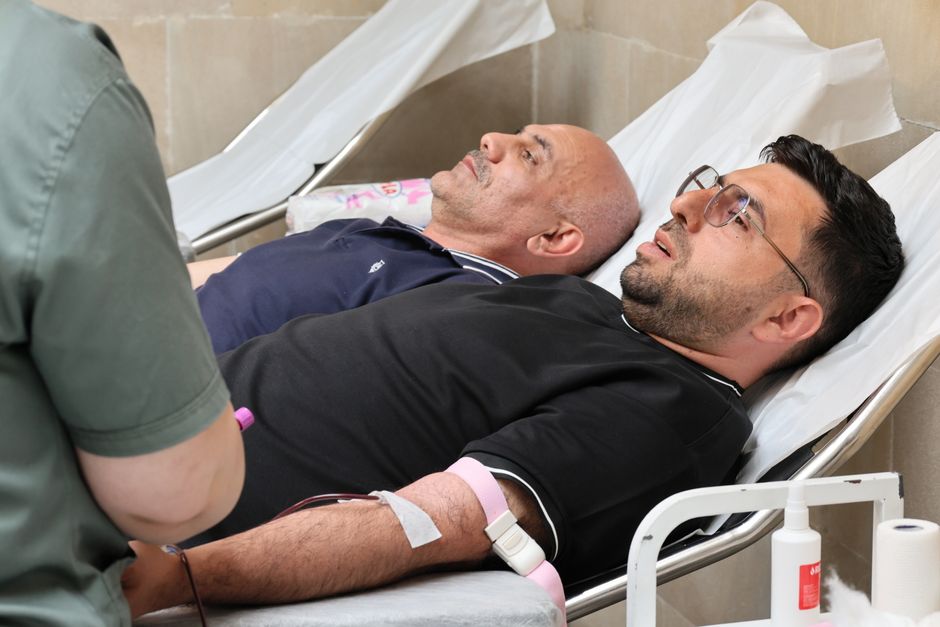
Thalassemia treatment has changed dramatically in the past decade. For most people with the severe forms, regular blood transfusions remain the foundation of care, paired with medicines that remove the excess iron those transfusions leave behind. For a small but growing group, gene therapy and related gene-editing approaches now offer a path that does not depend on lifelong transfusions.
The right treatment depends on how severe the disease is and which type a person has. Some people need only monitoring. Others need transfusions every few weeks. A few qualify for a one-time genetic treatment that can reduce or eliminate the need for transfusions.
What Is Thalassemia and Why Does It Need Treatment?
Thalassemia is an inherited blood disorder in which the body makes less hemoglobin than it should. Hemoglobin is the protein inside red blood cells that carries oxygen. When hemoglobin production is faulty, red blood cells are fewer and shorter-lived, and the result is anemia.
The condition comes in two main forms. In alpha thalassemia, the problem lies in the genes that make the alpha globin part of hemoglobin. In beta thalassemia, the problem lies in the beta globin genes. Each form ranges from mild to severe.
Severity is usually described by how much treatment a person needs. At the mild end, a person may have small red blood cells and mild anemia but feel fine. At the severe end — called thalassemia major or transfusion-dependent thalassemia — the body cannot make enough healthy red blood cells to function, and anemia becomes life-threatening without treatment.
Thalassemia is one of the most common inherited blood disorders worldwide. It is more frequent in people whose ancestry traces to the Mediterranean, the Middle East, South Asia, Southeast Asia, and parts of Africa. That pattern reflects how the disease has persisted: carrying a single copy of a thalassemia gene appears to have offered some protection against malaria in regions where the disease was common.
How Do Blood Transfusions Treat Thalassemia?
Transfusions do not fix the underlying disease. They replace the red blood cells the body cannot make well enough on its own. That restores oxygen delivery, relieves anemia, and allows normal growth and organ function.
For people with transfusion-dependent thalassemia, transfusions are typically given every two to five weeks, depending on how quickly the red blood cells survive in the body. This is not a cure. It is a long-term support strategy, and it works well when it is consistent.
The reason consistency matters is that chronic anemia forces the bone marrow to work constantly. In beta thalassemia major, that overwork causes the marrow to expand, which can deform facial bones and thin the bones. The spleen and liver can enlarge as they try to clear damaged red blood cells. Transfusions suppress some of this by keeping hemoglobin at a level the body can tolerate.
Transfusions carry their own problems. The most significant is iron overload. Each unit of transfused blood contains iron, and the body has no natural way to remove excess iron. Over years, that iron builds up in the heart, liver, and endocrine organs, where it can cause heart failure, liver damage, diabetes, and delayed puberty.
This is why transfusion therapy is almost always paired with iron chelation — medicines that bind iron and help the body excrete it. Chelation is not optional in transfusion-dependent disease. It is part of the treatment itself.
What Is Iron Chelation and Why Is It Necessary?
Iron chelation is the use of drugs that attach to excess iron so the body can remove it through urine or stool. Without chelation, iron from repeated transfusions accumulates and damages organs.
Three main chelating drugs are used in the United States. Deferoxamine is given by slow infusion under the skin or into a vein, often over several hours. Deferasirox and deferiprone are taken by mouth. Each has different dosing, monitoring needs, and side effects, and the choice depends on the person’s age, organ function, and tolerance.
Monitoring is a routine part of chelation. Doctors track iron levels in the blood and use imaging — often MRI — to measure iron in the heart and liver directly. This matters because blood tests alone can miss organ iron, and the heart is the organ most at risk.
One point worth being clear about: chelation has improved survival in transfusion-dependent thalassemia substantially. Before effective chelation, heart failure from iron overload was a leading cause of death in these patients. That is a well-established finding, not a marginal benefit.





What Other Treatments Are Used for Thalassemia?
Beyond transfusions and chelation, several other approaches are used depending on the case.
- Splenectomy. Removing the spleen can reduce how often transfusions are needed, because the spleen destroys red blood cells. But it raises the risk of serious infections and blood clots, so it is used less often now than in the past.
- Folic acid. Because the body is constantly making new red blood cells, folic acid supplementation is often recommended. This supports red blood cell production but does not treat the disease itself.
- Hydroxyurea. This drug is used in some forms of beta thalassemia to raise fetal hemoglobin, a type of hemoglobin that works better than the adult form in this disease. Response varies, and it is not effective for everyone.
- Luspatercept. This is an injectable medicine approved for adults with beta thalassemia who need transfusions. It can reduce transfusion frequency in some patients. It does not eliminate the need for transfusions entirely.
- Stem cell transplant. A transplant from a matched donor can cure thalassemia. It is the longest-established cure. Its use is limited by donor availability, age, and the risks of the transplant itself, which include serious complications.
These options are not interchangeable. Which one applies depends on the specific diagnosis, age, and how the disease is behaving.
How Is Thalassemia Treated With Gene Therapy?
Gene therapy for thalassemia works by correcting the genetic problem in the patient’s own blood-forming stem cells. The goal is to allow the body to make normal hemoglobin on its own, so transfusions are no longer needed.
The process has several steps. First, stem cells are collected from the patient’s blood after treatment that moves them out of the bone marrow. Next, in the laboratory, a working copy of the beta globin gene is added to these cells using a modified virus that carries the gene but cannot cause disease. The corrected cells are then given back to the patient after a round of chemotherapy that makes room for them in the bone marrow.
A related approach uses gene editing rather than gene addition. Instead of adding a new gene, it switches on a gene the body already has — the one that makes fetal hemoglobin. Fetal hemoglobin is normally turned off after birth, but when it is switched back on, it can compensate for the faulty adult hemoglobin. This approach has also been tested in clinical trials.
Both approaches have shown that some patients can become transfusion-independent. That is a real and significant outcome. But it is important to be precise about what is known and what is not.
What is known: In clinical trials, a substantial share of treated patients have been able to stop transfusions for extended periods. The treatments are approved for certain patients with transfusion-dependent beta thalassemia.
What is less certain: How long the benefit lasts. Whether it works equally well across all genetic subtypes. How it performs in very young children, in people with significant organ damage from iron overload, and in alpha thalassemia. Long-term safety data are still being collected.
Gene therapy is also demanding on the body. The chemotherapy used before the corrected cells are returned can affect fertility and carries other risks. This is why it is offered at specialized centers and only after careful evaluation.
Who Is a Candidate for Gene Therapy?
Gene therapy is not for everyone with thalassemia. It is generally considered for people with transfusion-dependent beta thalassemia who are old enough to undergo the procedure and who do not have a suitable matched donor for a stem cell transplant.
Age matters. Most trials and approvals have focused on older children and adults. Data in very young children are limited. This is a genuine gap, not a minor detail.
Organ function matters too. People with significant heart or liver damage from years of iron overload may not tolerate the chemotherapy. This is one reason early discussion with a specialist center matters.
Fertility is another consideration. The chemotherapy used in gene therapy can reduce or eliminate fertility. Patients who may want children later should discuss fertility preservation before treatment.
How Do Treatment Options Compare?
| Treatment | What It Does | Key Limitation |
|---|---|---|
| Blood transfusions | Replaces red blood cells; relieves anemia | Requires iron chelation; lifelong |
| Iron chelation | Removes excess iron from transfusions | Must be taken consistently; side effects vary |
| Luspatercept | Reduces transfusion frequency in some adults | Does not eliminate transfusions |
| Stem cell transplant | Can cure the disease | Needs a matched donor; carries transplant risks |
| Gene therapy / gene editing | Corrects the patient’s own stem cells | Limited long-term data; chemotherapy risks; specialized centers only |
The comparison is not about which is best in the abstract. It is about which fits a specific person’s age, disease severity, organ health, and goals.
What Does the Future of Thalassemia Treatment Look Like?
Treatment is moving toward fewer transfusions and more durable options. Gene therapy and gene editing are the clearest examples, but they are not the whole picture. Research continues into medicines that raise fetal hemoglobin, into safer conditioning regimens for gene therapy, and into ways to make stem cell transplant available to more people.
For now, transfusions and chelation remain the backbone of care for most people with severe thalassemia. Gene therapy is a genuine advance, but it is not yet a routine option for everyone, and its long-term track record is still being written. Anyone considering it should do so with a thalassemia specialist who can weigh the real trade-offs.
Frequently Asked Questions
Can thalassemia be cured?
Yes, in some cases. A stem cell transplant from a matched donor can cure thalassemia, and gene therapy has allowed some patients to stop needing transfusions.
How often do people with thalassemia need blood transfusions?
People with transfusion-dependent thalassemia usually need transfusions every two to five weeks. The exact schedule depends on how quickly the transfused red blood cells are cleared from the body.
Is gene therapy for thalassemia available now?
Yes, gene therapy is approved for certain patients with transfusion-dependent beta thalassemia. It is offered at specialized centers and is not suitable for everyone.
Why do people with thalassemia need iron chelation?
Repeated blood transfusions add iron to the body, which has no natural way to remove it. Without chelation, that iron builds up and can damage the heart, liver, and other organs.
