
Tay-Sachs disease is diagnosed through a blood test that measures the enzyme hexosaminidase A, followed by genetic testing to confirm the specific mutations. When a pregnancy is already underway and both parents are known carriers, prenatal diagnosis is possible through chorionic villus sampling or amniocentesis. Each test answers a different question, and the order in which they are used matters.
What Is Tay-Sachs Disease and Why Does Diagnosis Matter?
Tay-Sachs is a rare inherited disorder that destroys nerve cells in the brain and spinal cord. It is caused by mutations in the HEXA gene, which provides instructions for making an enzyme called hexosaminidase A. Without enough of this enzyme, a fatty substance called GM2 ganglioside builds up inside nerve cells and eventually kills them.
The classic infantile form is the most common and the most severe. Babies typically appear normal at birth and develop normally for the first few months. Then skills begin to slip away. They lose the ability to roll over, sit, or reach for objects. By around age two, most children with infantile Tay-Sachs experience seizures and loss of response to their surroundings. The disease is progressive and fatal, and there is no cure.
Rarer forms exist. Juvenile and adult-onset Tay-Sachs progress more slowly and vary widely in severity. These later-onset forms are often misdiagnosed at first because their symptoms overlap with other neurological conditions.
Diagnosis matters for several reasons. It confirms what is happening when symptoms are puzzling. It allows families to understand recurrence risk. And in families who already know they carry the gene, it allows parents to make informed reproductive decisions before or during pregnancy.
How Is Tay Sachs Diagnosed With Blood Tests?
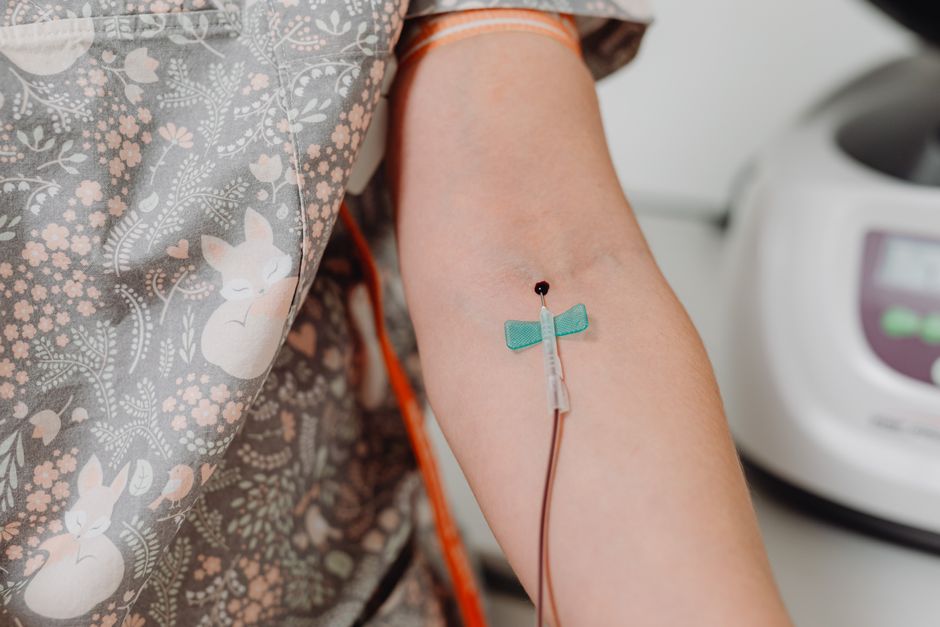
The first-line test is an enzyme assay. A blood sample is analyzed to measure how much hexosaminidase A activity is present in the white blood cells or serum. In classic infantile Tay-Sachs, enzyme activity is very low or absent.
This test has an important wrinkle. Hexosaminidase A is one of two related enzymes, and the other one — hexosaminidase B — can mask a deficiency if the test is not specific enough. Modern testing separates the two. That is why the enzyme assay is reliable when done properly, but also why it is not the final word on its own.
Enzyme testing is used in two different situations:
- Diagnostic testing — when a child or adult already has symptoms that suggest Tay-Sachs.
- Carrier screening — when a healthy adult wants to know whether they carry a HEXA mutation.
Carrier screening is where the enzyme test becomes less straightforward. Carriers have roughly half the normal enzyme activity, which usually falls in a range that overlaps with the low end of normal. For this reason, DNA testing is generally preferred for carrier screening today, especially in people with a family history or known ancestry risk.
Genetic testing looks directly at the HEXA gene and can identify the specific mutations a person carries. It confirms a diagnosis when enzyme results are borderline or unclear. It also tells carriers exactly which mutation they carry, which matters for testing a partner and for prenatal testing later.
Who Should Be Screened for Tay-Sachs?
Tay-Sachs occurs in all populations, but certain groups carry a much higher risk. The Ashkenazi Jewish population has historically had the highest carrier rate, and screening programs in that community have sharply reduced the number of affected infants. People of French-Canadian descent from specific regions of Quebec, and some Cajun populations in Louisiana, also have elevated carrier rates.
Because the disease is rare outside these groups, routine screening of everyone is not standard practice. Carrier screening is generally offered based on ancestry, family history, or a partner’s known carrier status. Some clinicians now offer expanded carrier screening panels to a broader range of patients, which include Tay-Sachs among many other conditions. Practice varies, and insurance coverage varies too.
If one partner is found to be a carrier, the other partner should be tested. Two carriers have a one in four chance with each pregnancy of having an affected child. That figure comes from basic inheritance: each parent passes on one copy of the gene, and the child is affected only when both copies are mutated.





How Is Tay Sachs Diagnosed During Pregnancy?
Prenatal diagnosis is offered when both parents are known carriers, or when there is a previous affected child. It is not a routine test for everyone.
Two procedures are used, and they differ mainly in timing and in what tissue they sample.
| Procedure | Typical timing | What is sampled |
|---|---|---|
| Chorionic villus sampling (CVS) | Usually 10 to 13 weeks of pregnancy | Small sample of placental tissue |
| Amniocentesis | Usually 15 to 20 weeks of pregnancy | Small sample of amniotic fluid |
Both procedures carry a small risk of miscarriage. The exact risk depends on the procedure, the clinic, and the individual pregnancy, and it has declined over time as techniques have improved. Anyone considering either test should discuss the specific risk with their clinician rather than relying on a general figure.
The sample is then tested for HEXA enzyme activity and, in most cases, for the specific HEXA mutations the parents are known to carry. Testing for known family mutations is more precise than a broad search, which is why identifying the parents’ mutations beforehand matters so much.
There is also a non-invasive option that some families ask about. Cell-free DNA screening can analyze fetal DNA from a maternal blood sample, and it is widely used for conditions like Down syndrome. For Tay-Sachs, its use is more limited. It can sometimes detect mutations a parent carries, but it does not reliably measure fetal enzyme activity, and it is not a substitute for CVS or amniocentesis when a definitive diagnosis is needed. The evidence for cell-free DNA in Tay-Sachs diagnosis specifically is limited compared with its use in chromosomal conditions.
What Happens After a Diagnosis?
There is no cure for Tay-Sachs, and treatment focuses on managing symptoms and supporting the child and family. Care typically involves a team that addresses seizures, feeding difficulties, breathing problems, and comfort. Some children receive physical and occupational therapy to maintain function for as long as possible.
Several experimental approaches have been studied, including enzyme replacement, substrate reduction therapy, and gene therapy. None has been shown in large human trials to reverse or stop the infantile form. Families who ask about clinical trials should get information from their care team about what is currently recruiting and what the evidence actually shows for each approach.
For families planning future pregnancies, genetic counseling is central. Options include prenatal testing in a subsequent pregnancy, preimplantation genetic testing with in vitro fertilization, and the use of donor gametes. These are personal decisions, and a genetic counselor can lay out the facts without steering the choice.
What Are the Limits of Tay-Sachs Testing?
Testing is highly accurate for the mutations it is designed to detect, but it is not perfect. Genetic testing panels look for known mutations. A person could carry a rare or previously unidentified HEXA mutation that a standard panel misses, and in that case the test could come back negative even though the person is a carrier.
Enzyme testing has its own limits. Results near the cutoff between carrier and normal can be ambiguous, which is why DNA testing is used to clarify. And in later-onset forms, enzyme levels may be only mildly reduced, making the diagnosis harder to pin down from a blood test alone.
These limitations are worth knowing but should not cause alarm. For most people in higher-risk groups, the combination of enzyme and DNA testing gives a clear answer. The key point is that a negative result on a limited panel does not always rule out carrier status, and a genetic counselor can explain what a given test did and did not cover.
Frequently Asked Questions
Can Tay-Sachs be detected before symptoms appear?
Yes. Carrier screening and prenatal testing can identify the condition before any symptoms develop. Newborn screening for Tay-Sachs is not universal in the United States, so detection usually depends on family history or known carrier status.
What blood test confirms Tay-Sachs disease?
An enzyme assay measures hexosaminidase A activity, and genetic testing of the HEXA gene confirms the diagnosis. The two are usually used together.
Is Tay-Sachs testing covered by insurance?
Coverage varies widely by plan and by the reason for testing. Carrier screening is often covered for people in higher-risk groups, but patients should confirm with their insurer before testing.
Can a carrier of Tay-Sachs have a healthy child?
Yes. Two carriers have a one in four chance with each pregnancy of having an affected child, which means most pregnancies in carrier couples result in unaffected children.
