
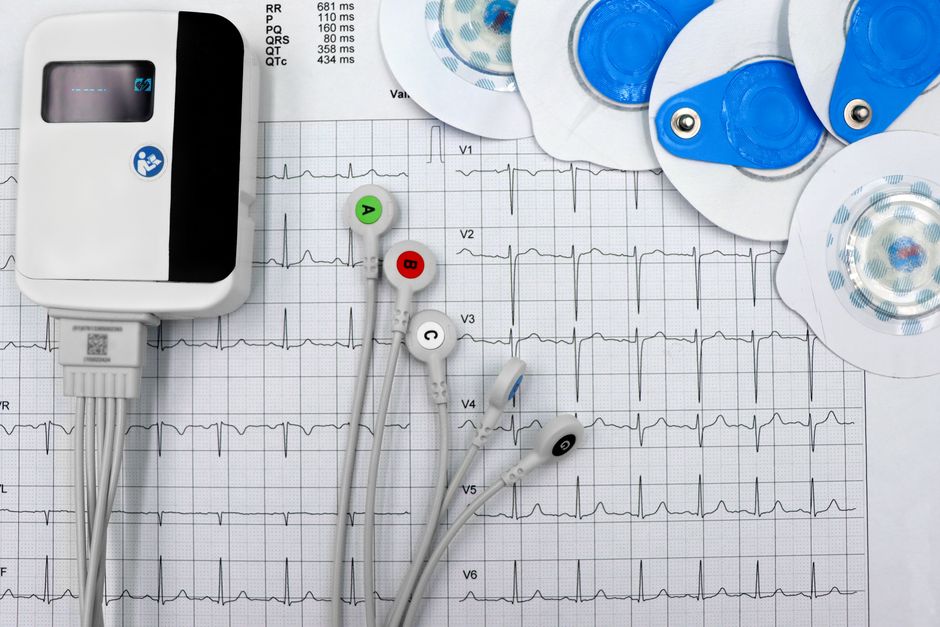
Tachycardia is diagnosed by measuring heart rate and then identifying the heart rhythm that is producing it. A resting heart rate above 100 beats per minute in adults meets the standard definition of tachycardia. An electrocardiogram (ECG) is the primary tool because it records the heart’s electrical activity and shows not just how fast the heart is beating but where the abnormal rhythm is starting and how it travels through the heart.
A number on a heart rate monitor tells you the rate. An ECG tells you the rhythm. That distinction is the reason ECG monitoring plays a bigger role in diagnosis than a simple pulse check ever could.
What Heart Rate Counts as Tachycardia?
In adults, a resting heart rate above 100 beats per minute is generally classified as tachycardia. A normal resting heart rate for adults typically falls between 60 and 100 beats per minute.
What counts as normal varies by age. Infants and young children normally have much faster heart rates than adults. A newborn may have a resting heart rate well above 100 beats per minute as a normal finding. This is why tachycardia in children is defined differently and why pediatric heart rate ranges are age-specific.
Heart rate also rises normally during exercise, fever, pain, anxiety, and dehydration. A fast heart rate in those situations is a physiological response, not a diagnosis. The clinical question is whether the rate is inappropriate for the situation or whether the rhythm itself is abnormal.
That is where the ECG becomes essential. It separates a normal rhythm running fast from an abnormal rhythm that happens to be fast. Those are different problems with different causes and different treatments.
How Is Tachycardia Diagnosed With ECG Monitoring More?
An ECG records the electrical signals that trigger each heartbeat. Small electrodes placed on the chest, arms, and legs pick up those signals and display them as waves on a tracing. Each wave corresponds to a specific electrical event in the heart.
A standard 12-lead ECG takes only a few minutes and captures a snapshot of the heart’s rhythm at that moment. It can show whether the rhythm is regular or irregular, how fast it is, and where in the heart it appears to originate.
The ECG also measures specific intervals that carry diagnostic meaning:
- P wave — reflects electrical activity in the upper chambers (atria)
- PR interval — the time from the start of atrial activation to the start of ventricular activation
- QRS complex — reflects electrical activity in the lower chambers (ventricles)
- QT interval — the time from the start of ventricular activation to the end of ventricular recovery
These measurements help a clinician determine whether a fast rhythm is coming from the atria, the ventricles, or an abnormal pathway connecting them. That anatomical distinction drives the diagnosis.
Why a Single ECG Often Is Not Enough
A 12-lead ECG captures roughly ten seconds of heart activity. If tachycardia is not happening during those ten seconds, the tracing will look normal. This is one of the most common reasons a diagnosis gets missed on a first visit.
Many tachycardias are paroxysmal, meaning they start and stop suddenly and unpredictably. A person might have episodes several times a week that last minutes, then feel completely fine in the doctor’s office. A single snapshot cannot capture what is not occurring at that moment.
This is why extended monitoring exists. When a standard ECG does not show the arrhythmia, clinicians turn to monitoring that records the heart over a longer period. The goal is to catch the rhythm while it is actually happening.




What Types of ECG Monitoring Are Used?
Several monitoring options exist, and the choice depends on how often symptoms occur and how long an episode lasts.
Holter monitor — a portable device worn continuously for 24 to 48 hours. It records every heartbeat during that period. It works best when symptoms happen daily or nearly every day.
Event monitor — worn for weeks to about a month. Some models record continuously; others are activated by the patient when symptoms occur. These suit symptoms that happen every few days or weeks.
Patch monitor — a small adhesive device worn on the chest for up to two weeks. It records continuously without wires or a belt, which makes it easier to wear during normal activity.
Implantable loop recorder — a small device placed under the skin of the chest through a minor procedure. It can monitor the heart for months to years. It is generally reserved for cases where symptoms are infrequent but potentially serious and other monitoring has not captured them.
Smartwatch and consumer wearable ECG features have become more common. Some can detect irregular rhythms and record a single-lead tracing. These devices may prompt someone to seek evaluation, but they are not a substitute for a clinical diagnosis. A single-lead recording provides less information than a 12-lead ECG, and the findings still need to be reviewed by a clinician. The evidence on how well these devices perform across different rhythms is still developing.
How Is the ECG Reading Interpreted?
The first step is determining whether the QRS complexes are narrow or wide. A narrow QRS generally means the rhythm is originating above the ventricles — in the atria or the atrioventricular node. A wide QRS suggests the rhythm is originating in the ventricles or traveling through an abnormal pathway.
This distinction matters because narrow-complex and wide-complex tachycardias have different causes and different levels of urgency. Wide-complex tachycardia is generally treated as a more serious finding until proven otherwise.
The next step is examining the relationship between the P waves and the QRS complexes. A normal P wave before every QRS complex, with a consistent PR interval, points toward a sinus rhythm — the heart’s normal pacemaker running fast. A missing or abnormal P wave, or one that appears in an unusual position relative to the QRS, suggests a different origin.
The regularity of the rhythm also provides clues. Some tachycardias produce a perfectly regular fast rhythm. Others, such as atrial fibrillation, produce an irregularly irregular pattern with no consistent interval between beats.
Putting these features together — QRS width, P wave relationship, regularity, and rate — allows a clinician to classify the rhythm. That classification is the diagnosis.
What Else Is Used Alongside ECG Monitoring?
An ECG identifies the rhythm, but it does not always explain why it is happening. Additional evaluation often follows.
Blood tests can reveal conditions that drive a fast heart rate, such as anemia, an overactive thyroid, or electrolyte imbalances. These are reversible causes that may resolve once the underlying problem is treated.
Echocardiography uses ultrasound to show the heart’s structure and how well it is pumping. It can detect valve problems, enlarged chambers, or other structural issues that may contribute to arrhythmias.
Electrophysiology study is a more invasive procedure in which catheters are threaded into the heart to map its electrical pathways directly. It is typically used when the rhythm needs to be pinpointed precisely, often before a procedure to correct it.
Stress testing records the heart’s rhythm during controlled physical exertion. It can reveal arrhythmias that only appear when the heart is working harder.
Not every person with tachycardia needs all of these. The evaluation is guided by what the ECG shows, how often symptoms occur, and whether there are signs of an underlying condition.
When Does Tachycardia Need Urgent Evaluation?
Some fast heart rhythms are benign and cause only bothersome symptoms. Others can be life-threatening. The ECG is the main tool that separates them.
Seek emergency care for a fast heart rate accompanied by chest pain, shortness of breath, fainting or near-fainting, confusion, or a feeling that the heart is racing uncontrollably. These signs suggest the heart may not be pumping enough blood to meet the body’s needs.
Wide-complex tachycardia, in particular, is treated as a medical emergency until a clinician determines otherwise. It can deteriorate into a rhythm that stops the heart from pumping effectively.
For people with known heart disease, a prior heart attack, or structural heart problems, a new fast rhythm warrants prompt attention. The threshold for evaluation is lower in these groups because the risk of complications is higher.
For someone young and otherwise healthy with brief, self-limited episodes and a normal ECG between episodes, the situation is often less urgent. But “often less urgent” is not the same as “not worth evaluating.” Recurrent symptoms deserve a proper workup.
Frequently Asked Questions
Can a single ECG diagnose tachycardia?
A single ECG can diagnose tachycardia if the fast rhythm is happening during the recording. If the rhythm is not active at that moment, the ECG will appear normal and longer monitoring is needed.
How long do you have to wear a heart monitor to catch tachycardia?
It depends on how often episodes occur. A Holter monitor records for 24 to 48 hours, while event and patch monitors can record for weeks. Implantable devices can monitor for months to years.
Can a smartwatch detect tachycardia?
Some consumer devices can detect a fast or irregular heart rate and record a single-lead tracing. They may prompt someone to seek care, but they are not a substitute for a clinical diagnosis by a clinician reviewing a full ECG.
What heart rate is considered tachycardia in adults?
A resting heart rate above 100 beats per minute is generally classified as tachycardia in adults. Normal resting heart rate for adults is typically 60 to 100 beats per minute.
