
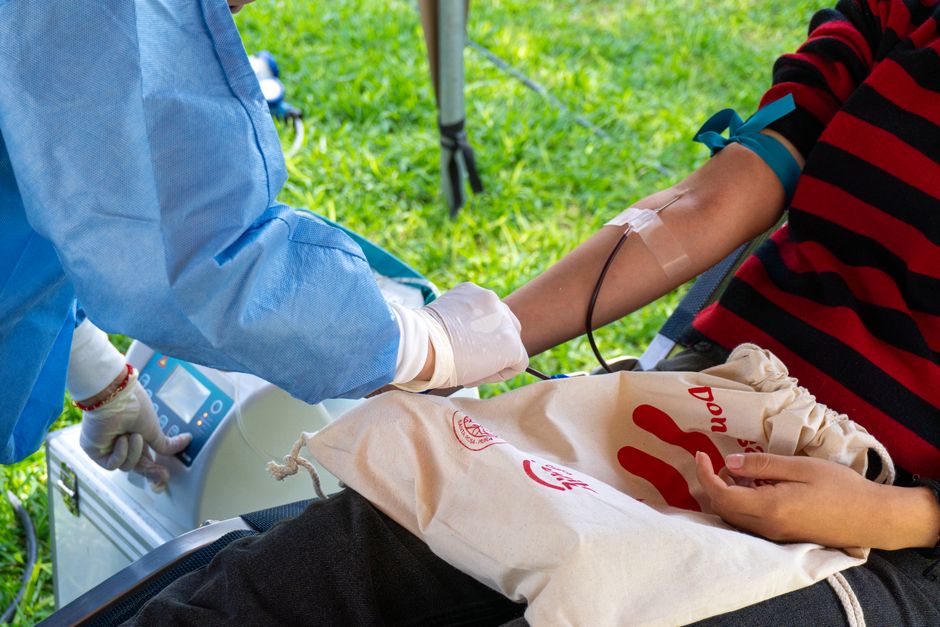
Plasma donation is a medical procedure where a machine separates the liquid part of your blood from the red and white blood cells, keeping the plasma and returning the rest to your body. The process is called plasmapheresis, and it takes about 90 minutes from start to finish. Unlike whole blood donation, which takes about 10 minutes, plasma donation requires you to sit in a reclined chair while a machine cycles your blood through a sterile kit several times.
What Happens During a Plasma Donation?
You sit in a reclined chair with a needle placed in a vein in the crook of your arm. The needle connects to sterile tubing that runs into a centrifuge machine. The machine draws your blood, spins it to separate plasma from the cellular components, collects the plasma into a bag, and then returns the red cells and platelets back to your body through the same needle.
This cycle repeats several times during the session. Each cycle draws and returns about one cup of blood. Your body tolerates this well because the red cells stay with you the entire time. The plasma collected at the end is typically around 600 to 880 milliliters, depending on your weight and the center’s protocols.
The needle stays in your arm for the whole donation. You cannot move that arm freely, but you can read, watch a screen, or use your other hand. The machine monitors your flow rate and pressure continuously. If anything looks off, the machine stops and alerts the staff.
How Long Does Plasma Donation Take?
The donation itself takes about 40 minutes of machine time, but the full visit takes 90 minutes or more. The extra time covers the health screening, the physical check, and the paperwork required before every single donation.
First-time donors should plan for up to two hours. The initial visit includes a more detailed medical history, a physical exam, and blood testing to establish your baseline protein levels. Return donors usually complete the whole visit in about 75 to 90 minutes.
Plasma centers are busy. Wait times vary by location and time of day. Weekday mornings are often quieter than evenings and weekends.
What Are the Steps Before the Needle Goes In?
Every donation starts with a screening process designed to protect both you and the patients who receive the plasma. You will answer questions about your health, medications, travel history, and lifestyle. The center checks your blood pressure, pulse, temperature, and weight.
They also test a small finger-prick blood sample. This checks your hematocrit — the proportion of red blood cells in your blood — and your total protein level. Plasma is mostly water with proteins dissolved in it. If your protein level is too low, the center will defer you until it recovers. This is a safety measure, not a rejection.
You must bring a valid government-issued ID and proof of address. You also need to know your Social Security number. Every donation is tracked in a national database to ensure you do not donate more often than the limit.





How Often Can You Donate Plasma?
Plasma regenerates quickly because it is mostly water and protein. The FDA allows plasma donation up to twice within a seven-day period, with at least 48 hours between donations. Most commercial plasma centers follow this limit, and many donors go twice a week consistently.
Your body replaces the donated plasma within 24 to 48 hours. The protein levels take a bit longer to fully restore. This is why the center checks your protein before each donation. If you eat a balanced diet with adequate protein, your body can keep up with twice-weekly donations.
Hydration matters more than most people realize. Plasma is about 92 percent water. If you arrive dehydrated, your donation will take longer, and you may feel lightheaded afterward. Drink plenty of water in the 24 hours before your appointment.
What Does the Machine Actually Separate?
Blood is roughly 55 percent liquid and 45 percent cells. The liquid portion is plasma. It carries proteins, electrolytes, hormones, and waste products. The cellular portion includes red blood cells, white blood cells, and platelets.
The centrifuge spins the blood at high speed. The heavier cells move to the outside of the spinning chamber, and the lighter plasma stays in the center. The machine draws off the plasma and returns the cells. This is the core of plasmapheresis technology.
The plasma you donate contains antibodies, clotting factors, and albumin. These are the components that pharmaceutical companies use to make therapies for people with immune deficiencies, bleeding disorders, and burn injuries. Your plasma itself is not given directly to another person in most cases. It is pooled with thousands of other donations and processed into medications.
Are There Side Effects of Plasma Donation?
Most donors feel fine during and after donation. The most common side effect is a mild tingling sensation around the lips or fingers. This happens because the anticoagulant used to prevent clotting in the machine temporarily binds to calcium in your blood. It passes quickly and is not dangerous.
Lightheadedness can occur, especially if you are dehydrated or have not eaten recently. Centers provide snacks and fluids after donation. Sitting up slowly and eating something within 30 minutes of finishing reduces this risk.
A bruise or soreness at the needle site is common and harmless. Serious complications are rare when the procedure is done by trained staff at a licensed center. The FDA inspects plasma centers regularly, and the sterile single-use kits eliminate cross-contamination risk between donors.
Who Cannot Donate Plasma?
There are strict eligibility rules. You must be at least 18 years old and weigh at least 110 pounds. Some centers require a minimum weight of 130 pounds because the donation volume is based on your total blood volume.
Certain medical conditions disqualify you. Active infections, recent tattoos or piercings, and recent travel to malaria-endemic regions can lead to temporary deferral. People with bleeding disorders, certain chronic illnesses, or a history of intravenous drug use are permanently deferred.
Medication rules vary. Some medications are acceptable, and others require a waiting period after your last dose. The screening questionnaire covers this in detail. If you are unsure, call the center before your visit and ask to speak with their medical staff.
Is Plasma Donation Paid?
Most commercial plasma centers pay donors. Payment is compensation for your time, not a purchase of your plasma. The amount varies by location, center, and how often you donate. Many centers use a prepaid debit card and offer bonuses for consistent attendance.
Blood banks that collect plasma for hospital use typically do not pay. These are separate systems. If you want to donate plasma for a specific patient or to your local hospital supply, contact your regional blood bank. If you want paid donation, look for a licensed commercial plasma center, often found in strip malls and near college campuses.
The payment does not change the safety standards. Commercial centers follow the same FDA regulations as non-profit blood banks. The screening and testing procedures are identical.
How to Prepare for Your First Plasma Donation
Eat a full meal with protein two to three hours before your appointment. Avoid fatty foods immediately before donation because fat in your bloodstream can make the plasma appear milky and unusable. The center may reject the donation if the plasma is visibly lipemic.
Drink extra water the day before and the day of your donation. Avoid alcohol for 24 hours beforehand. Get a normal night of sleep. Wear a shirt with sleeves that roll up easily above the elbow.
Bring your ID, your proof of address, and your Social Security card. Bring something to do while you sit. Bring a snack for after. The center provides juice and crackers, but having your own food is fine.
What Happens to Your Plasma After You Leave?
The collected plasma is frozen within hours and shipped to a processing facility. It is tested for infectious diseases including HIV, hepatitis B, hepatitis C, and syphilis. The testing happens after you leave, and if anything is positive, the center contacts you confidentially.
The plasma is pooled with other donations and fractionated into individual proteins. Albumin, immunoglobulins, and clotting factors are extracted and purified. These become medications used in hospitals worldwide.
Your donation is not used as a direct transfusion. It is a raw material for pharmaceutical manufacturing. This is why the protein quality and volume matter so much. A well-hydrated donor with a healthy protein intake produces higher-quality plasma.
Frequently Asked Questions
Does donating plasma hurt?
The needle stick feels like a quick pinch, similar to giving blood. The rest of the donation is painless, though you may feel mild tingling in your lips or fingers.
How much money do you get for donating plasma?
Payment varies by center and location, typically ranging from $30 to $60 per donation. Many centers offer higher bonuses for your first few visits or for donating twice in a week.
Can you donate plasma if you are afraid of needles?
You can, but the needle stays in your arm for the entire 40-minute donation. Some centers allow a staff member to hold your hand or talk you through the process.
How long does it take to recover after donating plasma?
Most people feel fully recovered within a few hours. Your body replaces the fluid portion within 48 hours, and you can donate again after 48 hours have passed.
