
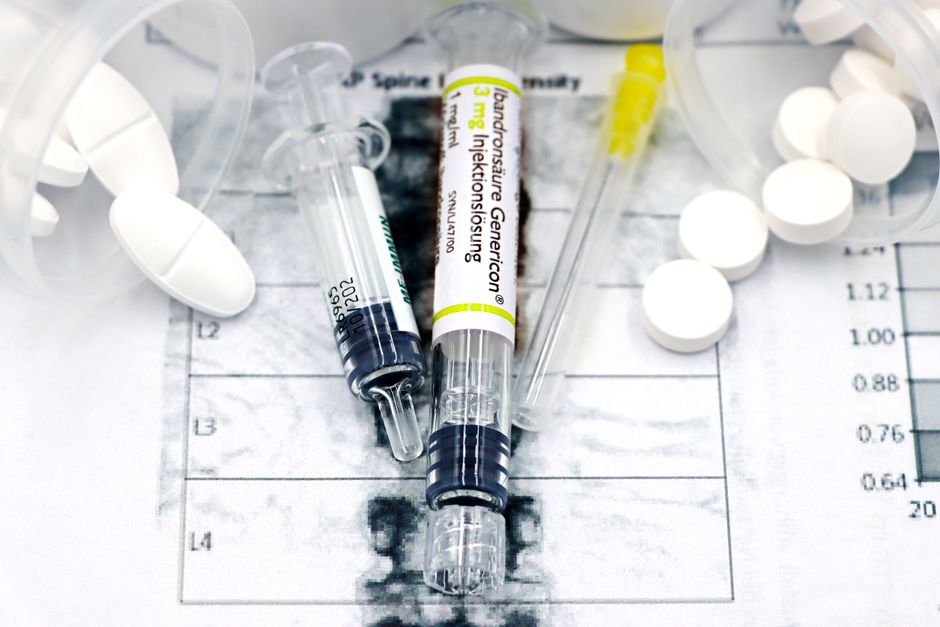
Osteoporosis is diagnosed primarily through a bone density scan called a DXA (dual-energy X-ray absorptiometry). This painless test measures your bone mineral density and compares it to a healthy young adult’s bones. The result is a T-score, and a score of -2.5 or lower means osteoporosis is present. Doctors may also use other imaging tools like vertebral fracture assessment or quantitative ultrasound, along with blood tests and a review of your medical history, to get a complete picture of your bone health.
What Is a DXA Scan and How Does It Work?
A DXA scan is the gold standard for diagnosing osteoporosis. It uses a very low dose of X-rays to measure how dense your bones are. The test focuses on two main areas: your hip and your lower spine. These are the places most likely to break if you have weak bones.
The scan itself takes about 10 to 20 minutes. You lie on a padded table while a scanner arm passes over your body. There is no pain, and you do not need to undress. The amount of radiation is extremely low — less than you would get on a cross-country flight. The CDC and the National Osteoporosis Foundation both recommend DXA as the most reliable test for diagnosis.
Your results come back as a T-score. A score of -1.0 or above is considered normal. Between -1.0 and -2.5 is osteopenia, which means lower than normal bone density but not yet osteoporosis. A score of -2.5 or lower means osteoporosis is present. The lower the number, the higher your fracture risk.
Who Should Get Tested for Osteoporosis?
Not everyone needs a DXA scan. The U.S. Preventive Services Task Force recommends screening for women aged 65 and older. For younger women, screening is recommended if their fracture risk is equal to or greater than that of a 65-year-old woman. This is calculated using a tool called FRAX.
Men are not routinely screened unless they have specific risk factors. These include being over 70, having a history of fractures after age 50, or using medications like corticosteroids for a long time. Other risk factors include low body weight, a family history of osteoporosis, smoking, and heavy alcohol use.
Some medical conditions also raise your risk. These include rheumatoid arthritis, celiac disease, hyperthyroidism, and type 1 diabetes. If you have any of these, your doctor may recommend a DXA scan earlier than the standard age.
What Other Tests Are Used to Diagnose Osteoporosis?
While DXA is the main test, doctors sometimes use other methods. One is a vertebral fracture assessment, which is often done on the same DXA machine. It checks for broken bones in your spine that you may not have noticed. Many spinal fractures happen without any obvious symptoms.
Quantitative ultrasound is another option. It uses sound waves to measure bone density, usually in your heel. It is cheaper and has no radiation. However, it is not as precise as DXA. The National Institutes of Health notes that ultrasound can help identify people at risk, but DXA is still needed for a firm diagnosis.
Blood and urine tests are not used to diagnose osteoporosis directly. But they help rule out other conditions that cause bone loss. These tests check for vitamin D levels, calcium levels, thyroid function, and markers of bone turnover. Research published in the Journal of Clinical Endocrinology & Metabolism shows that these labs are important for finding the root cause of bone loss, especially in younger people.





How Is the FRAX Tool Used in Diagnosis?
FRAX is a calculator developed by the World Health Organization. It estimates your 10-year probability of having a major fracture. It uses your bone density T-score along with clinical risk factors like age, sex, weight, height, and whether you have had a previous fracture.
Doctors use FRAX to decide if treatment is needed. For example, someone with osteopenia (a T-score between -1.0 and -2.5) may still have a high fracture risk based on other factors. In that case, treatment might be recommended even though the bone density alone does not show osteoporosis.
The FRAX tool is free and available online. But it has limits. It does not account for things like fall risk, how often you exercise, or your diet. It also does not include all medications that affect bone. So your doctor should use it as one piece of the puzzle, not the final answer.
What Does a Normal DXA Scan Report Look Like?
Your DXA report will show T-scores and Z-scores. The T-score compares your bone density to a healthy 30-year-old. The Z-score compares you to someone of the same age, sex, and body size. A Z-score below -2.0 may suggest that something other than aging is causing bone loss.
The report also lists the actual bone mineral density in grams per square centimeter. This number is less important for diagnosis than the T-score. But it helps track changes over time if you get repeat scans. Most guidelines suggest waiting at least one to two years between scans to see meaningful change.
Some reports include a fracture risk percentage. This is often calculated using the FRAX tool. The report may also note the quality of the scan, such as whether any metal or movement affected the results. Always ask your doctor to explain your numbers. Do not rely on online calculators alone.
Common Misconceptions About Osteoporosis Diagnosis
One common myth is that a bone density test at a health fair or pharmacy is as good as a DXA scan. It is not. Peripheral tests like heel ultrasounds can flag risk, but they do not give a T-score that matches the standard. The National Osteoporosis Foundation says DXA is the only test that can officially diagnose osteoporosis.
Another misconception is that osteoporosis only affects women. It does affect women more often — about 80% of cases are in women — but men get it too. According to the CDC, about 2 million men in the U.S. have osteoporosis. Men are less likely to be tested, which means their condition often goes untreated until a fracture happens.
Some people think that if they feel fine, their bones are fine. This is not true. Osteoporosis has no symptoms until a bone breaks. That is why screening is so important. A DXA scan can catch bone loss years before a fracture occurs, giving you time to take action.
What to Avoid When Preparing for a DXA Scan
Do not take calcium supplements for 24 hours before your scan. They can interfere with the measurement and give a falsely high reading. This includes calcium chews, antacids like Tums, and multivitamins with calcium. Plain food and water are fine.
Wear loose, comfortable clothing without metal. Zippers, buttons, underwire bras, and even some jewelry can show up on the scan and skew the results. You may be asked to change into a gown if your clothing has metal. Avoid scheduling the scan right after a barium exam or nuclear medicine test, as residual contrast can affect the results.
Tell your technician if you are pregnant or think you might be. Though the radiation is low, it is best to avoid any exposure during pregnancy. Also mention any recent fractures or surgeries, as these may change how the scan is done.
How Often Should You Repeat a DXA Scan?
There is no single answer for everyone. For most people with normal bone density, repeating the scan every 10 to 15 years is enough. For those with osteopenia, every two to five years is typical. The exact interval depends on your age, your T-score, and whether you have started treatment.
For people with osteoporosis who are on medication, a follow-up scan after one to two years is common. This helps your doctor see if the treatment is working. If your bone density is stable or improving, that is a good sign. If it is dropping, your doctor may change your medication or look for other causes of bone loss.
Research from the Journal of Bone and Mineral Research suggests that frequent repeat scans in people with stable bone density are not helpful. They expose you to unnecessary radiation and cost. Follow your doctor’s advice on timing, and do not request a scan just because you are worried.
Comparison of Bone Density Tests
| Test | Radiation Level | Time | Accuracy for Diagnosis |
|---|---|---|---|
| DXA (central) | Very low | 10–20 minutes | Gold standard |
| Vertebral fracture assessment | Very low | Same as DXA | High for spine fractures |
| Quantitative ultrasound | None | 5–10 minutes | Moderate; not diagnostic alone |
| Peripheral DXA (wrist, heel) | Low | 5–10 minutes | Lower; screening only |
| CT scan (QCT) | Higher | 10–15 minutes | Good but less common |
Key Steps After a Diagnosis
- Ask your doctor for your exact T-score and what it means for your fracture risk.
- Discuss whether you need a FRAX score to guide treatment decisions.
- Get your vitamin D and calcium levels checked through a blood test.
- Ask about weight-bearing exercise and balance training to reduce fall risk.
- Review all medications you take, including over-the-counter ones, for bone effects.
- Schedule a follow-up DXA scan based on your doctor’s recommendation.
Frequently Asked Questions
How is osteoporosis diagnosed with a DXA scan?
A DXA scan measures bone mineral density in your hip and spine and gives a T-score. A T-score of -2.5 or lower confirms osteoporosis.
What is the difference between osteopenia and osteoporosis?
Osteopenia is a T-score between -1.0 and -2.5, meaning lower than normal bone density. Osteoporosis is a T-score of -2.5 or lower, meaning significantly weakened bones.
Can a blood test detect osteoporosis?
No, blood tests cannot diagnose osteoporosis directly. They help rule out other causes of bone loss like thyroid problems or vitamin D deficiency.
How often should I get a DXA scan for osteoporosis screening?
For most people with normal bone density, every 10 to 15 years is enough. Those with osteopenia or on treatment may need one every one to five years.
