
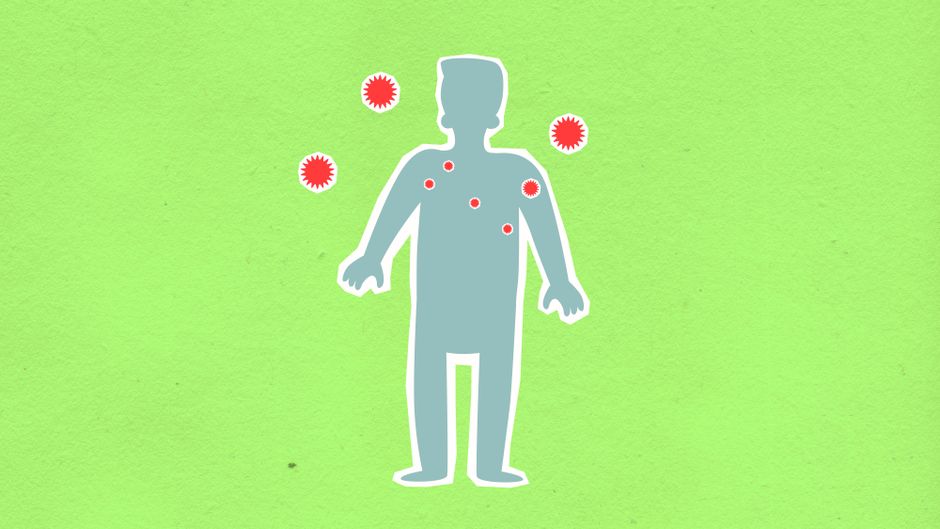
Mononucleosis spreads mainly through saliva. That is why it is often called the “kissing disease.” You get it by sharing saliva with someone who has the infection — through kissing, sharing a drink, or using the same fork or spoon.
The virus that causes mono does not travel through the air the way a cold or flu does. It needs direct contact with saliva. That single fact explains most of how this infection moves from person to person.
Most cases are caused by the Epstein-Barr virus, or EBV. It is one of the most common viruses in humans. By adulthood, a large share of people worldwide have been infected at some point. Many of them never knew it.
What Actually Causes Mononucleosis?
Epstein-Barr virus causes the great majority of mono cases. EBV is a herpesvirus, and once it enters your body it stays there for life. It usually goes quiet after the initial infection and does not cause ongoing problems for most people.
Infection happens when the virus in saliva gets into the mouth or throat of someone who has never had it. The virus infects cells lining the throat and the B cells of the immune system. That is what triggers the sore throat, swollen lymph nodes, and fatigue that define mono.
A few other organisms can cause a mono-like illness. Cytomegalovirus (CMV) is the most common alternative. It belongs to the same virus family and can produce similar symptoms. Other causes are far less common.
One detail worth knowing: EBV is not the only cause, so a negative EBV test does not always rule out mono. Some clinicians test for CMV when EBV results come back negative but symptoms look the same. The two infections are managed similarly.
How Is Mononucleosis Contagious Through Saliva?
Saliva is the main route. The virus lives in the throat and salivary glands during the active infection, so anything that moves saliva from one mouth to another can pass it along.
Common ways this happens include:
- Kissing, especially deep kissing
- Sharing cups, water bottles, or utensils
- Sharing food from the same plate
- Using the same toothbrush
- Sharing lip balm or lipstick
- Hands that touch saliva and then touch another person’s mouth
These are everyday behaviors, which is part of why mono spreads easily among people who live or spend a lot of time together. It is not about hygiene failure. It is about how the virus travels.
The virus can also be present in saliva before symptoms appear and for months after they fade. That means a person can pass it on without looking or feeling sick.
Can You Catch Mono Without Kissing?
Yes. Kissing is a common route, but it is not the only one. Any shared object that carries saliva can move the virus between people.
This matters most in group settings. College dorms, sports teams, and crowded households are places where cups, bottles, and utensils get shared without a second thought. That is a big part of why mono shows up in these environments.
A person does not need to be visibly ill to be contagious. The virus can be shed in saliva for weeks to months after the initial infection, and it can reactivate later and shed again. This is one reason mono can seem to appear out of nowhere.



How Long Is Mononucleosis Contagious?
The contagious period is longer than most people expect. A person can spread the virus during the incubation period — before any symptoms show — and for a long stretch after they feel better.
The incubation period for EBV is typically several weeks. Symptoms then develop and usually last two to four weeks, though fatigue can linger longer in some people.
After the active illness, the virus can stay in saliva for months. It then settles into a dormant state inside immune cells. It can reactivate and appear in saliva again later, often without causing symptoms.
Because of this, there is no clean “all clear” moment when someone stops being contagious. The practical guidance is to avoid sharing saliva with others while you are sick and to be mindful that the virus can still be present afterward.
Who Is Most at Risk of Getting Mono?
Anyone who has never been infected with EBV can get mono. Once you have had it, you generally do not get it again in the same way, because your immune system develops lasting protection.
In the United States, EBV infection often happens in the teen and young adult years. That timing is why mono is so common in high school and college students. When infection is delayed to this age, it is more likely to cause noticeable symptoms.
When EBV infects young children, it often causes mild or no symptoms. A child may have a brief fever or feel slightly unwell and never be diagnosed with mono. The infection still happened, and it still provides immunity.
This is a key reason mono looks like a young person’s illness. Many adults were already infected as children, so they are not vulnerable.
How Can You Lower the Risk of Spreading or Catching Mono?
There is no vaccine for EBV or mono, so prevention comes down to limiting saliva contact with someone who may be infected. That is harder than it sounds, because the virus can be present without symptoms.
Practical steps include:
- Do not share drinks, bottles, or utensils
- Avoid sharing food and lip products
- Use your own toothbrush and keep it separate
- Wash hands, especially before eating
- Avoid kissing someone who is sick or recently had mono
None of these steps guarantees you will avoid mono. They reduce the chances when you know someone is infected. Since the virus can be shed silently, complete prevention is not realistic.
If you have mono, resting and avoiding strenuous activity matters for a different reason. The spleen can enlarge during mono, and in rare cases it can rupture. Clinicians generally advise avoiding contact sports and heavy lifting for a period after infection, based on how the spleen is healing. The exact timeline should come from your own doctor, because it depends on your case.
Does Mono Spread Through the Air or by Casual Contact?
Mono is not spread through the air the way measles or the flu is. It does not hang in the air or travel across a room in droplets that you breathe in from a distance.
Casual contact — sitting near someone, talking to them, or being in the same room — is not a meaningful route of transmission. The virus needs saliva to move from one person to another.
This is a common point of confusion. People sometimes worry that a classmate or coworker with mono is a risk just by being nearby. That is not how EBV spreads. The risk comes from direct saliva contact, not proximity.
It is also worth separating mono from other infections that share some symptoms. A bad sore throat or swollen glands could be strep throat, which is bacterial and spreads differently. Only testing can tell them apart, and the treatment is different. If symptoms are severe or not improving, that is a reason to see a clinician rather than assume mono.
Frequently Asked Questions
How is mononucleosis contagious?
Mono spreads through saliva, mainly via kissing or sharing drinks, utensils, or toothbrushes with an infected person. It does not spread through the air like a cold or flu.
Can you get mono without kissing?
Yes. Sharing anything that carries saliva, such as a cup, fork, or water bottle, can pass the virus. Kissing is common but not required.
How long is mono contagious?
A person can spread the virus before symptoms appear and for months afterward, since it can stay in saliva for a long time. There is no single clear point when contagiousness ends.
Is mono spread through the air?
No. EBV, the main cause of mono, travels through direct saliva contact, not through airborne droplets. Being near someone with mono is not a real risk.
